I've read that the 737 Max was quickly designed in response to a new Airbus plane that included a new engine that was 25% more efficient. Boeing wanted a plane that used the same engine so they could remain competitive with Airbus. The problem for Boeing was the size of this new engine. The 737 sat too low to the ground for the engine to have proper ground clearance. Rather than redesign other aspects of the plane, Boeing mounted the engine higher putting the top portion of the cowling above the leading edge of the wing as seen in the pic below. This created a flight control issue. Rather than correct it with mechanical design, Boeing creates the MCAS software to compensate fo it. Splash 2.

Boeing mounted the engine higher putting the top portion of the cowling above the leading edge of the wing as seen in the pic below. This created a flight control issue. Below is a picture of the 737 NG, the version just prior to the MAX.
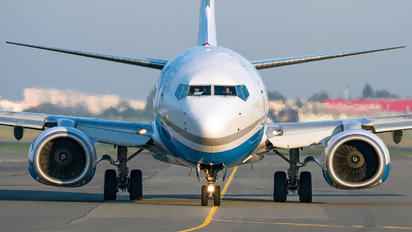
It appears to me that the MAX engines were raised less than 6 inches.
There are a lot of articles and threads on FR that discuss the flight control issue caused by mounting the engines higher.
I have not seen any article that adequately describes the flight control issue. Most of the articles blame additional lift created by the engine nacelles. Looking at the 2 pictures, the NG nacelles would also create additional lift. The only difference being nacelle placement.
IMHO, mounting the engines higher would cause minimal change in handling characteristics between the NG and the MAX. Any change in handling characteristics could be handled by the Elevator Feel Shift module.