Posted on 05/10/2019 4:58:28 PM PDT by ProgressingAmerica
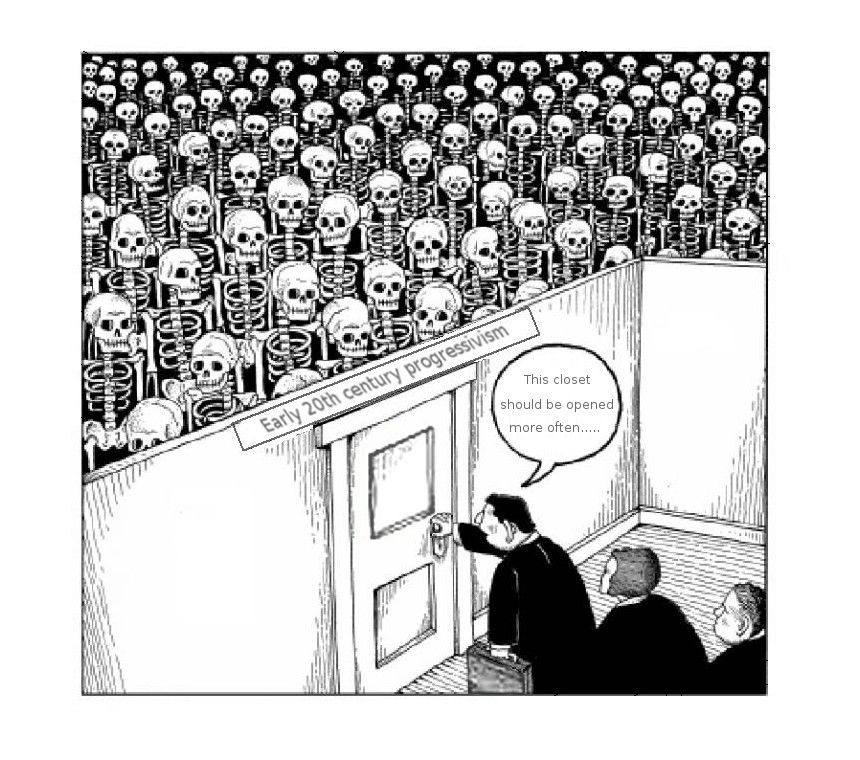
You have to give credit to progressives, when they are intent on achieving their purpose they don't let anything get in their way. Even reality. So the definition of a word in some dictionary stands little chance of being protected from the onslaught of "reform" in the face of the machinations of these people. Realistically, it is to the progressives benefit to take words and weaponize them.
We have all been trained by progressive-dominated media, government schools, and even some of our "leaders" that a monopoly is a purely market-based entity and it's a bad entity. Well, not so fast. Let's take a look at what Merriam-Webster defines has to say about how a "Monopoly" is defined. Looking at the list, it is entirely in stereotypical ways and all of the entries are intended as condemnations of private industry.
One entry says "one that has a monopoly". Another entry says "exclusive possession or control".
This is plain garbage. A monopolist is a monopolist because they are a monopolist. That's basically what these are saying. Even the very first entry, which says "exclusive ownership through legal privilege, command of supply, or concerted action" is polluted. It kind of swerves into the truth with this "legal privilege" phrase, but that phrase is too loose to be useful considering the "or concerted action" nonsense it is connected with. It's the corruption of the language itself. Here is how a "monopoly" used to be defined: (source)
An institution or allowance by the king, by his grant, commission, or otherwise, to any persons or corporations, of or for the sole buying, selling, making, working or using every thing, whereby any person or corporations are sought to be restrained of any freedom or liberty that they had before, or hindered in their lawful trade.
That's really specific, now isn't it? This is Edward Coke's definition of a monopoly, in case you were wondering. In reality, the only kind of monopoly that can possibly exist is a legal monopoly. That is, for example, the Royal East India Trading Company, is rightfully described as a monopoly. It was never a monopoly because it was the only supplier in the field, it was always a monopoly because of the king's charter! But you see, progressives had to blow this definition of a monopoly out of the water because what does it do? It implicates them. Single payer healthcare, government schools, the TVA, utilities, the nationalization of the railways in 1917, the nationalization of student loans, etc etc etc. All of it are legal monopolies. Even where there is not a sole-supplier status, we do find monopolies. Fannie Mae and Freddie Mac both have a grant or a commission from the king by nature of their very existence. Both are monopolies - in this instance they would be a government sanctioned duopoly. Amtrak is another example of a monopoly. Ever wonder why you can't get CNN out of airports? Air travel is a government controlled monopoly.
In all instances, these government-dominated sectors were brought to you by progressivism. They want government, and only government, to control your health. To control your retirement. To control your food. To control where you can and cannot go via transportation. What you can or cannot see, or what you hear.
I suspect that the Sherman Anti-trust act plays a larger than life role in the re-structuring of the word monopoly, but I cannot say for certain when this ultimately took place. But I do know this. A definite answer as to "when" we went from a sane definition of monopoly and arrived at a pro-big-government definition of it would be to the benefit of constitutionalists and to the detriment of progressives.
Go directly to jail.
Do not pass Go.
Do not collect $200.
Antitrust legislation is not aimed at eliminating government sanctioned suppliers. It is aimed at private corporations that control a large percentage of the production of specific products or services, where 'large percentage' is usually defined as enough to control the market prices in those products or services.
Monopolies in this sense are anti-competitive. Even libertarians agree that monopolies, whether gained via purely competitive processes or government fiat or criminal behavior, inhibit the free market. Libertarians, however, have the mistaken belief that monopolies will eventually undermine themselves and should not be eliminated by government edict.
The problem is that today technology moves so quickly that maintaining a monopoly even for as short a span as a year can lead to significant market distortions.
The monopolies that Alphabet and Facebook have on their services are negatively impacting the free market of ideas and so they need to either be broken up or else managed as public utilities.
Waiting for a conservative Bill Gates to rise up and create meaningfully competitive service providers to Google, YouTube, Facebook, SnapChat, etc. is engaging in fantasy.
They are both bad. There is no either or, here. It is both and. Yes bad government has assisted in establishing and enabling health care monopolies. The solution is making sure that the free market can operate.
Thank you. Anti-monopolists are not by definition progressives. This article is a fraud.
Well, since the Public does come first,
It could not be denied
That in matters such as this,
The Public must decide.
So, antitrust now took a hand.
Of course, it was appalled
At what it found was going on.
The “Bread trust,” it was called.
Now this was getting serious,
So Smith felt that he must
Have a friendly interview
With the men in antitrust.
So, hat in hand, he went to them.
They’d surely been misled;
No rule of law had he defied.
But the their lawyer said:
“The rule of law, in complex times,
Has proved itself deficient.
We much prefer the rule of men!
It’s vastly more efficient.
Now, let me state the present rules,”
The lawyer then went on,
“These very simple guidelines
You can rely upon”
You’re gouging on you prices if
You charge more than the rest.
But it’s unfair competition
If you think you can charge less.
“A second point that we would make
To help avoid confusion:
Don’t try to charge the same amount:
That would be collusion!
You must compete. But not too much
For if you do, you see,
Then the market would be yours
And that’s monopoly!”
Price too high? Or price too low?
Now, which charge did they make?
Well, they weren’t loath to charging both
With Public Good at stake!
In fact, the went on better
They charged “monopoly!”
No muss, no fuss, oh woe is us,
Egad, they charged all three! — from “Tom Smith and the Incredible Bread Machine” by R.W. Grant
http://www.enterpriseintegrators.com/flint/4thR/TomSmithsIncredibleBreadMachinePoem.txt
You cannot gain a monopoly in a free market. Only government can create a monopoly.
Contemporary progressivism is even worse.
FWIW, there are and have been Gov’t sanctioned Monopolies.
Ma Bell comes to mind.
Competition comes with a cost and when “Private companies” partner with legislators and institute rules and regulations that raise the barrier of entry we no longer have a free market.
You can go down a long list of occupations that require some sort of “License”.
All to protect the consumer.
A license to be a Bartender?
A Hair Stylist?
It’s the companies that own the market that use their dominance and money to get these regulations passed in order to protect their position and profits.
Your post is utter BS.
Saved me the post.
Thank you.
That’s exactly how it works.
A free market is a utopian ideal that may be good to aim for, but can't be depended on to ever be eventuated.
My own suspicion is that if you ran a computer simulation of a free market economy, monopolies would quickly develop and could very well last longer than those in government regulated markets.
ping
Adam Smith would likely agree with the definition at the “source” given by the writer, as a definition of how monopolies existed “back in the day” - governments created them.
Yet, what Adam Smith argued was not favorable about them to an economy and economic Liberty, was the anti-competitive affects of monopolies, which were, to Adam Smith, what was precisely not good about them.
Their anti-competitive affects, and no matter how they come to be created, that prices, production, capital, and supply are restrained and controlled by the anti-competitive affects of a monopoly - ANY monopoly.
Yes, I’d agree, government created monopolies are the worse - they corrupt not only the marketplace but government as well.
But what is “bad” generally speaking, in terms of economic Liberty, is monopolies regardless of their creation.
Get paid by the word, do you? And you have a keen eye for the capillary. The only controversy about monopoly I am aware of are the accusers of Amazon and Google as being monopolies.
In a free market, should someone get to monopoly status, someone else will come along and compete.
John D. Rockefeller tried to build a monopoly in the oil market. Every tim he thought he had it, some new oil company would pop up.
It’s only by using government to restrict competition that you achieve monopoly status.
http://www.ronpaulforums.com/showthread.php?508755-How-does-the-free-market-prevent-monopolies
https://www.youtube.com/watch?v=Dvb2j0Wt218
https://mises.org/library/myth-natural-monopoly
https://mises.org/library/five-ways-create-monopoly
Disclaimer: Opinions posted on Free Republic are those of the individual posters and do not necessarily represent the opinion of Free Republic or its management. All materials posted herein are protected by copyright law and the exemption for fair use of copyrighted works.