Here I disagree with you. The South already had slavery. It was actually impossible for the North to do anything about it had the South remained in the Union. "Slavery" is the stated purpose from many people of the time, but it was not the hidden purpose of which you speak.
The hidden purpose was economic independence from the control of Washington DC and the Cartel of the North East. (The group we today refer to as "the establishment."
The South was paying between 73-83% of all taxes used to finance the government, and it was getting heavily gouged by Northern Shipping, Banking, Insurance, and Warehousing industries, and being forced to pay higher prices for Northern goods as a consequence of protectionist laws that made Northern products competitive when they would not otherwise be.
The South could not do anything about the conditions which hurt it economically because it couldn't get a majority in Congress to overturn the protectionist legislation that was put in place to help Northern Industry.
Going independent of the control of the Washington/NorthEast cartel, made them a serious economic threat to the cartel. To give you an idea of how big of an economic threat Southern independence was to the North East, I'll show you this map.
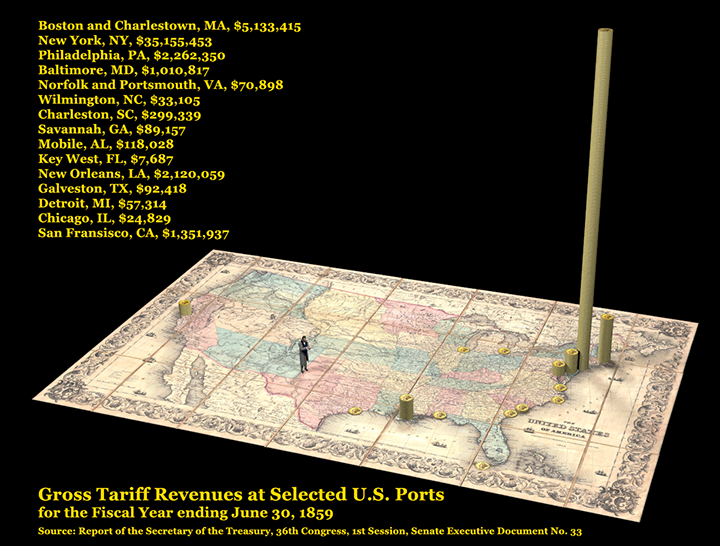
See that money which represents tariff collections? 75% (or more) of that money was earned by the South. Look at where that money ended up.
Independence would transfer 75% (or more) of that coin pile to Southern ports, and there it would have capitalized Southern industries and spurred much other sorts of growth.
Southern Independence was obviously a threat to New England robber barons who had been making their fortunes off of intercepting the trade between Europe and the South due to the protectionist laws that were then in place.
The War was about Money and future economic competition.