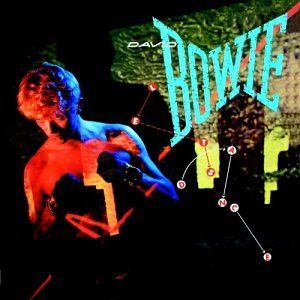
David Bowie + Stevie Ray Vaughn = Let's Dance.
And Pat Boone wasn't rock and roll. Neither was Bobby Vinton. Nor Paul Anka.
Just because the labels TOLD us that Tony Bennett was rock and roll didn't make it so.
Doo Wop wasn't rock and roll either although it's strongest market share was contemporary to rock and roll's first radio success and the two sounds co-existed well.
They try to claim that rap is the new rock. But it doesn't make it so.
The Beatles began as rockers. And then had to tone down the sound and their image to be marketable among the suits.
They weren't known for Motown covers before George Martin got a hold on their career (and that was an improvement over being made to cover things like Sweet Georgia Brown and My Bonnie and Besame Mucho).
By the time they were able to record more than their initial club "hit" songs (songs they wrote and performed live before the record deal), they'd started moving onward to more mature songs that had more poetic lyrics and softer accoustic guitar oriented sounds. "And I Love Her", "Norweigian Wood", etc. Then again, they faced opposition from the music labels from the get go. The first Lennon-Harrison original (released on MGM) was an instrumental (Cry For A Shadow) but they were told that "the guitar group sound is OUT".
George Martin didn't care much for their originals but he saw them as something marketable, they each had a distinctinve look and personality. While he may not initially have had much love or respect for rock and roll, I think that he did come to have an understanding of it with the Beatles and helped shape their albums in a positive way.
But then rock and roll was never supposed to be something you played your whole life.
While the originators (late 1940s, early 1950s) played it for adults in booze fueled bars, dives, and roadhouses, it got co-opted early on.
By the time the Brill Building got involved, the tin pan alley cats were WRITING songs for "the new sound" but they aren't as genuine. They were HITS and pleasant memorable songs, but they were an imitation every bit as we are told the Monkees hits were. And that goes for all of the songs of Leiber and Stohler.
I listen to the Beatles. I think they are among the best songwriting team. I also think that the Rolling Stones are more of a rock and roll band than the Beatles shifted into.
Sgt. Pepper isn't a rock and roll album, much.
But then everyone wants to call EVERYTHING rock and roll because rock is established as "cool" and "youth music" and "Americana".