Skip to comments.
A Major Explosive Eruption in Ongoing; The Media is Missing It [5:09]
YouTube ^
| May 13, 2026
| GeologyHub
Posted on 05/13/2026 1:52:34 PM PDT by SunkenCiv
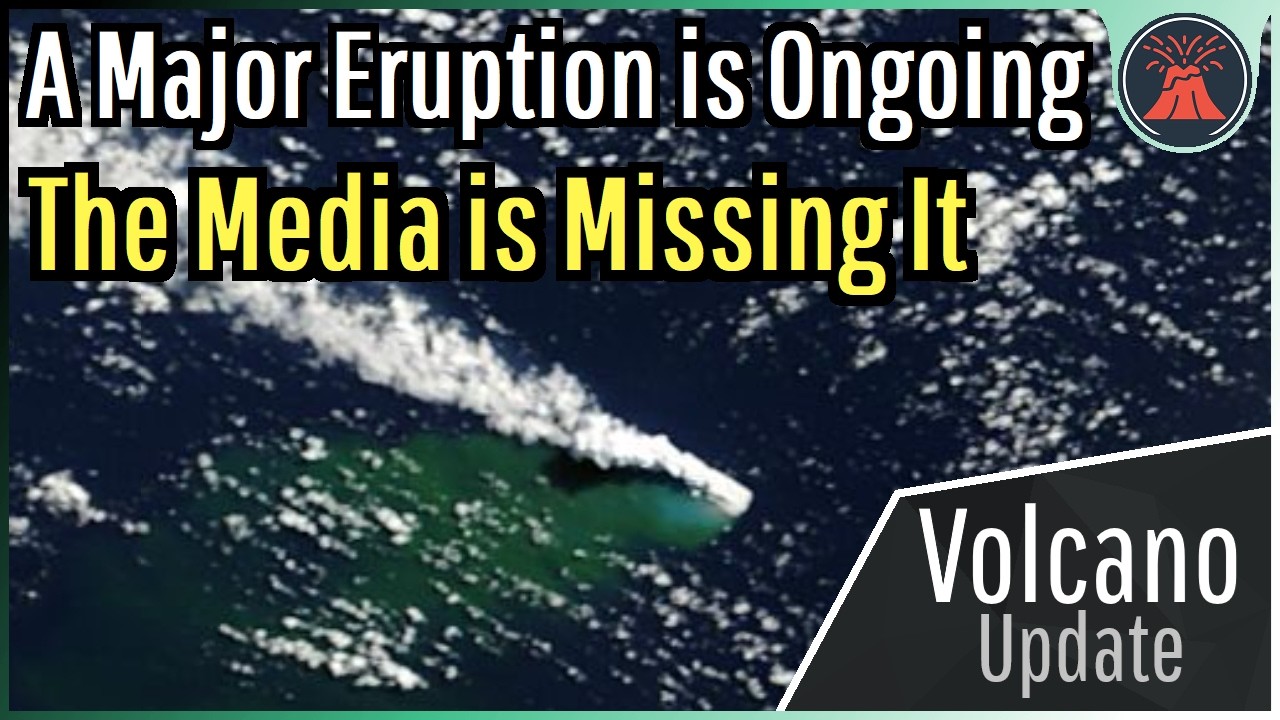
A major explosive volcanic eruption is ongoing, the largest so far of 2026, and yet the media is largely missing it. What I am referring to is a volcano which few people have ever heard of located within the central Bismarck Sea. Going by the same name of that area, it is currently producing its largest eruption on record, having already generated abundant pumice rafts and an eruption plume that rose 13,000 feet above the ocean surface. This is all due to the planet's largest deep submarine volcanic eruption in more than a decade! A Major Explosive Eruption in Ongoing; The Media is Missing It | 5:09
GeologyHub | 392K subscribers | 5,208 views | May 13, 2026
(Excerpt) Read more at youtube.com ...
TOPICS: Science; Travel
KEYWORDS: geology; geologyhub; volcano
Navigation: use the links below to view more comments.
first 1-20, 21-33 next last
1
posted on
05/13/2026 1:52:34 PM PDT
by
SunkenCiv
Transcript
Chapter 1: Major Ongoing Eruption
The largest explosive volcanic eruption so far of 2026 is actively ongoing, and for whatever reason, it seems like no one is paying attention to it. In fact, if you were not an airline pilot in Oceania, you might have never known this eruption was actively ongoing. Yet, all you have to do to see the ongoing eruption is look at satellite imagery in the Central Bismarck Sea of Papua New Guinea because the effects this eruption are having are so significant. There, what appears to be a volcanic complex simply known as the Central Bismarck Sea is producing the strongest deep submarine volcanic eruption on the planet in more than a decade! While in my opinion, I am skeptical of the accuracy of topographic seafloor data in the vicinity, it seems like this eruption is occurring at these approximate coordinates at a spot that is noted as having a depth of 770 meters or 2,526 feet. And yet, despite the vast amount of atmospheric pressure an eruption would have to experience at such depths, specifically up to 1125 psi, the eruption seemingly contained sufficient volatiles and material to not cause an eruption plume to rise all the way to the surface but also then rise 13,000 feet above it. This created volcanic ash advisories, hence my observations that local airline pilots may already know of the eruption. Alongside this largely white colored plume, an area of nearly 2,100 square kilometers of ocean has been turned a shade of cyan to green, and numerous thermal signatures were detected close to the source vent on the ocean surface. I suspect these thermal signatures to indicate either the presence of floating gas-filled lava balloons, hot pumice, or a combination of both on the surface. Additionally, multiple satellite images have detected the presence of extensive floating pumice rafts, which on May 9th seemingly covered an area of 13 square kilometers. To those in the audience, you might think,
2
posted on
05/13/2026 1:53:09 PM PDT
by
SunkenCiv
(TDS -- it's not just for DNC shills anymore -- oh, wait, yeah it is.)
Chapter 2: Pumice
so what, but this can be a major problem for both passing ships and those who live on nearby islands. On ships, pumice rafts can clog machinery and damage engine components which are expensive to fix. As for people on local islands, large pumice rafts can disrupt ship traffic, clog ports, and even make it more difficult to fish for a time. With that being said, in my opinion, no one is in direct danger of death or injury from the ongoing eruption, unless a ship were to possibly venture above the eruption site where the water would be less buoyant and the eruption plume is, or an aircraft were to fly into its presumably ash-containing eruption plume. It is difficult to estimate how much has erupted so far, but I’d speculate somewhere around 18 million cubic meters of material, largely pumice. The presence of this pumice in of itself is quite interesting, as its occurrence helps scientists narrow down the eruption’s likely composition. Pumice tends to only erupt at intermediate to felsic volcanoes, predominantly the latter, so there is a decent chance that the ongoing eruption is involving andesite, dacite, or rhyolitic magma. It helps that higher silica magmas have lower densities, meaning that floating pumice is more likely to form from such the more felsic the source magma is. Also, due to what types of volcanoes tend to form in oceanic settings, basalt eruptions often dominate there. However, this part of Papua New Guinea has produced a rhyolitic eruption in recent times, specifically the one at St. Andrew Strait from 1953 to 1957. While the Central Bismarck Sea submarine volcano
3
posted on
05/13/2026 1:53:25 PM PDT
by
SunkenCiv
(TDS -- it's not just for DNC shills anymore -- oh, wait, yeah it is.)
Chapter 3: 1972 Eruption
While the Central Bismarck Sea submarine volcanodid previously erupt in 1972, that occurred at a spot seemingly 18 kilometers to the west-northwest of the ongoing eruption. I suspect that the complex is more of a volcanic field or chain of multiple cones rather than a singular central edifice. It appears that eruptive activity began between May 8th, 2026, and May 9th, 2026, and has been continuously ongoing ever since.
Chapter 4: Geologic Setting
All of this is occurring near a bend in a tectonic plate boundary I could simply describe as very complex which involves the collision of the North Bismarck Plate with the South Bismarck Plate. Regardless, I do not personally expect the ongoing eruption to form a new island due to the area’s vast depth, but in my opinion, increasing eruption plume heights higher than observed so far do remain a possibility. Stay tuned for more updates. As a final note, I would like to thank this channel’s patrons on Patreon and channel members on YouTube for supporting my work!
4
posted on
05/13/2026 1:54:15 PM PDT
by
SunkenCiv
(TDS -- it's not just for DNC shills anymore -- oh, wait, yeah it is.)
To: SunkenCiv
I listen to that guy when I can’t sleep. His voice could put a toddler with ADHD to sleep.
5
posted on
05/13/2026 1:59:43 PM PDT
by
Fai Mao
( )
To: SunkenCiv
6
posted on
05/13/2026 2:01:20 PM PDT
by
PGalt
(Past Peak Civilization? )
To: SunkenCiv
I don’t know that there has been this much serious volcanic worldwide. Not just tremors etc...big stuff.
“Whoopee! We all gonna die!”~ Country Joe
7
posted on
05/13/2026 2:01:23 PM PDT
by
Adder
(End fascism...defeat all Democrats.)
To: Fai Mao
8
posted on
05/13/2026 2:05:22 PM PDT
by
Sequoyah101
(Opinions and belly buttons, everybody has one and they get to show them if they want to.)
To: SunkenCiv; dfwgator
(the central Bismarck Sea)
Is Bismarck a hewwing?
9
posted on
05/13/2026 2:06:56 PM PDT
by
SaveFerris
(Luke 17:28 ... as it was in the Days of Lot; They Did Eat, They Drank, They Bought, They Sold ......)
To: SunkenCiv
Wherever I go I hope there’s rum!
10
posted on
05/13/2026 2:09:00 PM PDT
by
dfwgator
("I am Charlie Kirk!")
To: Sequoyah101; SaveFerris
11
posted on
05/13/2026 2:10:35 PM PDT
by
dfwgator
("I am Charlie Kirk!")
To: SaveFerris
“Never believe anything until it’s been officially denied’’. Otto Von Bismark.
12
posted on
05/13/2026 2:20:14 PM PDT
by
jmacusa
( Liberals. Too stupid to be idiots.)
To: SunkenCiv
Is this a submarine volcano? Hunga Tonga hurled massive quantities of water/vapor high into the stratosphere. Not much in the way of aerosols and particulates.
13
posted on
05/13/2026 2:20:35 PM PDT
by
citizen
(A transgender male competing against women may be male, but he's no man.)
To: Sequoyah101
Whoever does those Geology hub Vlogs. He presents good information, but needs some lessons in public speaking.
14
posted on
05/13/2026 2:21:27 PM PDT
by
Fai Mao
( )
To: dfwgator
But not sodomy and the lash!
15
posted on
05/13/2026 2:28:49 PM PDT
by
xp38
To: SunkenCiv
I did not know this. I wonder how much greenhouse gas it’s been putting out, every year.
16
posted on
05/13/2026 2:30:31 PM PDT
by
ConservativeMind
(Trump: Befuddling Democrats, Republicans, and the Media for the benefit of the US and all mankind.)
To: SunkenCiv
“18 million cubic meters of pumice”
That would be a 23 ft thick pumice raft, 1 sq mile in area (1 mile x 1 mile x 23 ft).
Or a 5 mile diameter pumice raft 1 ft thick.
Either way, that’s a big pumice raft!
They companies that make pumice stone abrasives for your bathroom tile are salivating!
To: SunkenCiv
They must be nervous in Rabaul (what’s left of it). There’s a cluster of volcanoes there.
18
posted on
05/13/2026 3:13:42 PM PDT
by
Buttons12
( )
To: ProtectOurFreedom
19
posted on
05/13/2026 3:17:54 PM PDT
by
mewzilla
(Swing away, Mr. President, swing away! 🇺🇸 🏴)
To: Adder
MEANWHILE-—N NEVADA KEEPS HAVING QUAKES
2.8 @ 6:33 am
3.4 @ 12:38 PM TODAY
20
posted on
05/13/2026 3:23:01 PM PDT
by
ridesthemiles
(not giving up on TRUMP---EVER)
Navigation: use the links below to view more comments.
first 1-20, 21-33 next last
Disclaimer:
Opinions posted on Free Republic are those of the individual
posters and do not necessarily represent the opinion of Free Republic or its
management. All materials posted herein are protected by copyright law and the
exemption for fair use of copyrighted works.
FreeRepublic.com is powered by software copyright 2000-2008 John Robinson