Skip to comments.
The Insurgent Empire (Standoff War, Trashcanistans, and the Proliferation Trap)
Substack ^
| 4/08/2026
| Big Serge
Posted on 04/09/2026 8:10:21 AM PDT by Ultra Sonic 007
As we cross the one month mark of the Israeli-American war on Iran, a sufficient corpus of data is emerging to contemplate the kinetic dynamics of the conflict. This is a very strange war. It is not merely the fact that the roster of combatants and associated parties - Netanyahu, President Trump, Lindsay “Holden Bloodfeast” Graham - comprise the most polarizing figures in world politics today. As if to punctuate this fact, I fully anticipate angry comments berating me for using a sanitized and emotionally titrated word like “polarizing.” But we digress.
Far more interesting than endless apoplexy over Israel or Trump is a look at the kinetic scheme of the war and what its long term strategic ramifications might be. We are using the term “war”, although it has somewhat humorously taken on life as a “Special Military Operation” - a riff on Russia’s idiosyncratic bureaucratic parlance for the war in Ukraine, which the White House inadvertently stepped in when they referred to Operation Epic Fury as a “special combat operation.”
The idea of a Special Military Operation is interesting in its own right, and carries a connotation of regime change achieved through a mixture of military force and subversive coercion. Such a label was highly appropriate in the case of America’s January operation in Venezuela, where an overwhelming strike package was combined with political preparations which had Vice President Delcy Rodríguez in position for a favorable transfer of power. In contrast, the conflict in Ukraine has clearly spiraled beyond the scope of a “special operation”, which we can loosely define as kinetically coerced regime change or diplomacy. As early as 2022, Russia was prepared to transition to a conventional war with multiple army groupings and a robust logistical apparatus. While the Kremlin continues to call the war a Special Military Operation, this is mainly a device for domestic political purposes and signals the intent to fight the war without materially disrupting daily life in Russia, and has little bearing on the fact that the war is precisely that.
The war in Iran, however, is something else. Unlike in the Venezuelan case, there was no political preparation for a managed transition of power, and neither the United States nor Israel have substantive ground forces in position for operations against Iran. Israeli ground forces are engaged in Lebanon, and notwithstanding the deployment of several rapid reaction light infantry forces to the Middle East, the US is still only beginning a staging process which was not implemented until after hostilities had commenced.
When one looks past the political overtones, we see a war that, to this point, appears to be practically sui generis: a war conducted almost exclusively from standoff by both sides. This is a novel experiment in striking power, but it leaves us with a poor conceptual framework and vocabulary. Most of the verbiage and conceptual framing of warfare is built on a long history of ground-oriented combat, and there are few obvious comparisons to what is being attempted right now in Iran. War exclusively from standoff would appear to be a new frontier in armed conflict. It may be that it will fail - either through the outright failure by the Israeli-American alliance to achieve its objectives, or by forcing them to take recourse to ground forces. Such a failure would be meaningful, but so too would success. If America can succeed in degrading or destroying a powerful Iranian regime through striking power alone, this would have dangerous ramifications and create an entirely new calculus of deterrence and risk.
A war successfully waged from standoff might be conceived as the realization, nearly a century later, of the more extreme prognostications for air power in the interwar period of the 20th Century. The most famous prewar air power enthusiast, Italian general Giulio Douhet, argued in his influential 1921 book The Command of the Air that strategic bombing could win a war with minimal involvement of ground forces, by breaking the will of the enemy population. In Douhet’s vision, the force with superior striking power could bomb enemy cities with impunity and leave the enemy utterly without recourse. In a similar vein, although tinted with a sense of futility and despair, former British Prime Minister Stanley Baldwin famously bemoaned: "I think it is well also for the man in the street to realize that there is no power on earth that can protect him from being bombed. Whatever people may tell him, the bomber will always get through. The only defense is in offence, which means that you have to kill more women and children more quickly than the enemy if you want to save yourselves."
Strategic bombing did prove to be a powerful new kinetic platform, but it certainly fell far short of these lofty expectations. Douhet’s belief that unstoppable aerial reduction of cities would destroy the enemy’s will to fight - “normal life would be unable to continue under the constant threat of death” - was thoroughly debunked, and even in Japan, which was particularly vulnerable to strategic bombing, effects on the “will” of the population were negligible.
Furthermore, Baldwin’s warning that “the bomber will always get through” proved to be poorly worded. It was certainly true that, given a large enough strike package, some bombers were sure to reach their targets, but strategic bombers proved extremely vulnerable. The overawing quality of strategic bombing belies the fact that losses of aircraft and crews were frequently exorbitant. In 1942 and 1943, loss rates frequently ranged between 5 and 7% per mission. RAF bomber command suffered an overall fatality rate of nearly 45% among its air crews, and the US Army Air Force’s Eight Air Force took losses of around 20%. Somewhat counterintuitively, the fatality rate among bomber crews was substantially higher than among ground forces. A private in a rifle company was far more likely to survive the war in Europe than the pilot of a powerful B-17.
Losses per sortie fell sharply in the Korean War relative to the Second World War in Europe (from 9.7 to 1.3 losses per 1,000 sorties), aided partially by the shorter penetration distances and the lower density of the air defense environment, and the burn rate in Vietnam was lower still. However, the sheer number of sorties flown in Vietnam led to nearly 10,000 lost aircraft on the American side, including just over 3,700 fixed wing aircraft, with more than 90% of these losses inflicted by ground defenses, rather than the paltry North Vietnamese fighter wing.
Although loss rates had fallen significantly on a per-flight basis, in Vietnam - just as in the Second World War - air crews had a more dangerous job than the infantry. Both fixed wing and helicopter flight crews had fatality rates above the overall US average (2.2%), and helicopters pilots in particular were horribly attrited. The 5.4% fatality rate among helicopter pilots was, yet again, higher even than among the 11Bs who formed the backbone of the infantry force grinding away on the ground. High airframe loss rates were also experienced by the Israeli Air Force in both the Six Day War and the Yom Kippur War, when combat losses were approximately 14 and 8 per 1,000 sorties respectively.
None of this is to suggest that air power has not been an absolutely vital component of military operations over the last century. Rather, what we are suggesting is that the modern framing of air power as an essentially safe kinetic platform - that is, sparing of both airframes and personnel - is relatively new, and dates only to the 1990’s and the Gulf War, where losses plummeted to just 0.16 per 1,000 sorties.
In essence, the first 50 years of strategic air power connoted two important limitations. First, that the use of air power was expensive in both airframes and personnel, and secondly that air power was limited as a strategic lever in the absence of ground forces. The first of these assumptions began to crumble, at least on the American side, in the 1990’s, and the frame of reference on losses in the war against Iran renders the losses in Vietnam incomprehensible to Americans. That same war in Iran is also challenging the second assumption of air power, which presumes that air strikes in the absence of a ground component can achieve only limited results.
What I am arguing, in a sense, is that we are living through an attempt to birth the third epoch of air power. The first epoch, which lasted from 1939 to 1990, was an era of low strategic leverage and relatively high (albeit steadily falling) loss rates. From 1990 until now, we have seen American aircraft operate in relative safety, but with only modest strategic leverage. In Afghanistan, Iraq, and Syria, American forces with essentially uncontested access to airspace still required on the ground proxies to control territory and create enduring area denial against adversaries like ISIS and the Taliban. Now, we are witnessing a real time experiment to topple and submit a regional power using air strikes alone. This is the first high intensity war to be fought from standoff.
Conventionally, it was taken as an axiom that airpower cannot provide an enduring presence and the ever elusive “control” of territory that makes decisive victory possible. What seems to have changed in this conflict is a new theory of victory, apparently embraced by Donald Trump and Pete Hegseth, which celebrates denial as a substitute for control and embraces the Trashcanistan as a victorious end state.
INSURGENCY BY OTHER MEANS
Pete Hegseth finds himself as an unlikely heir of Vladimir Lenin. Not in the ideological sense, of course, but in the pursuit of anarchy and denial as a lever of victory. One of Lenin’s many political talents was his ability to appreciate anarchy as a political lever and to ruthlessly promote it. In the early revolutionary period in Russia, even after their “seizure of power” in the October Revolution, the Bolsheviks exerted very little real control in the vast Russian internal space. Although Bolshevism later became synonymous with an authoritarian bureaucratic hydra, the infant regime was thin on the ground and had few levers of power. The nascent Leninist program was less focused on exerting political authority than it was on denying competitors the ability to do so. The Bolsheviks promoted mutinies in the armed forces, paralyzed what remained of the Tsarist bureaucracy, looted the state bank, and encouraged unrest in the countryside through the expropriation of landed estates. Long before Lenin actually held meaningful political authority in Russia, he successfully promoted the collapse of authority as such and denied competing governing bodies the ability to consolidate control.
This is the war of the insurgent.
nsurgency, in its classical form, is the strategy of the weak against the strong. Unable to match a superior adversary in direct conventional combat, the insurgent instead pursues a strategy of exhaustion and cost imposition: make the occupation expensive, make it bloody, make it politically unsustainable, deny the occupier the fruits of victory. This is a kinetic manifestation of the Leninist political strategy: if control cannot be attained outright, denying others that same possibility becomes an intermediate objective. The insurgent cannot persistently control territory, but he can deny the occupier control over anything beyond the immediate radius of his fortified positions. Mao articulated this logic most clearly, but its principles are as old as warfare itself: Fabius Maximus against Hannibal, the Spanish guerrillas against Napoleon, the Viet Cong against the Americans, the Taliban against everyone. The fundamental insight is that insurgents wage an asymmetric war of denial.
Now consider what the United States is doing to Iran, and notice the structural similarity. The Americans are not occupying Iran. They have no intention of occupying Iran. The American strategy, as articulated by various administration officials and as discernible from the pattern of operations, does not envision ground forces seizing and holding Iranian territory. What it does envision is something remarkably similar to the insurgent’s playbook, executed from the opposite end of the technological spectrum: make the Iranian regime’s existence as the governing authority of its own territory impossibly expensive; deny it the exercise of sovereign control over its own military and industrial assets; impose costs that accumulate faster than they can be absorbed; and through this sustained pressure, either compel behavioral change or create the conditions for the regime’s internal collapse.
To begin, we must consider that the air campaign Iran is not only, or even primarily based on military calculations — it is a political act, which strikes at the apparatus of Iranian deterrence, legitimacy, and cohesion, designed to create a crisis of legitimacy and authority at the heart of the Iranian state. Hegseth’s declaration that CENTCOM had been instructed to “dismantle the Iranian regime’s security apparatus” made the political objective explicit. This is not the language of limited military action. It is the language of a campaign designed to hollow out the Iranian state from the air.
This is the insurgency logic, but it is now applied by the kinetically stronger side. Where the classical insurgent is a fish swimming in the sea of the people, operating below the threshold of the occupier’s conventional military power, the American standoff campaign operates above the threshold of the defender’s conventional military power. The insurgent wins by making the cost of occupation unbearable. The standoff power wins by making the cost of resistance unbearable, and denying the enemy state the mechanisms and political cohesion needed to exert control over its own territory. The insurgent cannot be killed from the air because he blends into the civilian population; the standoff power cannot be exhausted by occupation if he does not care about the political end state. In both cases, the fundamental asymmetry of the conflict lies not in raw military power but in the asymmetric value of political authority. Neither a guerilla force nor the American air forces care much about exerting political authority of their own, because their paradigm of victory requires only that they deny that control to the enemy.
There is, of course, a crucial disanalogy. The insurgent’s strategy succeeds, when it succeeds, by making occupation politically unsustainable — by imposing costs that the occupying power’s domestic politics cannot absorb over time. The American standoff campaign imposes costs that Iranian domestic politics cannot absorb, precisely because the economic and human devastation falls on Iran rather than on the United States. Fifteen American dead, if we take the casualty figures at face value, in forty days of war is not a political liability for the administration in Washington; it is practically a recruiting poster. This asymmetry of cost absorption is, in fact, the entire strategic premise of the standoff campaign.
And yet the campaign has not been without its strategic complications. Iran has demonstrated a residual capacity for cost imposition of its own — missile strikes against Gulf state partners, closure of the Strait of Hormuz, drone attacks against American bases that have inflicted real if modest casualties. The economic costs of the campaign, running at approximately a billion dollars per day in American expenditure, are not trivial, particularly as the war strains inventories of valuable munitions across multiple theaters simultaneously. CSIS analysts have noted, with evident concern, that the Iran campaign is consuming THAAD interceptors and SM-3 missiles at rates that create real risks in the Pacific theater. The standoff campaign is not free, even if its costs are distributed very differently than those of a ground war.
But the essential logic holds. America has found a way to wage war on a state more populous and vast than France or Germany — a state with ninety million people, a sophisticated military apparatus, and decades of preparation for exactly this kind of confrontation — without suffering the kind of casualties that would make continued prosecution of the war politically impossible. This is a genuine strategic innovation, and it deserves to be analyzed with the seriousness it commands.
SOVEREIGNTY IN TRASHCANISTAN
There is a concept in counterinsurgency doctrine — ungoverned space — that refers to territory nominally under a government’s sovereignty but effectively beyond its administrative and security reach. The canonical examples might include the tribal areas of Pakistan, the deserts of the Sahel, and the archipelagos of the southern Philippines. These spaces become dangerous precisely because the absence of effective governance creates vacuums that non-state actors, criminal networks, and terrorist organizations rush to fill. The problem of ungoverned space has been a persistent preoccupation of American foreign policy for the better part of three decades.
What is happening in Iran today is something structurally similar, but America is attempting to generate it from the outside by air power rather than from the inside by the failure of state capacity. The American and Israeli air campaign is, in a very real sense, a try at manufacturing ungoverned space within Iranian territory — rendering the Iranian government unable to exercise effective control over large swaths of its own military and industrial infrastructure, unable to guarantee the security of its own leadership and command apparatus, unable to project force across its borders or even to defend its own airspace with any reliability. This is sovereignty denial as a strategic objective, achieved not by occupation but by aerial pulverization of the instruments through which sovereignty is exercised. The recent move to expand targeting to include infrastructure is perfectly consistent with this theory.
The mechanism is worth tracing carefully, because it illuminates both the sophistication of the American approach and the limits of what it can achieve. Sovereignty, in the modern state system, is not merely a legal fiction decreed by treaty and recognized by the United Nations — it is an operational reality grounded in the state’s capacity within its territory, to enforce its laws, to collect its taxes, to conscript its soldiers, to defend its borders. Strip away these functional capacities, and the legal fiction of sovereignty becomes just that — a fiction, a paper claim to authority that commands no real obedience because it commands no real power.
The American campaign has been systematically targeting the operational foundations of Iranian sovereignty. The strikes against the IRGC are strikes against the organization that has served as the muscular arm of the Islamic Republic — the entity that suppresses dissent, that runs the proxy networks, that operates the missile forces that give Iran its regional deterrent. The strikes against missile manufacturing facilities are strikes against the tools through which Iran projects its own version of power beyond its borders. The assassination of Khamenei is, in the most literal sense, a strike against the apex of Iranian sovereign authority — the man from whom all authority in the Islamic Republic ultimately derived. The strikes against military-industrial facilities are strikes against the economic and technological sinews through which a state translates its national resources into military capacity.
What the Americans are building, in effect, is a hollow Iranian state — a government that persists in some formal administrative sense, that continues to issue decrees and collect some portion of its revenues and administer its bureaucracies, but that has been stripped of the capacity to enforce its will against determined external pressure. This is not regime change in the conventional sense — it is something more subtle and arguably more insidious. Regime change implies the replacement of one governing authority with another; what the Americans seem to be pursuing is the progressive incapacitation of the existing regime without necessarily having a clear vision of what comes after.
The parallel to insurgent strategy deepens here. The classic counterinsurgency theorist would recognize immediately what is being attempted: denying the opponent control over the contested terrain, in this case not geographical terrain but the functional terrain of state capacity. Mao’s insight that political power grows from the barrel of a gun cuts both ways — he who controls the means of violence controls the political environment. Strip the Iranian regime of its missiles, discombobulate the Republican Guard and its nuclear program and its ability to project power, and you strip it of the instruments through which it has maintained its political authority, both domestically and regionally. The regime that survives Operation Epic Fury will be a fundamentally different entity than the one that preceded it — not because it has been replaced, but because it has been hollowed.
Whether this produces the behavioral changes that Washington desires is a separate and genuinely open question. The historical record of coercive air campaigns is decidedly mixed. The bombing of Serbia in 1999 produced the desired concessions within seventy-eight days; the bombing of North Vietnam produced nothing of the kind across years of sustained effort. The difference, scholars have argued, lies in the alignment between the specific costs imposed and the specific political objectives pursued, and in the coherence of the coercive bargain being offered. The Trump administration’s articulation of its objectives has been, to put it charitably, fluid — ranging from destruction of nuclear capabilities, to regime change, to maximizing pressure, to negotiation, sometimes across the span of a single press conference. This incoherence of political objective, juxtaposed against the impressive coherence of operational execution, represents perhaps the deepest structural vulnerability of the campaign.
What I would argue, in effect, is that the Trump administration has embraced the strategic logic of what I affectionately call a Trashcanistan (a phrase which I saw used by Professor Stephen Kotkin in a different context, which I am determined to coin as an American strategic concept). A Trashcanistan, in my parlance, refers to a state which has been shattered to the point where it is both unable to resist external pressure and maintain uncontested internal legitimacy, putting it in a perennial state of dependence and siege. The late Syrian Arab Republic under Assad was an ideal example, as it was both dependent on foreign backers to stay solvent and unable to control all of its nominal territory. The Islamic Republic of Afghanistan might offer another example, as it was unable to survive without American support and never fully controlled its territories.
Trashcanistans have frequently emerged after short-sided foreign intervention, which either hollows out the existing state or creates a new one with limited capacity and legitimacy. The function of a Trashcanistan has always been, primarily, as a symbol of America’s strategic standoff. Failed interventions and wars leave shattered states behind, but the point is that they can be left behind. The resurgence of the Taliban, for example, is mainly a problem for Afghanistan’s neighbors, like Pakistan.
In Iran, however, the Trump administration seems to have recognized and embraced the possibility that creating a Trashcanistan can be a strategic objective in and of itself. If Iran is unable to reset deterrence, if its economy is shattered and its security services hollowed out, it is of no difference to Washington which direction a toppling state falls.
THE FALLOUT
Let us stipulate, for the sake of argument, that the American campaign succeeds on its own terms. The Iranian nuclear program is set back by a decade or more. The IRGC is so comprehensively degraded that it cannot reconstitute its regional proxy networks for years. The Iranian economy, already reeling from maximum pressure sanctions and now subjected to the physical destruction of its military-industrial base, enters a prolonged depression. The regime, with much of its senior leadership dead, confronting both external devastation and internal protests of a magnitude unseen since 1979, either negotiates a comprehensive settlement or collapses in favor of a successor government more amenable to American preferences. In this optimistic scenario, Iran does not obtain a nuclear weapon, and the United States achieves a regional order more to its liking, with a defanged and internally spiraling Iran.
What has the world learned from this success?
It has learned several things, and they are not comforting.
The first lesson is simple and brutal: the United States can, at will and at acceptable cost, reach into any country that lacks nuclear weapons and comprehensively destroy its military capacity and state apparatus. This is not a new lesson in principle — American military superiority has been a fact of international life since at least the 1990s. What is new, however, is an apparent American indifference to political end states. The possibility of being sucked into a costly ground occupation and “nation building” project carried its own sort of deterrence. If, however, the United States is willing to create Trashcanistans from the air with little care for the particulars of the political outcome, this correspondingly raises America’s capacity to act with indifference.
The second lesson follows immediately from the first: Iran did not have nuclear weapons, and Iran is being bombed. North Korea has nuclear weapons, and North Korea is not being bombed. Whatever else one might say about Kim Jong-un’s governance of the Democratic People’s Republic of Korea, his decision to develop and demonstrate a credible nuclear arsenal has achieved its primary strategic objective with textbook efficiency — it has made his country immune to exactly the kind of treatment that Iran is currently receiving. The logic of this observation does not require sophisticated strategic reasoning to grasp. It will be grasped by every government in the world, including governments currently operating under American security guarantees, including governments that the United States would prefer not to see nuclearize.
The third lesson is about the limits of American security guarantees. The Gulf states — Bahrain, Qatar, the UAE, Saudi Arabia — hosted American forces and accepted the consequences in the form of Iranian missile and drone strikes. They absorbed damage to their civilian infrastructure, their airports, their residential areas. They served, in effect, as the logistical and basing foundation of the American campaign. And they will have noticed something: American security guarantees are real but contingent, and they involve accepting costs that the guarantor does not itself bear. The Iranian strikes on Al Udeid Air Base in Qatar, on the US Navy Fifth Fleet headquarters in Bahrain, on Dubai, on Riyadh — these strikes were aimed not merely at military targets but at demonstrating to American partners that the price of partnership with Washington includes absorption of enemy retaliation. For some partners this calculus will hold. For others, particularly those in geographic proximity to potential future adversaries armed with long-range missiles, it may begin to look insufficient. In short, America’s actions in Iran show tremendous power, but they also reveal a new indifference to the costs borne by both the target and by America’s allies in the region.
The fourth and most structurally significant lesson is about the relationship between the standoff campaign as a strategic model and the specific conditions that make it possible. The American campaign against Iran worked because Iran did not have nuclear weapons. This is not a subtle or complicated observation, but it is one whose implications ramify outward in ways that are genuinely alarming. The American standoff campaign is, at its core, a model of coercion premised on the adversary’s inability to threaten catastrophic retaliation. Conventional deterrence — the threat to impose unacceptable costs on an aggressor through conventional military means — failed Iran utterly. Its missiles could reach American bases, could impose costs, could complicate the campaign; but they could not threaten the American homeland, could not threaten American cities, could not make the costs of the campaign genuinely unbearable for the American political system. Nuclear weapons would have changed this calculus entirely.
What should be emphasized, in all this, is that the Iranians had good reason to believe that they had exceptionally strong deterrents. They had a large and diverse array of munitions capable of ranging the entire theater, a distributed and well motivated command apparatus that was prepared to endure casualties, and they had unique leverage over one of the world’s great economic chokepoints. There are few non-nuclear powers capable of boasting such a robust deterrent profile. It failed.
Ultimately, a few important trends are dovetailing in a dangerous way. First, America has shown exceptional willingness to use coercion, even against nominal allies. The relationship with NATO is strained, to say the least, and Japan and South Korea are even drawing fire. The Trump administration has shown an eagerness to use violent coercion in Venezuela and Iran, and it is mostly indifferent to both the political end-state and the retaliatory damage suffered by regional allies. The world is becoming increasingly kinetic, and the chaos in Iran has shown that even a powerful conventional deterrent package is not a deterrent at all.
A NEW STRATEGIC ARCHITECTURE
A brief digression into history is warranted here, because the relationship between demonstrated conventional military dominance and nuclear proliferation incentives is not merely theoretical — it has played out before, and the historical record is instructive.
The nuclear age was inaugurated by a demonstration of precisely this kind of overwhelming military advantage. The atomic bombings of Hiroshima and Nagasaki were, among other things, a demonstration to the world, and specifically to the Soviet Union, of an American superiority so complete as to be effectively absolute. The American monopoly on nuclear weapons lasted precisely four years before the Soviets detonated their first device in 1949. The acceleration of the Soviet nuclear program after Hiroshima was not coincidental; it was the direct response of a state that had witnessed a qualitative demonstration of what American power could do, and had drawn the rational conclusion that matching it was an existential priority. Stalin’s famous remark after Hiroshima — that Soviet scientists would need to correct the situation — was the most consequential policy statement of the twentieth century.
The proliferation chain that followed — the British bomb in 1952, the French in 1960, the Chinese in 1964 — was similarly driven not merely by abstract strategic theory but by the specific demonstration of what nuclear weapons provided that conventional military power could not: immunity from the kind of coercive military pressure that great-power conventional superiority creates. Each successive proliferator was, in some meaningful sense, drawing the same lesson from the same demonstration.
The post-Cold War period introduced a new variant of this dynamic. The Gulf War of 1991 demonstrated American conventional military superiority in a form so complete that it fundamentally altered the strategic calculations of several states simultaneously. The Iraqi military — reasonably well-equipped by the standards of regional powers, veteran of a decade of combat against Iran — was destroyed so thoroughly and so rapidly that the subsequent analysis produced two distinct strategic responses among American adversaries and potential adversaries. One response was to develop asymmetric capabilities — the kind of investments in missiles, terrorism, proxy warfare, and information operations that characterize the strategies of powers that have internalized the futility of conventional military competition with the United States. The other response was to accelerate nuclear programs, on the calculation that nuclear weapons represented the only true equalizer. North Korea drew this lesson with particular clarity after watching what the Americans did to Iraq in 1991, and then again in 2003.
The second Iraq war provided an even cleaner natural experiment. Saddam Hussein, who had developed a nuclear program and then abandoned it under international pressure, was invaded and hanged. Kim Jong-il, who had developed a nuclear program and refused to abandon it, died of old age in his bed and passed the program to his son. Muammar Gaddafi, who voluntarily surrendered his weapons of mass destruction programs in 2003 in exchange for normalized relations with the West, was overthrown with significant Western assistance in 2011 and killed by a mob. The lesson was not lost on anyone paying attention: the strong guarantee of sovereignty provided by nuclear weapons is the lesson that every rational actor in the international system can read from this record.
What the American standoff campaign in Iran has demonstrated is that an America that is not only willing but even eager to create Trashcanistans as a strategic objective will be almost impossible to deter conventionally. The Trump doctrine can be liked to geostrategic arson. Arsonists, of course, do not bother with building things. They burn them down.
A DIFFICULT CALCULATION
There is a persistent tendency in American strategic discourse to analyze the costs of military action primarily in terms of immediate expenditure and immediate casualties. By these metrics, the standoff campaign against Iran has been extraordinarily cost-effective: roughly thirty-five billion dollars in direct costs through the first month, fifteen American dead, devastating damage to Iranian military capacity. Compare this to the two trillion dollars and four thousand American dead in the first decade of the Iraq occupation, and the case for the standoff model seems self-evident.
This comparison, however, conflates the costs of a campaign with the costs of the strategic situation that the campaign creates. The Iraq occupation was expensive in direct costs but it also, in its disastrous execution, set a template that has paradoxically reinforced the case for the standoff model: if you cannot afford occupation and cannot sustain the political costs of ground war, then standoff war becomes the preferred tool. If nation building leads to Trashcanistans anyway, simply skip the trouble and create anarchy from the air. The problem is that standoff war, for all its operational elegance, purchases military success at the price of strategic ambiguity. You can destroy a state’s military capacity from the air, but you cannot build the peace that follows from the air.
The munitions cost problem deserves particular attention, because it points toward a structural constraint on the standoff model that is not sufficiently appreciated. CSIS analysts have noted that the Iran campaign is consuming stockpiles of exquisite munitions — THAAD interceptors, SM-3s, JASSMs, Tomahawks — at rates that create genuine risks in other theaters. The United States does not produce these weapons at the rate it is expending them; the defense industrial base has not been configured for sustained high-intensity standoff warfare since the Cold War. The transition from JASSMs to JDAMs as Iranian air defenses were suppressed was not merely a sensible operational choice; it was also a reflection of the finite depth of the American magazine. A war that is cheap in lives can still be expensive in ways that matter strategically, particularly when the munitions consumed in one theater are precisely the munitions that would be needed in another.
There is also the question of what happens to the Iranian state after the dust settles. The standoff campaign has been extraordinarily effective at destroying Iranian military capacity, but military capacity is not the same thing as governing authority. The Iranian state apparatus — its ministries, its courts, its bureaucracies, its revolutionary legitimating ideology — has not been destroyed. It has been decapitated and embarrassed, but decapitation and embarrassment are not the same thing as elimination. History is replete with examples of states that survived devastating military campaigns by retreating to the resilience of their civil institutions and the obstinacy of their populations: Germany endured total aerial bombardment for years and kept fighting; Britain endured the Blitz and emerged with its government and social fabric intact; North Vietnam absorbed more tonnage of bombs than any country in the history of air warfare and still managed to outlast American patience. The standoff campaign can destroy Iranian missiles but it cannot, by itself, determine who rules Iran or what policies that ruler pursues. A favorable outcome for the Americans will depend on whether they can shatter Iranian infrastructure, security forces, and the economic base to induce a true state collapse spiral.
If the campaign ends with a negotiated settlement, the terms of that settlement will determine whether it has achieved anything lasting. A settlement that compels Iran to verifiably dismantle its nuclear program and accept international monitoring would represent a genuine strategic success, though the precedent it sets about nuclear deterrence would remain. A settlement that is merely a pause — that allows Iran to recover its economic footing, rebuild its military capacity, and resume its nuclear program under more careful concealment — would represent a strategic failure of a particularly expensive kind, having consumed billions in munitions, strained relationships with regional partners, and creating an urgent incentive for Iran to obtain nuclear weapons by any means possible.
The most dangerous outcome, from a long-term proliferation standpoint, is a settlement that appears to be a success but is not — one that the international community accepts as the resolution of the Iranian nuclear question while Iran quietly begins the work of reconstituting its program at depths and in locations that even American bunker-busters cannot reach. The Trump administration’s public statements have acknowledged this risk, with Trump himself suggesting that American satellites will be watching for any signs of recovery activity. But the history of covert nuclear programs — Pakistan, North Korea, India — suggests that motivated states with sufficient scientific capacity find ways to develop what they have determined to be a vital national interest, regardless of the surveillance environment.
The most consequential audience for Operation Midnight Hammer and Operation Epic Fury is not the Iranian government. It is every other government in the world that has, or aspires to have, or might someday find itself in conflict with, the United States of America.
North Korea has watched American conventional power annihilate Iranian air defenses in a matter of days and then systematically dismantle the Iranian military-industrial apparatus from the air. Pyongyang has always articulated its nuclear deterrent as the essential guarantee of regime survival; the events in Iran have validated this assessment with a specificity and vividness that no amount of theoretical argumentation could have produced. Kim Jong-un, whatever else one might say about him, is a rational actor in the strategic sense — he has consistently prioritized the nuclear program above the welfare of his population because he has concluded that nuclear weapons are the only guarantee that the fate of Saddam Hussein or Muammar Gaddafi does not become his own. He is now watching his assessment confirmed in real time. There is not the slightest possibility that this lesson makes denuclearization talks with North Korea easier.
China has watched an American standoff campaign demonstrate the operational capabilities that the People’s Liberation Army will have to contend with in any future conflict over Taiwan. More importantly, China has watched the United States demonstrate that it can wage sustained high-intensity air operations against a large, hardened adversary from standoff range, at politically acceptable costs in American lives. Beijing’s investment in anti-access and area-denial capabilities — the DF-21 carrier killer, the DF-26 intermediate range ballistic missile, the J-20 stealth fighter, the integrated air defense system — is explicitly designed to raise the costs of exactly this kind of campaign to prohibitive levels. Chinese military planners will be studying every aspect of Operation Epic Fury with the intensity that the Wehrmacht studied British armor employment at Cambrai. The specific operational techniques that proved effective against Iranian air defenses will be analyzed and countered; the munitions that proved most effective will be studied and either replicated or defeated.
But it is the smaller and middle powers — the states that cannot match American conventional power and cannot aspire to Chinese-level military-industrial capacity — that face the most direct proliferation incentive. Saudi Arabia, which has been simultaneously a beneficiary of American protection in the current conflict and a target of Iranian retaliation, will draw from this experience a calculation about the adequacy of American security guarantees. The kingdom has significant financial resources and has long been rumored to have a contingency arrangement with Pakistan for access to nuclear weapons in extremis. The events of 2025 and 2026 will not make Saudi Arabia less interested in the nuclear option. Turkey, which has increasingly charted an independent strategic course under Erdogan and his successors, has the industrial and scientific base to develop nuclear weapons and has in recent years made pointed comments about the rationality of possessing them. South Korea, which faces a nuclear-armed North Korea and an increasingly uncertain American commitment, has conducted public polling showing majority support for an independent nuclear deterrent.
Each of these states is watching the same demonstration and drawing the same calculation: American conventional military superiority is so overwhelming that only nuclear deterrence provides meaningful protection against American coercion. This is not an irrational conclusion. It is, in fact, the most rational conclusion available from the observable evidence.
The cruel paradox at the heart of nonproliferation policy is precisely this: the stronger the case for nonproliferation as a political objective, the more extreme the measures required to enforce it, and the more extreme the measures required to enforce it, the stronger the incentive for proliferation becomes. The United States has demonstrated, definitively, that it is willing to conduct sustained air campaigns against states that are developing nuclear weapons. Every state that draws the lesson that nuclear weapons are the only protection against such campaigns is, from the perspective of American nonproliferation policy, behaving irrationally. And yet every state that draws this lesson is behaving entirely rationally from the perspective of its own security calculus, in light of the available evidence.
THE DETERRENCE ARCHITECTURE OF THE POST-IRANIAN-WAR WORLD
Clausewitz famously observed that war is the continuation of political intercourse by other means — that military action is always, at its deepest level, a political act, and must therefore be evaluated by its political consequences rather than its military outcomes alone. This maxim applies with particular force to the kind of coercive standoff campaign that the United States has conducted against Iran, because the political consequences of such a campaign ripple far beyond the bilateral relationship between Washington and Tehran.
The specific political consequence that I want to dwell on is the likely shape of the deterrence architecture that emerges from the wreckage of the Iranian military program. The post-Cold War nonproliferation regime — the NPT, the IAEA inspection regime, the various ad hoc arrangements like the JCPOA — was always a somewhat precarious construction, held together by a combination of security guarantees, economic incentives, normative pressure, and the implicit threat of coercive action against violators. The coercive element was always the indispensable backstop; states that concluded that they could develop nuclear weapons without meaningful consequences tended to do so.
What the Iranian campaign has done is dramatically clarify the coercive dimension of this architecture, while simultaneously clarifying its systemic limits. The coercion is real: the United States will, in fact, conduct military operations against states pursuing nuclear weapons, and those operations can be devastatingly effective. But the coercion is not universal: it depends on the target state not itself possessing nuclear weapons. The architecture, in other words, is coercive against states below the nuclear threshold and effectively toothless against states above it. This is not news — it has always been true — but it has never been demonstrated with quite the operational clarity that Operation Epic Fury provides.
The consequence of this demonstration is likely to be a more sharply bifurcated international system: states that are firmly embedded in American security alliances, that have concluded that American guarantees are adequate and that their own nuclear development would strain those guarantees beyond the point of utility, will likely remain non-nuclear. States that are not so embedded, or that have reasons to doubt the permanence and adequacy of American guarantees, will look at the Iranian experience and accelerate their own calculations about nuclear development. The middle ground — states that were genuinely uncertain about the value of nuclear weapons as a deterrent — has been substantially narrowed by the events of the past year. The demonstration has been too clear and too complete to leave much room for ambiguity.
There is also the question of what kind of deterrence relationship nuclear states have with the United States in a world where standoff war has become the dominant American mode of coercion. The logic of nuclear deterrence has always been that it deters nuclear use by the adversary; in the Cold War this was straightforward, because both superpowers were nuclear-armed and both faced the prospect of civilization-ending retaliation. In the asymmetric world of American conventional dominance, nuclear weapons serve a different function for smaller states: they deter not nuclear attack but conventional regime change. This is the specific deterrence function that North Korea’s nuclear program serves, and it is the function that every rational proliferator is seeking to acquire.
The United States has not, in its public discourse, adequately grappled with the implications of this dynamic. The official position is that American conventional superiority deters nuclear use by adversaries, while American commitment to nonproliferation prevents the spread of nuclear weapons to additional states. The Iranian experience suggests that this position is internally contradictory: the very power of American conventional superiority creates the incentive for proliferation, and successful nuclear deterrence of American conventional power creates de facto immunity from the nonproliferation regime’s coercive backstop. You cannot simultaneously demonstrate that conventional military power is so overwhelming that only nuclear weapons can deter it, and maintain that the nuclear deterrent option is off the table for states that feel threatened by American conventional power.
THE INNOVATOR'S DILEMMA
There is a concept from the business world — the innovator’s dilemma — that describes the predicament of a market leader whose dominant technology, precisely because of its dominance, forecloses the strategic options that would allow adaptation to disruptive innovation. The dominant player, having invested so heavily in an existing paradigm and having organized its entire operation around that paradigm’s logic, finds itself structurally unable to embrace the new paradigm that is displacing it, even when it can see the displacement coming.
Something analogous may be at work in the realm of American military strategy. The standoff campaign is, by the metrics of its own execution, a masterpiece: technically sophisticated, casualty-minimizing, operationally decisive. It represents the highest expression of the American way of war as it has evolved since the end of the Cold War — precision, standoff, information dominance, airpower über alles. The American military establishment, having spent thirty years perfecting this model and having accumulated enormous institutional investment in the equipment, doctrine, training, and procurement architecture required to execute it, is understandably reluctant to question its strategic utility even when the second-order effects of its successful application point toward a world in which it becomes progressively harder to employ.
The proliferation of nuclear weapons is precisely the disruptive innovation that threatens the standoff campaign model. As more states acquire credible nuclear deterrents, the universe of states against which standoff war can be freely employed — without risking nuclear retaliation — shrinks. The model remains devastatingly effective against the diminishing number of states that have neither nuclear weapons nor the security guarantees that make them de facto nuclear powers. Against all other states, it is effectively irrelevant as a coercive instrument.
The innovator’s dilemma applies: the very success of the standoff campaign against Iran creates the incentive structure that, if followed rationally by other states, will eventually undermine the coercive relevance of the standoff campaign in a nuclearized world. America innovates its way to a military model of overwhelming conventional superiority, and in doing so creates the conditions for a proliferation cascade that makes that model strategically obsolete as a coercive instrument against a growing share of the relevant adversary set.
There is no obvious solution to this dilemma. Restraint in the use of conventional military power might reduce proliferation incentives but would require accepting the spread of weapons of mass destruction by states that can be coerced into abandoning their programs. Aggressive use of conventional military power to prevent proliferation produces exactly the proliferation incentives described above. Extending security guarantees broadly enough to encompass all potential proliferators is both politically impossible and strategically incoherent. This is, in the most literal sense, a genuine strategic dilemma — a situation in which every available option involves accepting costs that are, in some dimension, unacceptable.
TOPICS: Government; History; Military/Veterans; Politics
KEYWORDS: holdenbloodfeast; iran; israel; middleeast; mullahloversonfr; substack; substackistan; tds; tldr; trump
An interesting perspective on the current conflict from primarily a military strategy POV, but with a lot of good observations, especially with regards to nuclear proliferation.
To: Ultra Sonic 007
Even though the author discusses this war as an improvement of the USAF "bombing will remove any necessity of ground operations" dictum, the truth is that any war will never be won through bombing alone.
If we were going to remove the Iranian threat, we should have physically removed all nuclear materials and destroyed their ability to keep building ICBMs - and armed/trained their dissidents.
Wars are only won when you run your flag up the enemy's flagpole.
2
posted on
04/09/2026 8:28:20 AM PDT
by
Chainmail
(You can vote your way into Socialism - but you will have to shoot your way out.)
To: Ultra Sonic 007
This is a great piece.
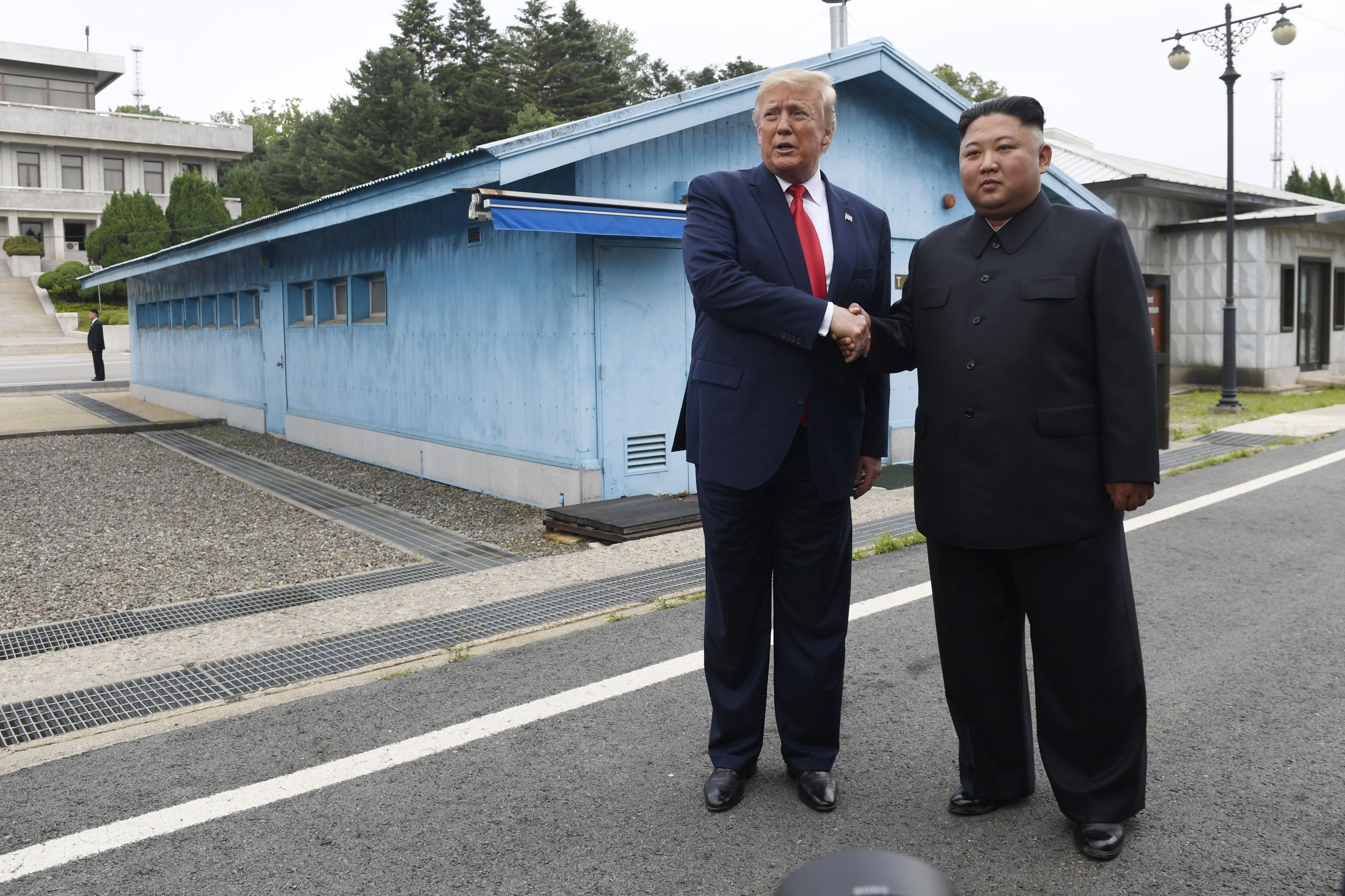
Whatever else one might say about Kim Jong-un's governance of the Democratic People's Republic of Korea, his decision to develop and demonstrate a credible nuclear arsenal has achieved its primary strategic objective with textbook efficiency -- it has made his country immune to exactly the kind of treatment that Iran is currently receiving.
It's beyond that. THIS is the kind of treatment North Korea's leader gets from the U.S. president whose retarded predecessor once called North Korea a part of the "Axis of Evil" ...
3
posted on
04/09/2026 8:36:14 AM PDT
by
Alberta's Child
(If I leave here, it’s because I’m tired of arguing with geriatric parrots wearing MAGA hats.)
To: Ultra Sonic 007
If America kills Iran’s nuclear capabilities, how does that cause worldwide proliferation of nuclear power?
4
posted on
04/09/2026 8:46:27 AM PDT
by
Jim W N
(MAGA "by restoring the Gospel of the Grace of Christ (Jude 3) and our Free Constitutional Republic!)
To: Chainmail
Wars are only won when you run your flag up the enemy’s flagpole.
I disagree. We won the Barbary wars.
Wars are won when the desired objectives are obtained.
5
posted on
04/09/2026 8:46:44 AM PDT
by
marktwain
(----------------------)
To: Jim W N
If America kills Iran’s nuclear capabilities, how does that cause worldwide proliferation of nuclear power?
Because other states see that only being a nuclear power is a guarantee against being invaded or having you military structure destroyed.
The author lists several examples. North Korea shows deterrence, Iraq, Libya, Ukraine show how the lack of nuclear capability allowed invasion and destruction.
6
posted on
04/09/2026 8:49:17 AM PDT
by
marktwain
(----------------------)
To: Ultra Sonic 007
I thought nation building was bad, so now not nation building is bad too?
Lots of good insight in the article however it does miss one main thread - the intent of the country to wreak havoc.
So, to continue the contrast between Iran and the DPRK, Iran, through its proxies, is firing missiles into other countries.
If the DPRK starts firing missiles into the ROK, I don’t think the nukes in their pocket are going to preclude a response. The response would first concentrate on their nuclear inventory.
And if they start with nukes, the response is nukes.
7
posted on
04/09/2026 8:49:48 AM PDT
by
fruser1
To: Ultra Sonic 007
8
posted on
04/09/2026 8:58:55 AM PDT
by
Bobalu
(Are you one of the men that just wanted to be left alone?)
To: fruser1
Lots of good insight in the article however it does miss one main thread - the intent of the country to wreak havoc.
Yes, that is a definite weak point. No mention of the context of Iranian fundamentalism and its often stated desire to destroy the United States and Israel, and to conquer its neighbors.
Of course, we have the example of Libya, which was co-operating with the West, and which was “rewarded” with invasion and destruction.
9
posted on
04/09/2026 9:09:52 AM PDT
by
marktwain
(----------------------)
To: marktwain
Ahh, the Libya bit.
If you recollect that one, the mistake was not so much not having nukes, but signing the Hague Treaty.
What sent everyone in (with the US “leading from behind”) was Khaddafi’s use of artillery on protestors, in direct violation of that treaty, which Libya was a signatory to.
So he was dutifully chastised.
10
posted on
04/09/2026 9:13:15 AM PDT
by
fruser1
To: marktwain
The Barbary Wars were won by American seapower, and finished by US Marines and sailors on the ground. (See the Battle of Derna and the raid to destroy the Philadelphia).
11
posted on
04/09/2026 10:17:30 AM PDT
by
Chainmail
(You can vote your way into Socialism - but you will have to shoot your way out.)
To: marktwain
I disagree. We won the Barbary wars. To his point, that required boots on the ground, not just shelling from ships (the standoff weapons of the era).
To: EnderWiggin1970
The “Boots on the Ground” did not conquer the Barbary states. They came close, and threatened it. They did not do it. They did not raise the American flag on the capitol cities.
13
posted on
04/09/2026 6:37:13 PM PDT
by
marktwain
(----------------------)
Disclaimer:
Opinions posted on Free Republic are those of the individual
posters and do not necessarily represent the opinion of Free Republic or its
management. All materials posted herein are protected by copyright law and the
exemption for fair use of copyrighted works.
FreeRepublic.com is powered by software copyright 2000-2008 John Robinson