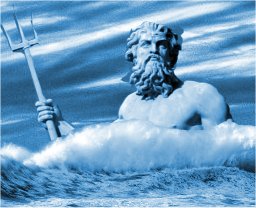
They call themselves Progressives.
Posted on 04/21/2022 6:39:08 AM PDT by algore
Granting rivers legal personhood represents a seismic shift from the bedrock belief in Western society that humans are at the apex of the natural world. But for many Indigenous people, the concept of nature as a sentient equal to humans is nothing new. In Maori culture, for example, ancestors, or tupuna, are embodied in the landscape.
“I see the river and the trees as ancestors,” says Uapukun Mestokosho, a member of the Mutehekau Shipu Alliance, the committee that advocated for the river’s legal rights. “They’ve been here long before we have and deserve the right to live.”
While the personhood movement reconceptualizes the relationship between rivers and people, granting non-human entities personhood is an existing Western concept applied to corporations that can bridge Western and Indigenous legal systems. “In the case of the Magpie River, Indigenous law is showing up in a language that Canadian law can understand,” says Lindsay Borrows, a law professor at Queen’s University in Ontario.
How these personhood declarations translate into legislation varies widely, from an overarching recognition in the case of the Whanganui River to a list of specific rights in the Magpie and Klamath. Other legislation recognizes natural entities as rights holders but stops short of personhood.
That’s the case with Los Cedros Biological Reserve in Ecuador, where a recent landmark ruling upheld the reserve’s constitutional rights against mining. Similarly, in central Florida, Lake Mary Jane guardians recently filed a case in state court to uphold the lake’s rights against encroachment—a first in America.
Personhood is a new legal tool, so it remains to be challenged in court. Yet part of its power lies in the ability to keep conflicts outside the courtroom. Instead, it relies on appointed guardians advocating on behalf of the river or forest. It also represents Indigenous law drawing a line in the sand.
“We want to send a message that we are a government for our nation,” says Shanice Mollen-Picard, a member of the Mutehekau Shipu Alliance. “We live in this territory, and we know how to protect it best.”
The river will want to go back to being an inanimate object once it finds out it owes back taxes ...
Human blood sacrifices to “save the planet” are not far off in the future if we do not defeat these crazy loons.
Brain damaged idea.
They call themselves Progressives.
So now we can murder it with the proper legislation or edict.
It’s actually quite a wealthy person. It has its own banks. Two of them
Ding! Ding! Ding! Ding! Ding! The winner by a knockout!
Oh oh. Don’t tell me. The Dems are going to let ‘it’ vote.
Granting rivers legal personhood represents stupidity.
Reminds a person that all cultures are NOT equal.
If this is acceptable ‘equivalence’, then cargo cults have as much validity as anything else.
It’s actually quite a wealthy person. It has its own banks. Two of them.
But will it float a loan?
That’s the current thinking, yes
So we can sue the rivers if they try to kill or harm us then? Fisherman slips, hurts himself, takes river to court
I think you have it backwards. We should encourage human sacrifices to “save the planet”!
The real,questions are: what race is the river? And is it gay? What pronouns does it prefer? Will it go to work for disney? Will it scream racism if it finds a pull rope on its banks?
And, babies in the womb?
Don’t laugh. There is a whole new wave of kids taught to believe that nature is people deserving of rights. Trees, rivers, rocks, minerals, whatever, will be able to sue in court.
“I see the river and the trees as ancestors,” says Uapukun Mestokosho.
Otzi (the guy found frozen in the Alps) probably thought the same kind of nonsense too.
But we aren’t cavemen anymore, okay? Not even you.
Disclaimer: Opinions posted on Free Republic are those of the individual posters and do not necessarily represent the opinion of Free Republic or its management. All materials posted herein are protected by copyright law and the exemption for fair use of copyrighted works.