It returns more quickly because the rod isn't bent as far.
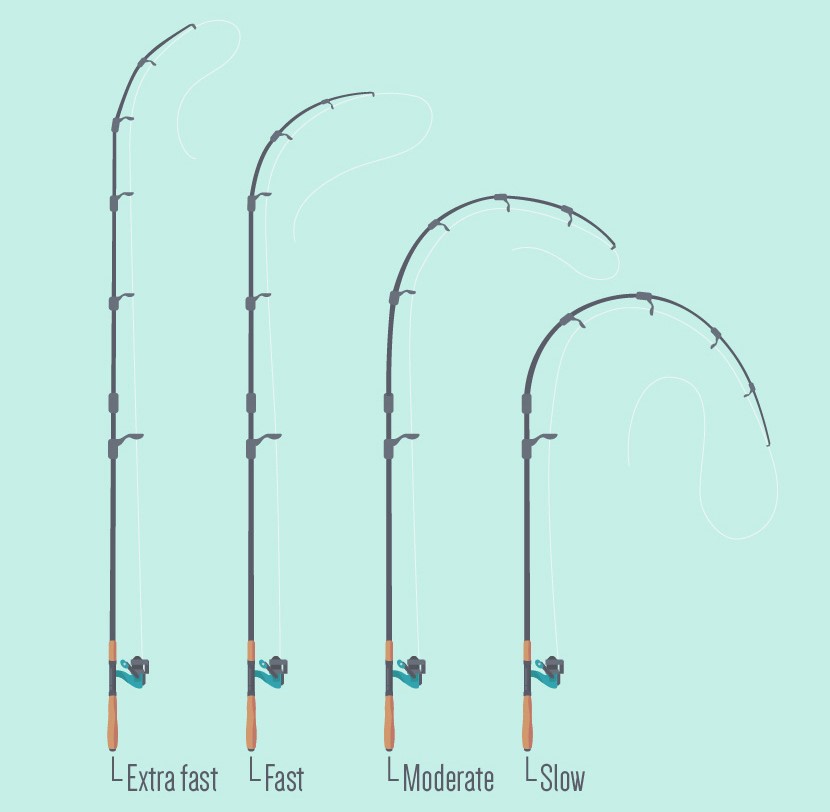
I should have said “medium action for an older rod”. Action refers to how quickly a rod returns to “straight” from a “bent” (curved) position, not how flexible or heavy duty it is.
Modern rods can be very “quick”. One thing that crosses me up a lot in casting is that I have a big variation in rod flexure and action even within rods nominally rated for similar line weights. Then there is grip length and more, and then often in an evening I may have a “hefty” combo out for catfish and another still in use for bluegill. More so if bank fishing in KY, as many location allow 3 or more line fishing, so, I might have 3 rods out, spaced 50 ft. apart or so, along a pond bank, and a 4th with me “roaming” as I try to find hot spots. Occasionally that results in some mad scrambles. (Stationary rods will be belled and in rod holders.)
Trout sometimes bite well into an evening in some waterbodies, so, then I may have a rod out for catfish and another for trout. (These are typically 2 line maximum trout ponds, but some get stocked with catfish too.)
Once in a while I change reel types too: baitcasting is a lot different than spinning is different from spincasting, and then fly casting is an entirely different planet!
Anglers who stick with high performance favorites can cast much more accurately, consistently, than I. OTOH, if one goes to our nearest trout “pond” (big pond) with a fly rod, and a big channel cat happens to inhale your offering, you have quite a task on your hands.
That said, my Dad, while fishing for bluegill, once landed a 26 lb. channel cat on a fly rod. His “salvation” was that the pond was so small, he could keep running around it and never quite ran out of line to play out.
It returns more quickly because the rod isn't bent as far.