"If" and "a magic wand" are hypotheticals, interesting on one level and millennia old on another.
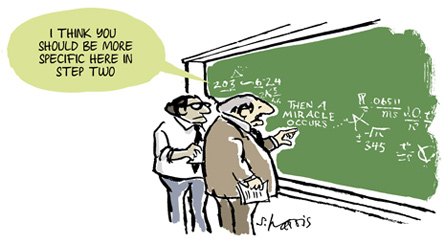
Stepping away from theological foci, here's a favorite cartoon in my estimation, addressing science's "magic."
It's an interesting question. The only chink in the argument is a presupposition that one has a right to being saved from your chosen destruction. Maybe a tough one, even between humans, because it pits the potential fault or guilt of the parent against the real fault of the son.
“The only chink in the argument is a presupposition that one has a right to being saved from your chosen destruction.”
If by “right” you mean “deserve”, in other words, “do you deserve to be saved from the consequences of your choices?” then consider this.
Do you think anyone would choose to do something that would make him miserable and even kill him if he knew that would be the results (consequence) of his choice?
The reason people make poor choices (choices with bad consequences) is because they’re incapable of seeing and appreciating those bad consequences. It’s like a two year old running into the street to get the ball unaware that that choice might kill him.
Does he deserve to be saved by a loving father that knows better?
"If" and "a magic wand" are hypotheticals, interesting on one level and millennia old on another.
Stepping away from theological foci, here's a favorite cartoon in my estimation, addressing science's "magic."