In the General/Chat forum, on a thread titled Why You Can’t Trust Drug Side Effect Information! | Doctors and patients rely on drug side effect information found in online databases. What if that evidence is flawed?, Lou L wrote: Lou L wrote: Right...you should stop and reflect. You should also understand how this data is collected and reported.
You are using adverse events and percentages of incidence from two different populations: obese and those with diabetes. They are not the same. Full stop. End of story.
ransomnote: No, not full stop and end of story. We can't rule out the possibility that the data is misreported. Both groups could have been higher, both groups could have been lower. One might have been higher. Just saying 'they are different' is an observation, not an explanation.
Covid Vax example: Peter Doshi (British Medical Journal) looked at Pfizer trial data. Pfizer used the PCR and separated trial participants (post exposure) into Covid Positive with symptoms, Covid Positive without symptoms, and Covid Negative with symptoms. Pfizer then ignored 'Covid Negative with symptoms' from that point forward. Doshi correctly wanted to know why they didn't investigate what sort of illness that last group had.
The answer could profoundly impact the 'efficacy' rating of the 'vaccine', and we now know that the vax was never tested for transmission, according to Pfizer (pg 46) and Moderna (page 48) FDA filing.
'Data Gaps'
Anyone younger than age 18 or older than age 55
Pregnant or lactating mothers
Auto-immune conditions
Immunocompromised individuals
No data on transmission of covid
No data on preventing mortality from covid
No data on duration of protection from covid
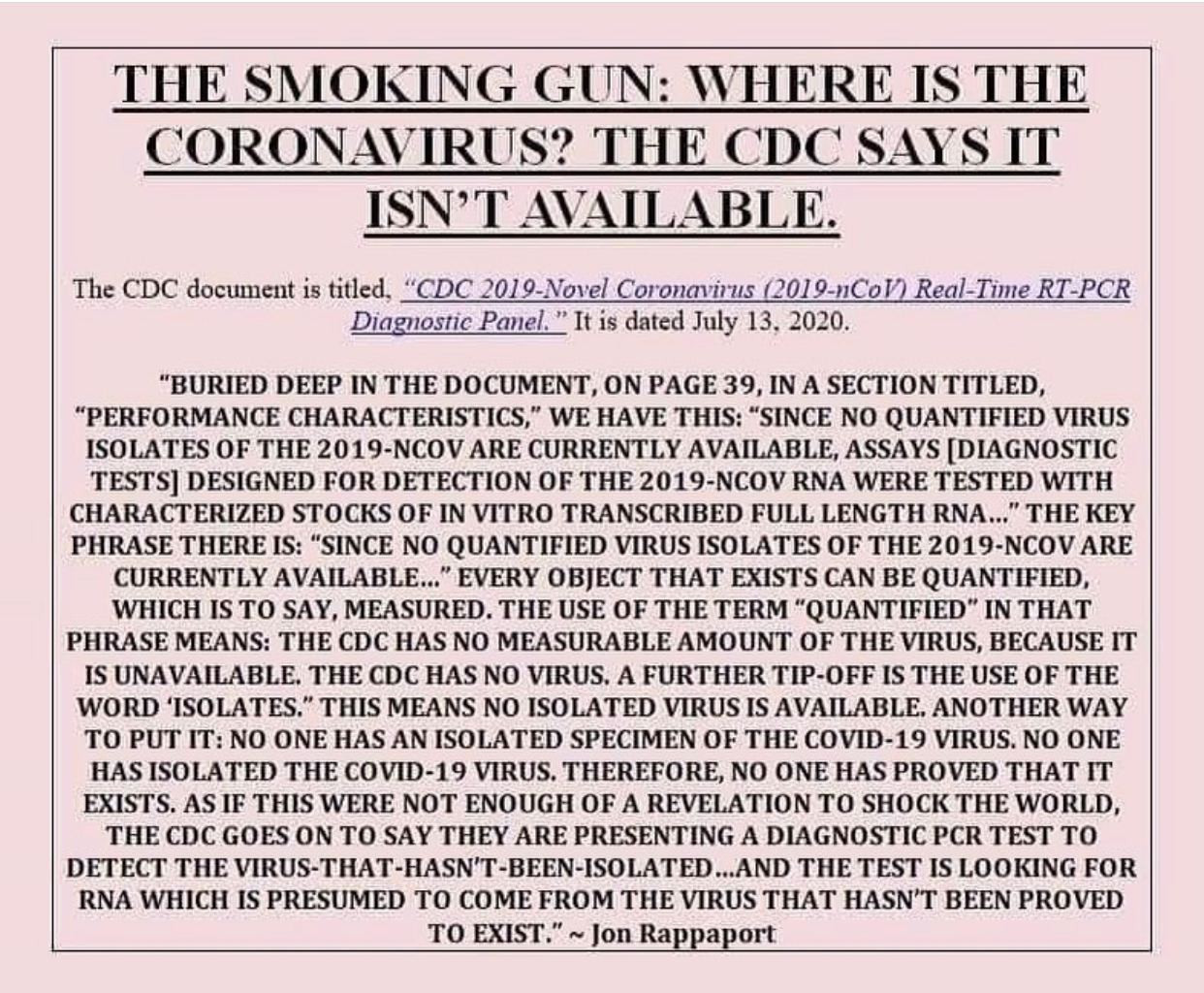
We also know that the PCR used during Covid, and for vaccine trials, tested for a 'related coronavirus' instead of testing for the presence of the actual Covid virus because the CDC said no isolated samples of Covid were available when it was developed.
Lou L wrote: You're also dealing with much smaller numbers. Clinical trials try to obtain a diverse representation of the targeted population, but people are different. Some are more sensitive to feeling nausea than others. Statistics are extrapolated, but the potential adverse effects listed in the patient insert may not be what you experience. Even trial to trial, among patients with the same disease state the percentages of reported adverse events won't likely be the same.
There are people on FR that look for boogeymen behind every pharmacy bottle. In a few cases, it might be justified--I'm not excusing any of the C19 vaccines--but in a great majority of cases clinical trials follow the scientific method and are doing their best to offer life-saving or improving medicines.
ransomnote:
When I looked for these side-effects of these weight loss drug profiles online, there was no mention of potential vision impairment. But if you search, you find data that should concern people.
We went blind after using weight-loss drugs like Ozempic and Mounjaro
EXCERPT:
A review conducted by physician-scientists from the University of Utah’s John A. Moran Eye Center published in JAMA Ophthalmology on January 30, 2025, looked at nine patients who reported vision loss after taking semaglutide or tirzepatide, the active ingredients in Ozempic, Wegovy, Mounjaro and Zepbound.They found the patients taking these drugs developed three potentially blinding conditions affecting the optic nerve — the part of the eye that sends visual signals to the brain.
Of the nine patients, seven reported NAION-like symptoms; one had papillitis, an inflammation of the optic nerve head; and one individual developed paracentral acute middle maculopathy, which can cause a blind spot in vision.
The January study came on the heels of July 2024 research from Mass Eye and Ear, a teaching hospital at Harvard Medical School. It found an association between semaglutides and an increased risk of NAION.
In the General/Chat forum, on a thread titled Why You Can’t Trust Drug Side Effect Information! | Doctors and patients rely on drug side effect information found in online databases. What if that evidence is flawed?, NautiNurse wrote: If there were a psychological factor at work, it should not have been that different!
Why not? Ozempic is prescribed for people with DM2 who are most likely obese. Wegovy is for people who are obese without DM2. Two different populations and motivations.
ransomnote: That's not an explanation - it's a detail which requires investigation. We don't know if the disparity is due to population, and/or other factors like incorrect reporting. For example, the drug cannot gain approval if the results are not better than placebo, so a drug company could elevate reporting for the placebo group to gain approval. Why assume the best outcome possible when pharma has shown its backside to the world and we're still dealing with the fallout?
Pfizer fought in court to refuse to release trial data for 75 years because what it reported to the public during vaccine rollout did not match what it found in it's trial data. Unfortunately, it looks like some are still willing to blindly trust pharma and make whatever necessary assumptions to excuse them.
NautiNurse wrote: A pharmacist recently told me the most frequent complaint he hears about the semaglutide drug class: "It makes me feel full, not hungry." Doh!
ransomnote: It's quite likely any experiencing gastric paralysis or blindness while taking these drugs would not go to a pharmacist for help.