I still not sure why someone hasn’t built a hybrid where the gas motor only powers the battery, and is not part of the drive train. My guess is that the government incentives are not there.
The motor would be able to run at the most efficient point on its power curve, and would not have to be large-displacement, high HP unit. A small, air-cooled engine may do the trick.
It would reduce the complexity compared to modern hybrids which have both motors connected to the drive train. It would also be a source of heat in colder regions and would give the owner an alternate way to keep the vehicle going where charging stations or time are at a premium.
How Much Do Electric Vehicles Cost to ‘Fill Up’ Compared With Buying Gasoline?
A 15 city comparison of EV vs ICE costs.
https://archive.vn/AHI2d#selection-335.5-335.83
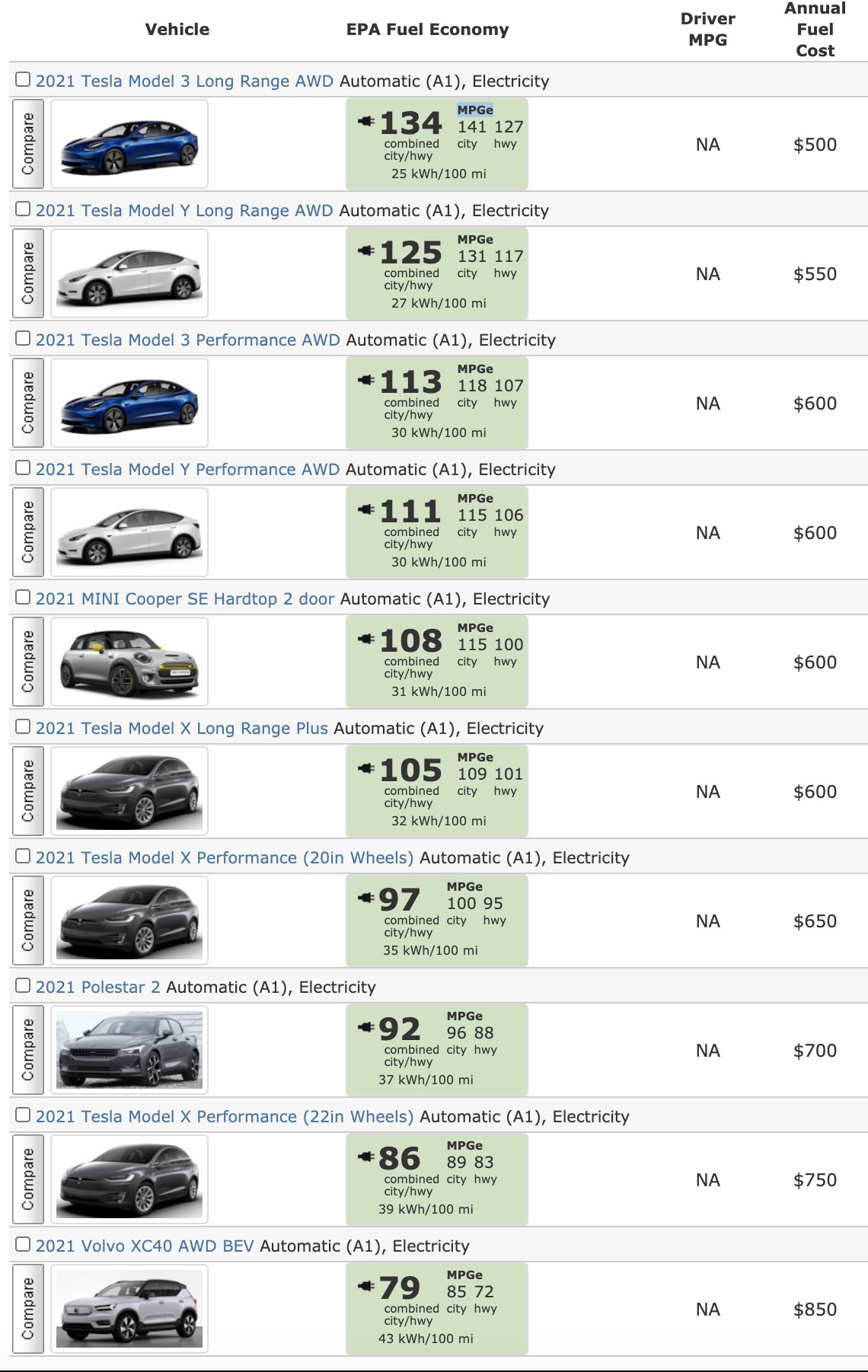
I calculated for the Model Y stats (27Kwh per 100 miles) versus a 33mpg gasoline car with $3 per gallon gas.
The break even fuel cost per Kwh is $.32 (32 cents per Kwh)
I suspect the answer is that current at home prices are below that but that the commercial charging stations will charge more.
Now, all we have to do is get decent EV cars for about $20K, millions of charging stations and enough time to charge up. It looks to me like EV will be short haul vehicles for upper middle and upper income people with home, off street, parking and charging capabilities. Where I live on the west coast of Florida, that’s a decent size demographic. In small town New Hampshire, where I used to live, not so much.