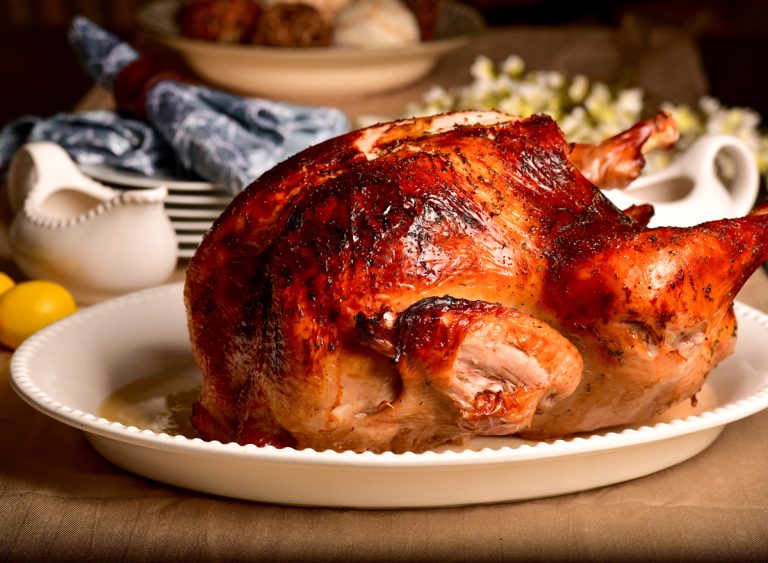

Butterball
Verdict: If you failed to secure a turkey before Thanksgiving and this is all that’s left, it’s a fine choice but it’s not going to bring rave reviews.
Shady Brook Farms
Verdict: This one was pumped full of brine and additives, so it had a nice flavor, but the flesh didn’t have that nice mouthfeel; therefore, it’s a decent bird but not a standout.
Harris Teeter
Verdict: A great choice and certain Thanksgiving-crowd pleaser as long as you (and your guests) don’t mind the addition of sodium phosphate.
Nature’s Rancher
Verdict: If you don’t want to spend the extra money for an organic bird, which can range from $3.99 a pound or more, this is a great choice with good flavor. Just do your own home brine before cooking to amp up the moistness.
Organic Prairie
Verdict: With no additives of any kind and being USDA certified organic, the only thing this bird fell a little short on was moisture. But that’s easy enough to remedy with a home brine, and then you get the ultimate tender turkey that also tastes like real meat and not mush.
How we did it
For how we cooked the turkey, we kept it super simple to remove a lot of variables that could possibly skew results. We went with a recipe that includes “spatchcocking” the bird, which is just cutting out the spine, flipping the bird over and pressing down on the breastbone until it cracks, allowing you the flatten it out on a roasting tray. This allows for quicker cooking, and a more even roast because the cool and moist inner cavity is no longer skewing how fast or slow certain parts (legs versus breast) get cooked to the proper temperature.
We dried the bird, applied a tablespoon of canola oil to each side along with two tablespoons of freshly ground black pepper, and, for the turkeys that weren’t brined, one tablespoon of Kosher salt.
Our oven was set to 450 degrees and after an hour of cooking, a Bluetooth meat thermometer was stuck deep into the breast and set with a 150-degree alarm. Once that went off—most of them only took about an hour and a half to cook—the legs were then checked to make sure they hit the 165-degree mark. When all temps were OK, the bird was taken out and left to rest for 5 minutes before carving and taste testing.
Each taste tester was given skin-on breast meat along with a chunk of leg and thigh meat. They were tasked with studying the meat for tenderness, texture, and flavor, and then ranked each according to a one-to-five scale and they wrote down comments.
My sister discovered roasting the bird upside down.
It works.
Cornish Game Hen?