How many FReepers know the etymology of the word "Essanay" and why the museum in Fremont is named "Essanay"? It's a fascinating story (pardon me for going slightly OT here):
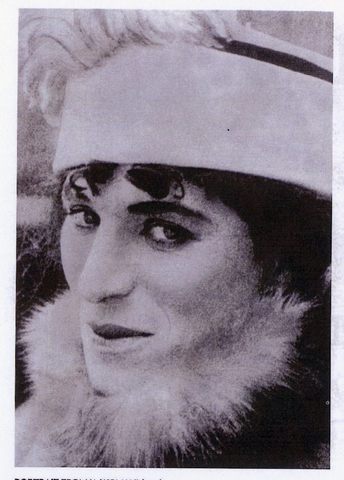
Finally, look how far ahead of his time Chaplin was! Chaplin in "A Woman," 1915:Essanay - Chaplin Brand
By Jeffrey Vance, adapted from his book Chaplin: Genius of the Cinema (New York, 2003) © 2009 Roy Export SASIf the early slapstick of the Keystone comedies represents Chaplin’s cinematic infancy, the films he made for the Essanay Film Manufacturing Company are his adolescence. The Essanays find Chaplin in transition, taking greater time and care with each film, experimenting with new ideas, and adding flesh to the Tramp character that would become his legacy. Chaplin’s Essanay comedies reveal an artist experimenting with his palette and finding his craft.
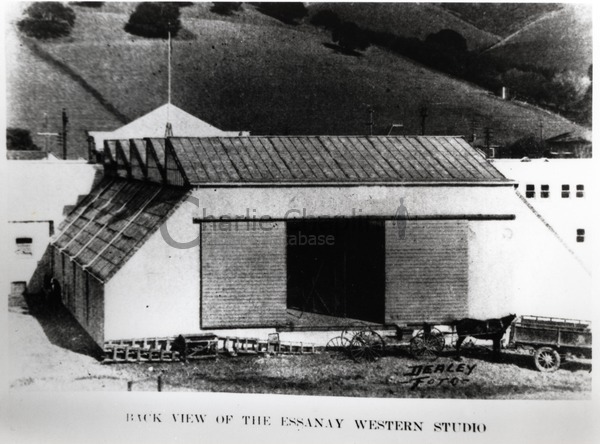
After the expiration of his one-year contract with the Keystone Film Company, Chaplin was lured to Essanay for the unprecedented salary of $1,250 per week, with a bonus of $10,000 for merely signing with the company. The fourteen films he made for the company were distinctly marked and designated upon release as the “Essanay-Chaplin Brand.” The company’s headquarters were in Chicago, Illinois, and the company had a second studio in Niles, California [today, "Niles" is an historic district of Fremont, CA, no longer a separate town]. The name Essanay was formed from the surname initials, S and A, of its two founders: George K. Spoor, who provided the financing and managed the company, and G.M. Anderson, better known as “Broncho Billy” Anderson, cinema’s first cowboy star.
Essanay began in 1907 and a year later became a member of the powerful Motion Picture Patents Company. Chaplin’s one year with the company was its zenith. The studio foundered after Chaplin left to join the Mutual Film Corporation and finally ceased operations in 1918. Essanay would most likely be largely forgotten were it not for Chaplin’s early association.
While no single Chaplin film for Essanay displays the aggregate transformation to the more complex, subtle filmmaking that characterizes his later work, these comedies contain a collection of wonderful, revelatory moments, foreshadowing the pathos (The Tramp), comedic transposition (A Night Out), fantasy (A Night Out), gag humor (The Champion), and irony (Police), of the mature Chaplin films to come.
The most celebrated of the Essanay comedies, The Tramp is regarded as the first classic Chaplin film. It is noteworthy because of Chaplin’s use of pathos in situations designed to evoke pity or compassion toward the characters, particularly the Tramp. An innovation in comedic filmmaking, The Tramp dares to have a sad ending. Pathos also appears in The Bank, in which Charlie’s heart is broken when the object of his affection throws away the flowers he has given her and tears up the accompanying love note.
Chaplin infuses the Essanay comedies with a number of other innovations. The first is comic transposition. In A Night Out, his second film for Essanay, the Tramp, thoroughly inebriated, gently puts his cane to bed, “pours” himself a glass of water out of a candlestick telephone, and uses toothpaste to polish his boots. Chaplin also employs fantasy for the first time in the Essanays films. In A Night Out, as Ben Turpin pulls the Tramp along the sidewalk, he believes that he is floating among flowers on a river. Chaplin’s own style of gag comedy develops in the Essanays, exemplified in The Champion, in which a David-like Tramp receives the assistance of his loyal bulldog to best his Goliath-like boxing opponent. Irony, a hallmark of Chaplin’s mature work, appears for the first time in the Essanays. Irony is conspicuous in Police, in which an evangelist implores the Tramp (who has just been released from jail) “to go straight” but is later revealed to be a pickpocket himself. Finally, Chaplin first utilizes several other devices in the Essanay comedies that will become signature features of his later films: dance (Shanghaied), the equivocal ending (The Bank), and the classic Chaplin fade-out (The Tramp).
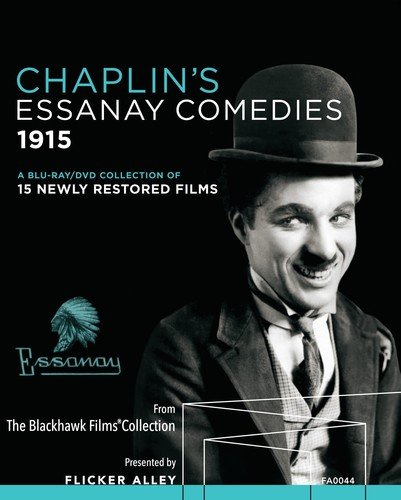
You can still buy Chaplin's Essanay Comedies. I've got them on my home video server.