

Posted on 06/10/2026 7:13:12 AM PDT by Ultra Sonic 007
WASHINGTON (CN) — The Justice Department’s Office of Legal Counsel released an opinion Tuesday concluding the U.S. Equal Employment Opportunity Commission’s guidelines prohibiting policies that unintentionally harm minority groups, known as disparate impact liability, are unconstitutional.
The Office of Legal Counsel issued the opinion in response to the Supreme Court’s June 2 decision in Allen v. Milligan. There, the justices blocked a lower court order prohibiting the use of Alabama’s 2023 electoral maps after finding the court failed to consider if Republican lawmakers were acting with good faith when leaving Black voters in the minority in all but one congressional district.
“EEOC’s Title VII guidelines are unconstitutional because they contemplate liability based on disparate effects alone, without regard to an employer’s likely intent, and pressure employers to engage in race-based decision-making,” the Office of Legal Counsel wrote. “Properly understood, disparate-impact liability proscribes only those practices that reflect a significant likelihood of intentional discrimination.”
The Office of Legal Counsel determined the EEOC’s guidelines amount to an unconstitutional reading of Title VII of the Civil Rights Act of 1964 because the commission’s historic approach “divorces liability from circumstances” and thus functions as a “qualified racial-proportionality mandate.”
Specifically, the guidelines wrongfully expanded the 14th Amendment’s guarantee of equal treatment to also guarantee equal outcomes.
Previously, under Title VII, employment discrimination plaintiffs had to show significant statistical disparities caused by specific policies. For an employer to contest the claim, they had to show the policy served a legitimate business purpose, after which a plaintiff must show that a less discriminatory alternative exists in order to succeed.
In the opinion, the office suggested three corrections to “resolve the tension between [disparate-impact] claims under [Title VII] and our colorblind Constitution,” citing the Allen decision and replacing the terms “vote-dilution claims” and “Section 2 of the Voting Rights Act of 1965.”
First, the Office of Legal Counsel said the “business-necessity” defense should not be a high bar, as employers should only be required to show a challenged practice is rational, convenient or helpful for a valid business purpose. Further, employment practices are presumptively job-related and only irrational or arbitrary practices with no plausible relation can create disparate-impact liability.
Second, plaintiffs need to satisfy a “robust causality requirement” and show the challenged practice itself caused the disparate impact, not external factors or other practices.
Third, plaintiffs have to provide evidence of an alternative practice that is both less problematic and would be equally effective in serving the employer’s valid business purpose.
“Workplace requirements and selection procedures — such as background checks, aptitude tests and SAT scores — are presumptively job-related,” the Office of Legal Counsel said. “Only irrational or arbitrary practices with no plausible job-relatedness can create disparate-impact liability. Disparate-impact plaintiffs must both establish that the challenged employment practice specifically caused the alleged disparate impact and provide evidence that an equally effective alternative practice causes less disparate impact.”
Acting Attorney General Todd Blanche — who President Donald Trump formally nominated for the attorney general gig yesterday — slammed the EEOC’s longstanding guidelines in a statement.
“Despite trying to promote equality, EEOC’s disparate impact liability interpretation under Title VII actually fosters the very discrimination its guidelines seek to address,” Blanche said. “This opinion will now allow businesses to hire based on performance, restoring equal opportunities in the American workplace.”
The Trump administration has long focused on disparate-impact liability, decrying the policy as a key factor behind diversity, equity and inclusion policies.
On April 23, 2025, Trump issued an executive order titled “Restoring Equality of Opportunity and Meritocracy,” which pushed for the elimination of all federal disparate-impact liability policies.
“Disparate-impact liability all but requires individuals and businesses to consider race and engage in racial balancing to avoid potentially crippling legal liability,” Trump wrote in the order. “It not only undermines our national values, but also runs contrary to equal protection under the law and, therefore, violates our Constitution.”
The opinion also cites the Supreme Court’s decision in Louisiana v. Callais, which gutted Section 2 of the Voting Rights Act and its long-standing prohibition against voting maps that result in a minority group’s voting power being diluted.
The conservative majority determined such maps can only be deemed unlawful if there is clear intent to dilute a minority’s voting power, rather than when a map simply has that impact.
EEOC Chair Andrea Lucas, a Trump appointee, welcomed the conclusion in an emailed statement and said it would clarify the “constitutional limits of disparate impact in employment discrimination matters.”
Trump, more of this stuff, please!
Disparate impact theory is the reason we have fat first responders, and females who can’t meet the genuine needs of the job. Lots of other negative impact in terms of barring tests, etc. Getting rid of it would be a lot bigger than most people think.
This is a structural change, a shift in the very foundation EXCISING THE built-in racist polices that have polluted or politic!
Yep, has been one of the precursors to DEI (didn’t earn it)
I don’t think most people understand how earth-shatteringly huge this is.
Trump, more of this stuff, please!
I see your point, and yet call me skeptical with it’s implementation and resilience.
Finally! But you know this will go to court.
One of many things that will be undone when Trump leaves office.
Everything Trump has done should be being pushed through congress legislatively, but congress won’t do that because most do not want to do what’s good for the country, let alone cooperate with Trump.
+1000!
Between a do-nothing Congress and a hostile judiciary, very little of Trump’s legacy will survive past his term.
I do! I was in HR when this first was initiated. Hated the term and and pretty much ignored it best I could.
Customer service people on the phone who mumble and cannot speak basic English...and HATE customers.
“one of the precursors to DEI (didn’t earn it)”
More than the precursor. It’s the foundation, the very cornerstone.
Disparate impact theory is the reason we have fat first responders...
Add in the Deep State that has gone dormant but not eliminated. It will spring back to life after Trump leaves office.
Just to be clear, for those who don't know, disparate impact theory does not mean that you are deliberately adopting some other test for the purpose of discriminating on the basis of race. No proof or even inference of intent is required at all. In fact, even if you can prove you had an intent to minimize the impact on race, you can still be found liable under disparate impact theory.
Agree, has been the case where even when you may have been trying to address it, the end result was changed to make it even more racist because minimizing it was not enough, it was often used to ensure a more racist outcome, always in favor of the left.
The lawyers using this statute knew full well it was a political one.
Not just regular fat but lesbian fat:
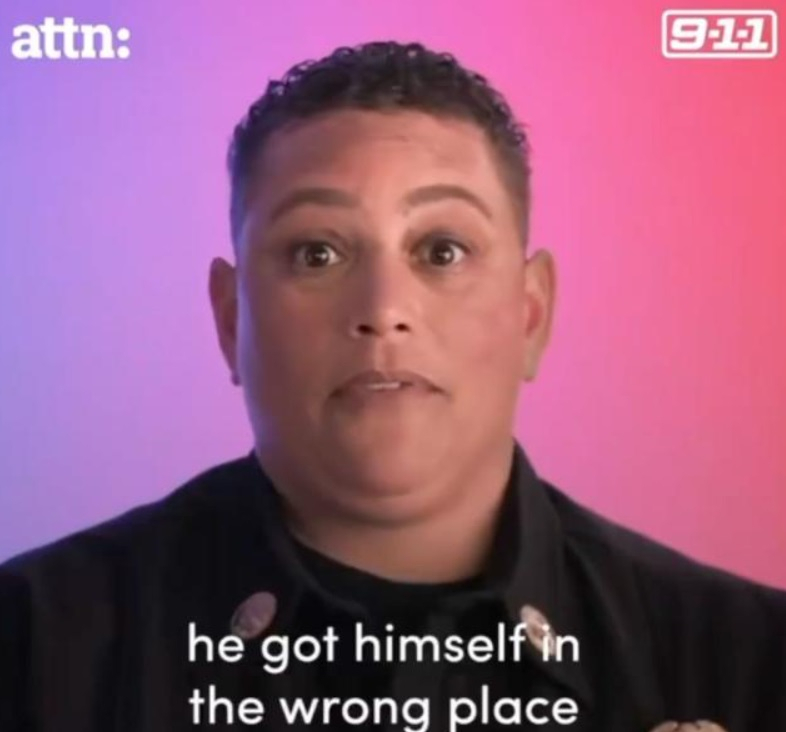
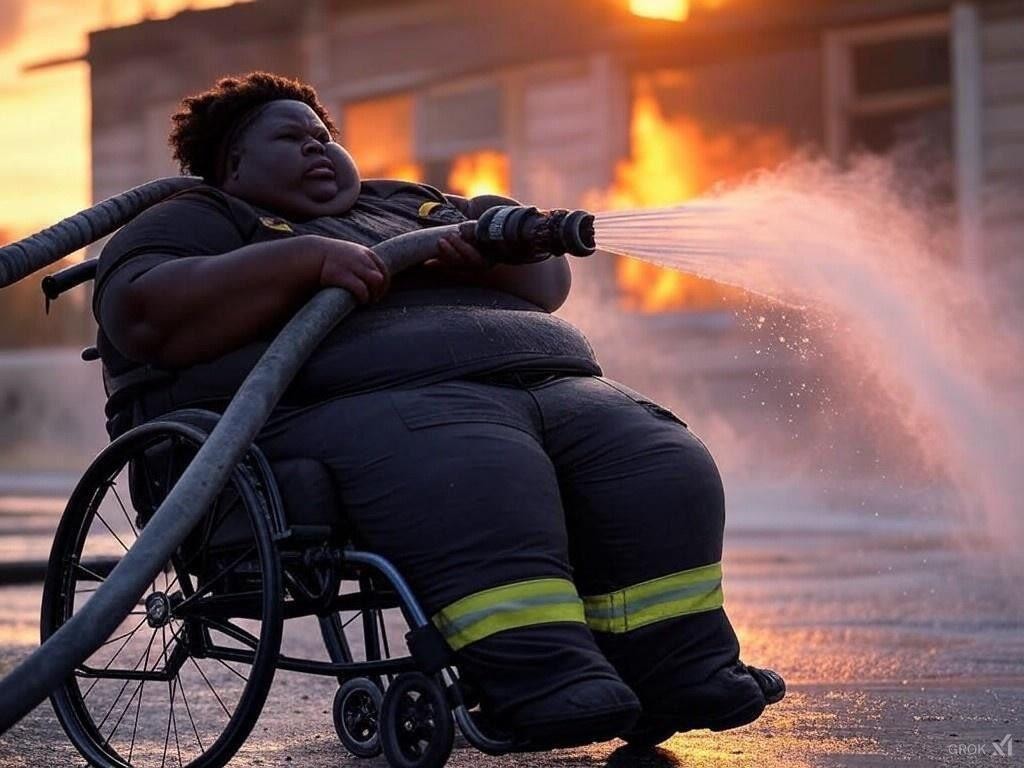
Do facts matter at all?
Each side is NOT in the slightest concerned about Race. Each side is solely concerned about R or D. That is the fact.
Disclaimer: Opinions posted on Free Republic are those of the individual posters and do not necessarily represent the opinion of Free Republic or its management. All materials posted herein are protected by copyright law and the exemption for fair use of copyrighted works.