
Click The Logo To Donate
Posted on 04/12/2003 1:00:30 PM PDT by MangoCrazy
Since the Saddam Hussein statues were torn down around Iraq, many Israelis have stopped carrying their gas masks despite almost daily exhortations by defense minister Shaul Mofaz to keep them close and not dismantle their sealed rooms since the danger is not over. His concern has draw sneers from some army veterans and pundits, making him the butt of jokes about “overreaction”. Some information about the sinister tools of death that are believed cached in remote al Qaim up against the Syrian border might lead to a better appreciation of the peril. However, Israeli officials are keeping what is known or suspected strictly to themselves.
Drawing on its intelligence sources, DEBKAfile lifts a few of the veils shrouding this remote corner of Iraq and the difficulties of its exploration.
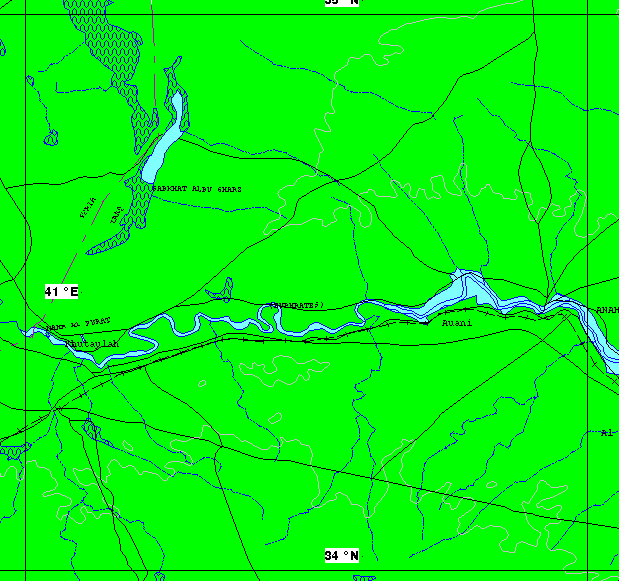
Aerial photos over al Qaim in northwestern Iraq have revealed a cluster of long, hangar-like structures with large steel doors some 12-14 meters high and 15-20 meters wide, the size of sheds housing heavy fire trucks. In frequent passes overhead, spy satellites and reconnaissance aircraft have picked up surface indications of the hidden presence of nuclear, chemical or biological materials. They have not ruled out al Hussein surface to surface missiles being held ready there to deliver unconventional warheads. Some of the Scuds fired against Israel in 1991 were launched here. Signs of chemical emissions have been detected in the deep canyons riddling the Al Qaim region, most of them concealed from overhead view by overhanging cliffs. More impenetrable hiding places are to be found along the Euphrates river banks, which are densely overgrown thanks to the rapids splashing down from the mountains.
Coalition forces have refrained from going straight in to Al Qaim to establish once and for all what weapons are hidden there for several reasons. Its installations are the most heavily guarded in Iraq – more even than Saddam Hussein’s own bunker fortresses in Tikrit. The brigade of especially trained, crack Special Republican Guards loyalists guarding al Qaim have proved impervious to tempting coalition offers to surrender, preferring to defend the site with their lives. The coalition command has tried limited air and ground assault, including even what is termed “unconventional warfare direct-action missions”, but until this weekend made little progress.
Unlike other parts of Iraq, where resistance quickly melted away, the defenders of al Qaim have put up a professional, tenacious and dedicated fight. Military sources told DEBKAfile that had coalition forces confronted this quality of combat in the rest of Iraq, they would still be pinned down at Nasiriya in the south after three weeks of fighting. The Iraqi defenders are making skilful use of al Qaim’s daunting topographical features which make it impassable for heavy tanks. The attacking force is therefore obliged to fight in this Tora Bora-like redoubt from canyon to canyon, hilltop to hilltop, bush to bush.
In the last 24 hours, US forces have seized the strategic intersection of Highways 11 and 13 leading into Syria, a major step towards cutting off the overland escape route of Iraqi forces and top members of Saddam’s hierarchy. However, it is not impermeable. The Euphrates River and its banks provide alternative routes for slipping across into Syria.
The attached map shows the position of the Syrian town of Abu Kamal on the orange line marking the 500-km long Syrian-Iraqi border, the hometown of the Syrian vice president Khalim Haddam, which made him President Bashar Assad’s natural choice for heading the pro-Iraqi faction of his regime.
The Americans are not using their heavy air and missile power to hit the hangar-like structures until they know for sure what they contain. If what they suspect is true, an American bombardment could serve Saddam’s purpose even better than launching his own missiles. American bombs plus al Qaim’s variable wind currents could release dangerous substances into the air over American troop concentrations in Iraq, as well as Israel, Jordan and Saudi Arabia, and even Turkey, Lebanon and Syria, without Iraqi having to send a single missile.
Al Qaim and its horrific secrets look like Saddam’s last card, or the first on the deck of 55 leaders handed out to American troops. There is no knowing if he will play this ace, activating WMD when American forces are within a pace of laying hands on him or his sons, or have managed to penetrate al Qaim’s mysterious structures.
As to the nuclear radiation detected at al Qaim, the Iraqis are known to have extracted uranium for their nuclear weapons program in the 1980s. More recently, satellite photographs suggested Iraq may have rebuilt a uranium extraction facility there, possibly under the big hangars or at the bottom of the canyons. For all these reasons, coalition forces are tackling their task in this region 170 km northwest of Baghdad with extreme caution.
No MOAB.
We shouldn't bomb it unless we want to destroy the evidence.
FReegards...
Who here actually believes that the US military would say such a thing to Debka or anyone else?
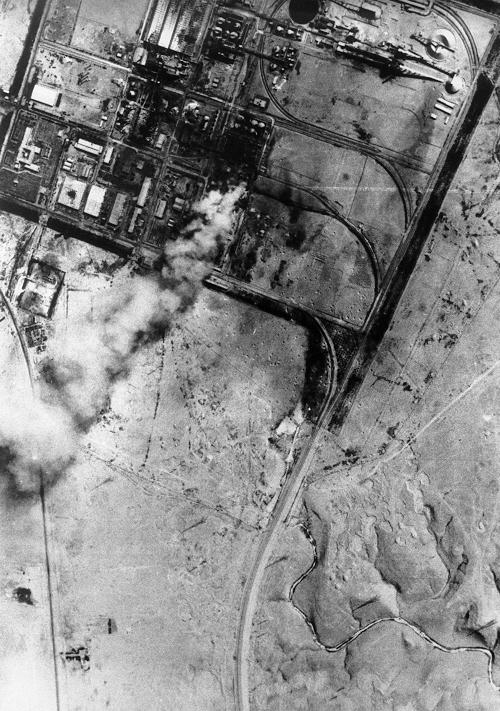
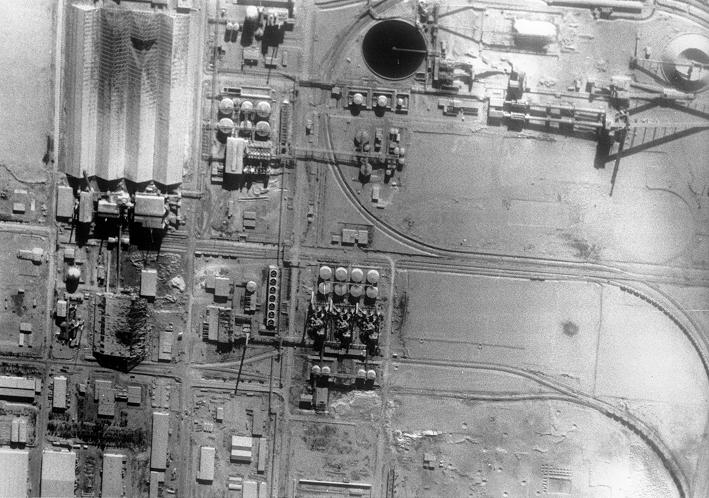
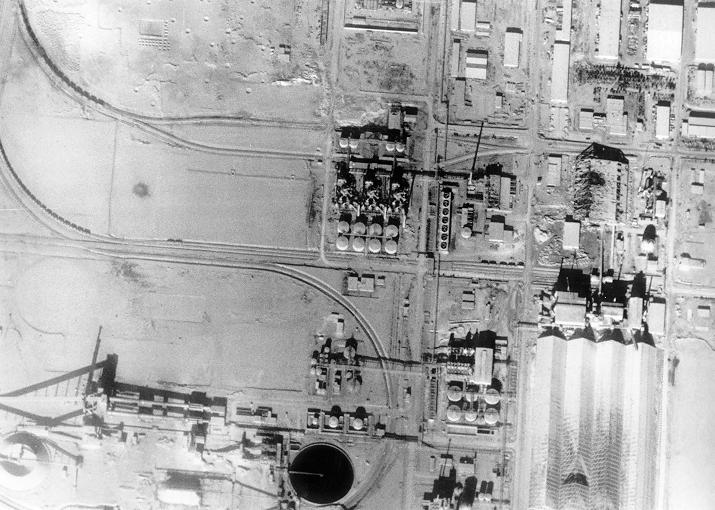
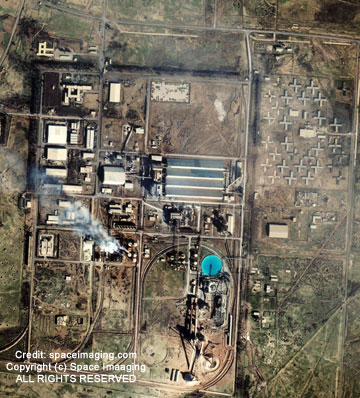 High-resolution commercial satellite imagery shows an apparently operational facility at the site of Iraq's al Qaim phosphate plant and uranium extraction facility (Unit-340), located in northwest Iraq near the Syrian border. This site was where Iraq extracted uranium for its nuclear weapons program in the 1980s. The al Qaim site was thoroughly destroyed by aerial bombing during the 1991 Persian Gulf War. Given the absence of International Atomic Energy Agency (IAEA) Action Team inspectors on the ground since December 1998, however, this image raises questions about whether Iraq has rebuilt a uranium extraction facility at the site, possibly even underground. Iraq could have used parts salvaged from the bombed facility or new equipment bought illegally to reestablish this capability. Unless inspectors go to the site and investigate all activities, the international community cannot exclude the possibility that Iraq is secretly producing a stockpile of uranium in violation of its commitments under Security Council resolutions. The uranium could be used in a clandestine nuclear weapons effort. History of Al Qaim In January 1976, Iraq contracted with a Belgian company for the construction of a chemical fertilizer complex at al Qaim. By the second half of 1982, the unit for ore concentration at al Qaim was processing phosphate ore from the Akashat mine, located southwest of al Qaim. In 1982, Iraq ordered the construction of a uranium extraction facility at the al Qaim site. The Belgian contractor, Mebshem, commissioned the facility at the end of 1984. Additionally, Mebshem trained Iraqi technical personnel to operate the uranium extraction unit. The unit was designed to produce 54 tonnes of uranium peroxide(UO42H2O) per year-assuming continuous production of phosphoric acid at 150 m3/hr, and uranium content in the phosphate of 75 parts per million (ppm). The uranium extraction facility at the al Qaim complex never reached maximum production. Through January 17, 1991, when Coalition forces bombed the facility, total production at the site was 170 tonnes of uranium peroxide, containing 110 tonnes of uranium. The relatively low output was due to: technical problems in the phosphoric acid unit; phosphate ore that yielded 40 ppm uranium as opposed to 75 ppm; technical problems in the piping connecting the phosphoric acid unit and the uranium production unit; technical problems with the rubber lining of the phosphoric acid tanks; and diversion of phosphoric acid directly to the fertilizer production unit rather than via the uranium unit. The uranium that was produced at the unit was transferred directly to the secret nuclear weapons program in 11 separate shipments. Any unused uranium at the time the Action Team inspections started in 1991 was placed in a store at Tuwaitha. (For more information about and images of Tuwaitha, click here)
 1.TARPS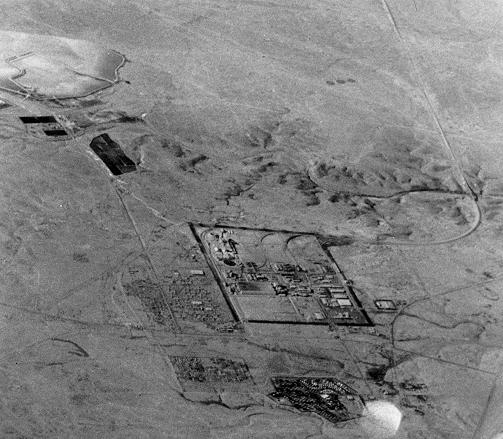
It's pretty obvious Syria and it's size 6 leader (who reminds some of the son of Cromwell or whoever it was in the movie Braveheart) is the next choke point to be shut.
Disclaimer: Opinions posted on Free Republic are those of the individual posters and do not necessarily represent the opinion of Free Republic or its management. All materials posted herein are protected by copyright law and the exemption for fair use of copyrighted works.