Posted on 09/08/2026 6:08:06 AM PDT by Twotone
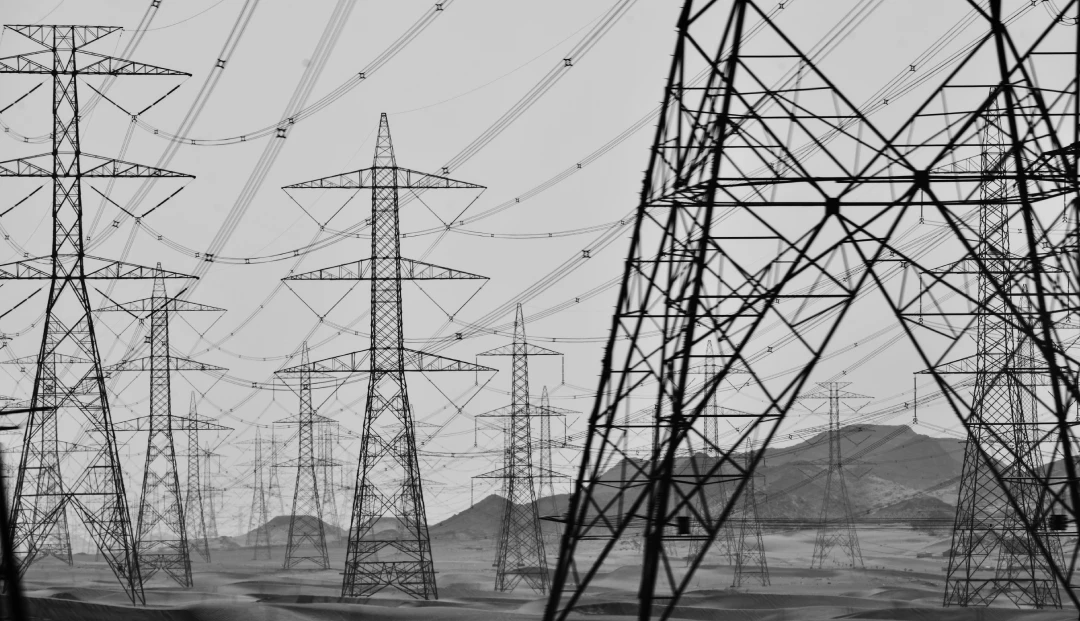
The Department of Transportation wants to lease highway and railroad land to private companies for power lines — a plan it says could potentially save Americans on their electricity bills.
Transportation Secretary Sean Duffy announced America’s Great Corridors of Commerce (AGCC) on Aug. 26 in a press release as a way to speed up construction of transmission lines, fiber-optic cables, water lines and pipelines. The program would reduce infrastructure costs, place “downward pressure on residential user rates,” meaning lower electric bills for households, and generate lease revenue for transportation projects at no additional cost to taxpayers, DOT said in the release and in a request for information (RFI) published Aug. 18.
“By working with the private sector to combine our existing transportation network with transmission lines, fiber optic cables, and other critical infrastructure, we can make energy more affordable and fuel American industry for generations to come,” Duffy said in the press release.
A DOT official told the Daily Caller News Foundation that no corridors have been selected and that the department will run a competitive process to seek expressions of interest from state transportation departments and railroads. Savings would vary project by project, the official said, but clustering data centers and manufacturers along a single corridor would avoid piecemeal grid upgrades and protect “everyday ratepayers from the rate hikes typically needed to fund scattered upgrades,” meaning the cost of those grid upgrades would not be passed on to household electric bills.
The official also referred the DCNF to a Sept. 2 post on X in which Duffy wrote that the country has nearly 161,000 miles of highways and 140,000 miles of railroad track that have already gone through permitting.
“Why not make extra use of the land … as corridors for energy, fiber, other technologies of the future?” Duffy wrote.
The Association of American Railroads (AAR), whose freight members operate roughly 84% of the country’s freight rail mileage, told the DCNF that it is still assessing the initiative and expects to submit comments before the docket closes Sept. 12.
NextGen Highways, a coalition that supports placing transmission infrastructure along highways, did not respond to the DCNF’s request for comment.
State transportation departments and railroads would choose private “Corridor Managers” through public-private partnerships, according to the RFI. The managers would typically receive 30 year to 50 year concessions to build, finance and operate utility tunnels or aboveground infrastructure along transportation rights-of-way, and they would lease space to utility and telecommunications companies and share revenue with the right-of-way owners, the RFI states.
Rights-of-way are the strips of land that run alongside highways and railroad tracks and are controlled by states or railroads.
Participation in the program would be voluntary, and right-of-way owners would apply to have corridors designated by DOT, according to the department’s website. The department would provide selected corridors with technical assistance and help navigating federal permitting and financing programs, the website states.
Although DOT says AGCC would require no additional taxpayer spending, the RFI identifies several federal loan programs that projects could use. Tunnels and conduits could qualify for loans through the Transportation Infrastructure Finance and Innovation Act or Railroad Rehabilitation and Improvement Financing programs, both of which lend federal money to infrastructure projects, and some utility equipment could also receive financing through Department of Energy or Environmental Protection Agency programs, according to the RFI.
The RFI also states that private companies could pay for the utility lines themselves “to avoid requiring compliance with certain federal regulations” that come with federal financing. The notice does not say which regulations it means.
The notice states that projects “will most likely” qualify for one or more categorical exclusions under the National Environmental Policy Act. A categorical exclusion is the lightest level of federal environmental review and generally requires less analysis than an environmental assessment or environmental impact statement, although the responsible agency would still have to determine whether a project qualifies, according to DOT’s website.
DOT also wants the corridors to attract data centers and manufacturers to nearby land by offering “plug and play” utility connections, according to the RFI. The department says on its website that utilities leasing space could avoid conducting separate procurement, environmental review and permitting processes for stand-alone lines.
The RFI does not guarantee lower electric bills, and the program’s effect on customers would depend partly on how regulators assign construction costs and whether lease revenue offsets them. State utility commissions regulate what customers pay for transmission and distribution, and those charges, the cost of delivering power through wires to businesses and homes, made up 44% of the average electric bill in 2025, according to the Energy Information Administration.
PJM Interconnection (PJM), the nation’s largest grid operator, serves more than 67 million people across 13 states and the District of Columbia, according to its website. PJM holds an annual capacity auction that pays power plants to be available during periods of peak demand, and utilities pass those costs to customers, the grid operator says. The total value of the auction rose from $2.2 billion for the 2023-24 delivery year to $16.1 billion for 2026-27, according to PJM’s report on the auction. PJM says in the report that the figure does not equal the total cost customers pay, since some electricity demand is hedged or supplied outside the auction.
PJM’s independent market monitor, Monitoring Analytics, identified actual and projected data center demand as the primary cause of tight supplies and high-capacity prices, according to an Aug. 13 report Monitoring Analytics released.
As part of its case for AGCC, DOT said in the press release that China built more high-voltage transmission lines during the past 15 years than the United States has built in its history.
The Federal Highway Administration issued guidance in 2021, under the Biden administration, encouraging states to accommodate renewable energy, electrical transmission and other uses in highway rights-of-way, according to the agency. The guidance cited climate change, communications access and energy reliability, the agency said.
Railroads already process utility-access requests. CSX handles more than 3,000 permanent right-of-way applications annually across 26 states, Alex Saar, CSX’s director of corridor services, told the Fiber Broadband Association in 2024.
DOT will accept public comments through Sept. 12 and plans to seek proposals from right-of-way owners afterward, according to the RFI. The department expects to select up to five corridors in the first AGCC designation round, the RFI states.
we need neighborhood nuke plants
We need nuclear to be the #1 provider for electricity in this country.
As if utility companies lowered their rates when their costs go down (or down go up as much). Hah! Thanks for the laugh.
Makes sense. They’ve been burying fiber for some time, but transmission lines are a whole burger thing.
That would include crossing as well as alongside.
On the other hand, the Sprint phone service got its name from from "Southern Pacific Railroad Internal Networking Telecommunications" before it was bought out by the Germans.
I am all in for that. I am ready for my lucrative retirement contracts teaching the next generation of nuclear technicians :)
Natural gas fuel cells to power new residential developments and retrofit into, for example, isolated small towns etc, would eliminate wire stringing — all the gas trunk lines are already buried or about to be, for home heating and some home cooking, the occasional clothes dryer; the electrical lines in the neighborhood would be run underground as they often are in new devs. No overhead lines would also mean no power outages from storms.
https://search.brave.com/search?q=natural+gas+fuel+cell
True enough. But sometimes they go a while without doing the usual inflation raising adjustments. Alabama Power is doing that now. What they're not telling you is that they raised rates bigly when Obama's EPA forced them to close a coal plant and replace it with natural gas fueled power (back when the Dims said natural gas was "clean burning"). Thus, the power utility was allowed to raise rates for a while to pay for it, on top of the usual once per year inflation rate raising. That time how now elapsed, and instead of lowering rates, Alabama Power is not raising with inflation like they'd usually do. Of course, they're heavily advertising it right now to show that they care. LOL
I give up. Please elucidate.
What?
Won’t we need the decrepit and inadequate highway transportation system, that we now have for, automobiles?
“As if utility companies lowered their rates when their costs go down...”
************
How true! It far more likely that they’ll find ways to raise their rates.
Are these power lines to be buried or on towers?
Accidents that go off the roadway may hit the towers.
Never mind. I looked at your “about” page. Now I understand.
Never mind. I looked at your “about” page. Now I understand.
In my part of Alabama, the past two months have been hot as blazes, with highs reaching over 100 regularly.
My bill for July and August were over $1000 each.
However, I’m not going to raise the inside temperature. I have a skin malady that needs cool, dry air. I guess it’s worth the cost.
Have you looked at cheaper ways to accomplish your dry cold air, at least in the part of the house you use the most?
I think people should consider something like a 6 or 10,000 btu window unit in the living room or a 5,000 btu unit in their office and computer room for example, for making a zone perfect while the whole house unit can be relaxed some.
There is an old railway line that runs by my house, the local train ran from about 1880 to 1943. The telephone company used that line to run a telephone line, it cuts through deep woods, and was the shortest practical way between two very rural towns.
This makes perfect sense.
But I have solar providing 79% of all the power I consumed, which was 23,553 kWh (23.5 megawatt hours) over the past 365 days. The 21% I had to pull from the grid was only 4,944 kWh (4 megawatt hours). An average of 412 kWh per month. On the flip side, I pay a loan payment for a loan I took out (HELOC) to hire contractors to install solar, test for a year and study it, then again to add to it, HVAC improvements to the house (variable speed heat pump and replaced my gas furnace with electric ones since I can't make my own natural gas), replace my gas water heater with a hybrid water heater, add insulation, etc. I also used that HELOC to buy an EV (not the full price of the EV, but the difference between a gas car vs an EV since I had to replace my wife's old gas car anyway) and also pay an electrician to install two charging circuits for the EV. That loan payment is currently $820/month and goes down as the loan balance is paid off.
So $820/month for the energy loan payment, plus $83/month to power company is virtually all of the energy costs we have for our home and driving 1,400 miles per month. Now that the EV is paid off, I no longer pull from the HELOC to help make the EV payment. Thus, the HELOC balance is going down. I still make the energy portion of my budget "feel" like it all costs me $850/month (my HELOC + power bill is over $850) by pulling the deficit from the HELOC. But I pull from it (adding to the balance) less than I pay on it (Lowering the balance). (On some months my power bill is below $30, and on those months I pay the surplus to the balance on the HELOC.) Thus the HELOC is being paid down, and for the past 4 years (year 2022 was when I had upgraded the solar and bought the EV, thus completing the energy project) the energy portion of my budget has "felt" like it's still year 2019 (when I was paying $460/month in energy plus $400/month to a car savings account for car repairs and eventual car replacement). And unless you sell power to the grid, the power utility doesn't know about solar and charge you fees. What stays on your side of the meter is your business. That's how I operated for the first 3 years of owning solar. Two years ago I crunched the numbers and realized that AP would pay me for selling power a little more than they charge me for the privilege to do so (netting me about $100/year in my favor). So I've been selling power to the grid (or my power bill would average about $8/month more than it does).
If you get a hybrid inverter(s) you can turn off the grid sell feature and none of your excess power will be sold to the grid -- no extra solar fees incurred from the utility. You sell power to the grid only if it's beneficial to you.
But don't do any of this unless you're willing to put in a lot of homework to make sure it's best for your situation (i.e. your power consumption habits) without changing your lifestyle. It's like being a project engineer to get it started with a small solar system, then again to test it for a year to see if it worked well and if it's worth to add onto and, if so, what parts to add onto to be feasible (save you more than it costs you).
To date it's saved my cash flow a net of $1,800 over the whole project. It was up to $8,000 a few months ago until I used that to pay the last 4 EV payments (to keep from maxing out my HELOC to pay for the EV). But because "saved cash flow" equals more money staying invested in our Roth IRAs growing tax free, what we're talking about is a total $7,7000 increase in our Roth IRAs (by not paying extra in energy costs as they've skyrocketed).
In October 2029 I'll resume putting $400/month to the car savings account like I did before getting the EV. Thus, I'll reduce the energy portion of my budget from $850/month to $450/month. And at that point I'll use some Roth IRA money to pay down on the HELOC (about $30K) so that the HELOC minimum payments will be no more than $320/month. But at that point the energy project will have benefited our Roth IRAs a total of $47K.
Assuming going forward we have a 3% inflation rate in energy costs and my power consumption habits are the same, December 2030 is the breakeven date. That's the date that my HELOC balance will equal $28K left to pay off, and my total energy savings (read: benefit to our Roth IRAs) will be $28K. So assuming all of my equipment keeps going well for the next 4 years like it already has (albeit with a 1.2% decline per year in throughput, as per the warranties of the EV and solar panels and solar batteries), I'll count the project as a success and going forward after that it'll be gravy on the top. The EV has a 10/year warranty on the battery (will it still be our main long trip car anyway, or will the old gas truck be replaced and, therefore, be our newer, more comfortable car for long trips?). The solar battery stack has 19-year warranties and the solar panels have 25-year warranties. At year 2030 when the energy project has paid for itself, the only equipment that'll have only a year or two left on warranties (10-year warranties) are the EV battery, the solar inverters, the HVAC, and water heater. So unless those items go kaput at the same time in 2030, I'll have paid off equipment saving me on energy costs.
Disclaimer: Opinions posted on Free Republic are those of the individual posters and do not necessarily represent the opinion of Free Republic or its management. All materials posted herein are protected by copyright law and the exemption for fair use of copyrighted works.