Click here: to donate by Credit Card
Or here: to donate by PayPal
Or by mail to: Free Republic, LLC - PO Box 9771 - Fresno, CA 93794
Thank you very much and God bless you.
Posted on 04/06/2026 8:19:05 AM PDT by MeanWestTexan
The Islamic Republic's repression machine has been severely damaged by Israeli attacks from its highest to its lowest levels. In addition to dozens of senior repression commanders, nearly 5,000 oppressors were killed and 21,000 others were injured. At least 130 intelligence headquarters, barracks, police stations and Basij bases were also destroyed.
On Saturday, March 9, 1404, around 9:00 AM Iran time, citizens observed explosions. In Tehran, the explosions were around the «-bit led» complex.
They still did not know that Ali Khamenei, the 86-year-old leader of the Islamic Republic, who had spent 36 years of his life commanding the suppression of Iranians, had been killed.
He was killed 50 days after he ordered the bloody killing of protesters in the Iranian National Revolution. Now it is clear with Donald Trump's words that at least 45 thousand people were killed in those days.
Khamenei did not carry out that killing alone; His order was implemented by the repression machine of the Islamic Republic from the Supreme National Security Council at the highest level to Basij bases and police stations at the lowest level.
The price of that massacre started on March 9, 1404 and is still going on.
Sources of Iran International say that nearly 5 thousand people from the repression forces have been killed so far. Also, the number of injured repressors has been announced as nearly 21,000.
Iran International has reviewed public reports of Israeli targets in Operation «Roar Sheeran».
The findings show that from March 9, 1404 to April 9, 1405, during about a month, at least 57 Basij buildings or bases, 43 police stations or headquarters related to Faraja (Islamic Republic Police Command) including special repression units, headquarters and police stations, 10 IRGC groups that participated in the repression and 11 security groups were targeted.
Other cases, including centers related to security and repression agencies, such as the Broadcasting Organization and the Judiciary Buildings, were also on the list of targets; Centers that played the role of completing the repression of Iranians with propaganda and issuing sentences.
Due to the internet outage in Iran, the news about the attacks on many areas has not been published yet.
Special report Sport Market
Special report From the Ministry of Information to the police station; Which parts of the repression machine have been targeted? Amirhadi Anwari Amirhadi Anwari Iran International
April 16, 1405, 09:20 (+1 Greenwich)
The Islamic Republic's repression machine has been severely damaged by Israeli attacks from its highest to its lowest levels. In addition to dozens of senior repression commanders, nearly 5,000 oppressors were killed and 21,000 others were injured. At least 130 intelligence headquarters, barracks, police stations and Basij bases were also destroyed.
On Saturday, March 9, 1404, around 9:00 AM Iran time, citizens observed explosions. In Tehran, the explosions were around the «-bit led» complex.
They still did not know that Ali Khamenei, the 86-year-old leader of the Islamic Republic, who had spent 36 years of his life commanding the suppression of Iranians, had been killed.
He was killed 50 days after he ordered the bloody killing of protesters in the Iranian National Revolution. Now it is clear with Donald Trump's words that at least 45 thousand people were killed in those days.
Khamenei did not carry out that killing alone; His order was implemented by the repression machine of the Islamic Republic from the Supreme National Security Council at the highest level to Basij bases and police stations at the lowest level.
The price of that massacre started on March 9, 1404 and is still going on.
Sources of Iran International say that nearly 5 thousand people from the repression forces have been killed so far. Also, the number of injured repressors has been announced as nearly 21,000.
Iran International has reviewed public reports of Israeli targets in Operation «Roar Sheeran».
The findings show that from March 9, 1404 to April 9, 1405, during about a month, at least 57 Basij buildings or bases, 43 police stations or headquarters related to Faraja (Islamic Republic Police Command) including special repression units, headquarters and police stations, 10 IRGC groups that participated in the repression and 11 security groups were targeted.
Other cases, including centers related to security and repression agencies, such as the Broadcasting Organization and the Judiciary Buildings, were also on the list of targets; Centers that played the role of completing the repression of Iranians with propaganda and issuing sentences.
Due to the internet outage in Iran, the news about the attacks on many areas has not been published yet.
The structure of the repression machine of the Islamic Republic
The structure of repression of Iranians by the Islamic Republic can be drawn in three parts.
In the first section, the command is located. After the leader of the Islamic Republic, the Supreme National Security Council, which consists of the heads of the three powers, military commanders, and ministers of information and the country, is the main decision-maker in the whole country.
The secretary of this council has a special place in it. Ali Larijani, the main decision-maker during the January massacre, was targeted in Israeli attacks.
At the provincial level, the Provincial Supply Council has a similar role to the Supreme National Security Council. The governor and military commanders, representatives of the religious jurist and regional Friday imams are the members of the provincial supply councils.
There is a similar county supply council in each county.
In Tehran, Tharullah camp has a special role in the suppression command. In suppressing protests at the discretion of the Supreme National Security Council, all repression forces in Tehran are under the command of this camp; Like what happened in bloody November 2018 and January 1404.
Seyyed al-Shaheda Corps also has a similar role in the peripheral areas of Tehran and Karaj to Tharullah camp in Tehran.
Faraja forces, in the form of police stations and then special units, are considered the first layer of repression. Provincial army forces and specialized units such as «Sabrin» and «Fatehin» complement them for more brutal repression.
Also for repression, Basij forces are organized in the form of Imam Ali battalions. These forces usually attack gatherings with motorbikes.
The creator of these units, who were first known in 2008, was Mehdi Rabbani, who was killed in the 12-day war.
At the top of the decision-making pyramid regarding the suppression of Iranians, Ali Khamenei, who issued a suppression order for 36 years, was killed in the early hours of the attacks on March 9.
Mohammad Pakpour, the commander-in-chief of the Revolutionary Guards, the main force for the suppression of Iranians, was killed in the same attack, along with Abdul Rahim Mousavi, the chief of the general staff of the armed forces, who was in charge of the logistics of the suppression.
Ali Shamkhani, Khamenei's top security adviser, although he did not have an official position in the repression structure at the time of his death, for many years as the secretary of the Supreme National Security Council, he was the highest decision-making authority regarding the suppression of protests such as the bloody November of 2018.
In the following days, Ali Larijani, the secretary, and Alireza Bayat, the deputy of the Secretariat of the Supreme National Security Council, Ismail Khatib, the Minister of Information, Akbar Ghafari, the deputy Khatib, and at least 7 deputy and senior officials of this ministry were killed.
Sport Market
Special report From the Ministry of Information to the police station; Which parts of the repression machine have been targeted? Amirhadi Anwari Amirhadi Anwari Iran International
April 16, 1405, 09:20 (+1 Greenwich)
The Islamic Republic's repression machine has been severely damaged by Israeli attacks from its highest to its lowest levels. In addition to dozens of senior repression commanders, nearly 5,000 oppressors were killed and 21,000 others were injured. At least 130 intelligence headquarters, barracks, police stations and Basij bases were also destroyed.
On Saturday, March 9, 1404, around 9:00 AM Iran time, citizens observed explosions. In Tehran, the explosions were around the «-bit led» complex.
They still did not know that Ali Khamenei, the 86-year-old leader of the Islamic Republic, who had spent 36 years of his life commanding the suppression of Iranians, had been killed.
He was killed 50 days after he ordered the bloody killing of protesters in the Iranian National Revolution. Now it is clear with Donald Trump's words that at least 45 thousand people were killed in those days.
Khamenei did not carry out that killing alone; His order was implemented by the repression machine of the Islamic Republic from the Supreme National Security Council at the highest level to Basij bases and police stations at the lowest level.
The price of that massacre started on March 9, 1404 and is still going on.
Sources of Iran International say that nearly 5 thousand people from the repression forces have been killed so far. Also, the number of injured repressors has been announced as nearly 21,000.
Iran International has reviewed public reports of Israeli targets in Operation «Roar Sheeran».
The findings show that from March 9, 1404 to April 9, 1405, during about a month, at least 57 Basij buildings or bases, 43 police stations or headquarters related to Faraja (Islamic Republic Police Command) including special repression units, headquarters and police stations, 10 IRGC groups that participated in the repression and 11 security groups were targeted.
Other cases, including centers related to security and repression agencies, such as the Broadcasting Organization and the Judiciary Buildings, were also on the list of targets; Centers that played the role of completing the repression of Iranians with propaganda and issuing sentences.
Due to the internet outage in Iran, the news about the attacks on many areas has not been published yet.
The structure of the repression machine of the Islamic Republic
The structure of repression of Iranians by the Islamic Republic can be drawn in three parts.
In the first section, the command is located. After the leader of the Islamic Republic, the Supreme National Security Council, which consists of the heads of the three powers, military commanders, and ministers of information and the country, is the main decision-maker in the whole country.
The secretary of this council has a special place in it. Ali Larijani, the main decision-maker during the January massacre, was targeted in Israeli attacks.
At the provincial level, the Provincial Supply Council has a similar role to the Supreme National Security Council. The governor and military commanders, representatives of the religious jurist and regional Friday imams are the members of the provincial supply councils.
There is a similar county supply council in each county.
In Tehran, «Tharullah camp has a special role in the suppression command. In suppressing protests at the discretion of the Supreme National Security Council, all repression forces in Tehran are under the command of this camp; Like what happened in bloody November 2018 and January 1404.
«Seyyed al-Shaheda Corps also has a similar role in the peripheral areas of Tehran and Karaj to Tharullah camp in Tehran.
Faraja forces, in the form of police stations and then special units, are considered the first layer of repression. Provincial army forces and specialized units such as «Sabrin» and «Fatehin» complement them for more brutal repression.
Also for repression, Basij forces are organized in the form of «Imam Ali» battalions. These forces usually attack gatherings with motorbikes.
The creator of these units, who were first known in 2008, was Mehdi Rabbani, who was killed in the 12-day war.
Ebrahim Raisi's meeting with the members of the Fatihin unit after suppressing the protests of 1401. The commander of this unit was killed in the attacks of April 12, 1404/photo from December 1401 Ebrahim Raisi's meeting with the members of the Fatihin unit after suppressing the protests of 1401. The commander of this unit was killed in the attacks of April 12, 1404/photo from December 1401 Repression leaders
At the top of the decision-making pyramid regarding the suppression of Iranians, Ali Khamenei, who issued a suppression order for 36 years, was killed in the early hours of the attacks on March 9.
Mohammad Pakpour, the commander-in-chief of the Revolutionary Guards, the main force for the suppression of Iranians, was killed in the same attack, along with Abdul Rahim Mousavi, the chief of the general staff of the armed forces, who was in charge of the logistics of the suppression.
Ali Shamkhani, Khamenei's top security adviser, although he did not have an official position in the repression structure at the time of his death, for many years as the secretary of the Supreme National Security Council, he was the highest decision-making authority regarding the suppression of protests such as the bloody November of 2018.
In the following days, Ali Larijani, the secretary, and Alireza Bayat, the deputy of the Secretariat of the Supreme National Security Council, Ismail Khatib, the Minister of Information, Akbar Ghafari, the deputy Khatib, and at least 7 deputy and senior officials of this ministry were killed.
Basij commander Gholamreza Soleimani and his deputy Ismail Ahmadi were targeted.
Less known, but experienced figures of repression such as Bahram Hosseini Mutlaq were also killed. Hosseini Mutlaq, the former commander of Tharullah camp in Tehran, was responsible for suppressing the protests of 2008. He also played a role in the repression structure of Alborz province.
Mohammad Ali Fathalizadeh, the commander of the Fatehin unit, was also killed in the attacks of 12 Farvardin.
The members of the Fatihin unit with their special clothes and equipment were present in the streets of Tehran during the protests of 1401 and created terror. Ebrahim Raisi had specifically thanked them for suppressing the protests of 1401.
They are Basijians who have received special training by the IRGC and were also present in suppressing Syrian protests.
Earlier, in the 12-day war, a group of repression commanders, including Hossein Salami, the former commander of the Revolutionary Guards, Mohammad Kazemi, the head, Hassan Mohaghegh, the deputy, and Mohammad Bagheri, the deputy of operations of the Revolutionary Guards Intelligence Organization, and Mohammad Taghi Yusufvand, the commander of the Basij Intelligence Protection, were killed. became.
Gholamreza Rezaian, the head of Faraja Intelligence Organization, was killed in the second war and Ali Reza Lotfi, the deputy of this organization, was killed in the 12-day war.
Judiciary officials such as Ali Zwanat Kar Mavardiani, Deputy Prosecutor of Tehran, Vahid Heydarpour, Head of Political Ward of Evin Prison, Bahare Latifi, Head of Women's Ward of Evin Prison, Ruhollah Tausli, Deputy Director of Education, Abbas Shafiei, Deputy Director of Prison and 36 other employees of the Judiciary were killed.
At the same time as the suspicious fires after the 12-day war, there are also security figures such as Ali Taib and Gholam Hossein (Shahram) Ghaib Parvar They were gone‘(s).
Ghaib Parvar, the deputy commander of the Revolutionary Guards in Imam Ali«camp, was one of the most violent repression centers in the Islamic Republic. Taib was also the former representative of Wali Faqih in Tharullah camp.
Ghaib Parvar, the deputy commander of the Revolutionary Guards in Imam Ali«camp, was one of the most violent repression centers in the Islamic Republic. Taib was also the former representative of Wali Faqih in Tharullah camp.
National revolution Our immortality Special report Sport Market
Special report From the Ministry of Information to the police station; Which parts of the repression machine have been targeted? Amirhadi Anwari Amirhadi Anwari Iran International
April 16, 1405, 09:20 (+1 Greenwich)
The Islamic Republic's repression machine has been severely damaged by Israeli attacks from its highest to its lowest levels. In addition to dozens of senior repression commanders, nearly 5,000 oppressors were killed and 21,000 others were injured. At least 130 intelligence headquarters, barracks, police stations and Basij bases were also destroyed.
On Saturday, March 9, 1404, around 9:00 AM Iran time, citizens observed explosions. In Tehran, the explosions were around the «-bit led» complex.
They still did not know that Ali Khamenei, the 86-year-old leader of the Islamic Republic, who had spent 36 years of his life commanding the suppression of Iranians, had been killed.
He was killed 50 days after he ordered the bloody killing of protesters in the Iranian National Revolution. Now it is clear with Donald Trump's words that at least 45 thousand people were killed in those days.
Khamenei did not carry out that killing alone; His order was implemented by the repression machine of the Islamic Republic from the Supreme National Security Council at the highest level to Basij bases and police stations at the lowest level.
The price of that massacre started on March 9, 1404 and is still going on.
Sources of Iran International say that nearly 5 thousand people from the repression forces have been killed so far. Also, the number of injured repressors has been announced as nearly 21,000.
Iran International has reviewed public reports of Israeli targets in Operation «Roar Sheeran».
The findings show that from March 9, 1404 to April 9, 1405, during about a month, at least 57 Basij buildings or bases, 43 police stations or headquarters related to Faraja (Islamic Republic Police Command) including special repression units, headquarters and police stations, 10 IRGC groups that participated in the repression and 11 security groups were targeted.
Other cases, including centers related to security and repression agencies, such as the Broadcasting Organization and the Judiciary Buildings, were also on the list of targets; Centers that played the role of completing the repression of Iranians with propaganda and issuing sentences.
Due to the internet outage in Iran, the news about the attacks on many areas has not been published yet.
The structure of the repression machine of the Islamic Republic
The structure of repression of Iranians by the Islamic Republic can be drawn in three parts.
In the first section, the command is located. After the leader of the Islamic Republic, the Supreme National Security Council, which consists of the heads of the three powers, military commanders, and ministers of information and the country, is the main decision-maker in the whole country.
The secretary of this council has a special place in it. Ali Larijani, the main decision-maker during the January massacre, was targeted in Israeli attacks.
At the provincial level, the Provincial Supply Council has a similar role to the Supreme National Security Council. The governor and military commanders, representatives of the religious jurist and regional Friday imams are the members of the provincial supply councils.
There is a similar county supply council in each county.
In Tehran, «Tharullah camp has a special role in the suppression command. In suppressing protests at the discretion of the Supreme National Security Council, all repression forces in Tehran are under the command of this camp; Like what happened in bloody November 2018 and January 1404.
«Seyyed al-Shaheda Corps also has a similar role in the peripheral areas of Tehran and Karaj to Tharullah camp in Tehran.
Faraja forces, in the form of police stations and then special units, are considered the first layer of repression. Provincial army forces and specialized units such as «Sabrin» and «Fatehin» complement them for more brutal repression.
Also for repression, Basij forces are organized in the form of «Imam Ali» battalions. These forces usually attack gatherings with motorbikes.
The creator of these units, who were first known in 2008, was Mehdi Rabbani, who was killed in the 12-day war.
Ebrahim Raisi's meeting with the members of the Fatihin unit after suppressing the protests of 1401. The commander of this unit was killed in the attacks of April 12, 1404/photo from December 1401 Ebrahim Raisi's meeting with the members of the Fatihin unit after suppressing the protests of 1401. The commander of this unit was killed in the attacks of April 12, 1404/photo from December 1401 Repression leaders
At the top of the decision-making pyramid regarding the suppression of Iranians, Ali Khamenei, who issued a suppression order for 36 years, was killed in the early hours of the attacks on March 9.
Mohammad Pakpour, the commander-in-chief of the Revolutionary Guards, the main force for the suppression of Iranians, was killed in the same attack, along with Abdul Rahim Mousavi, the chief of the general staff of the armed forces, who was in charge of the logistics of the suppression.
Ali Shamkhani, Khamenei's top security adviser, although he did not have an official position in the repression structure at the time of his death, for many years as the secretary of the Supreme National Security Council, he was the highest decision-making authority regarding the suppression of protests such as the bloody November of 2018.
In the following days, Ali Larijani, the secretary, and Alireza Bayat, the deputy of the Secretariat of the Supreme National Security Council, Ismail Khatib, the Minister of Information, Akbar Ghafari, the deputy Khatib, and at least 7 deputy and senior officials of this ministry were killed.
Basij commander Gholamreza Soleimani and his deputy Ismail Ahmadi were targeted.
Less known, but experienced figures of repression such as Bahram Hosseini Mutlaq were also killed. Hosseini Mutlaq, the former commander of Tharullah camp in Tehran, was responsible for suppressing the protests of 2008. He also played a role in the repression structure of Alborz province.
Mohammad Ali Fathalizadeh, the commander of the Fatehin unit, was also killed in the attacks of 12 Farvardin.
The members of the Fatihin unit with their special clothes and equipment were present in the streets of Tehran during the protests of 1401 and created terror. Ebrahim Raisi had specifically thanked them for suppressing the protests of 1401.
They are Basijians who have received special training by the IRGC and were also present in suppressing Syrian protests.
Earlier, in the 12-day war, a group of repression commanders, including Hossein Salami, the former commander of the Revolutionary Guards, Mohammad Kazemi, the head, Hassan Mohaghegh, the deputy, and Mohammad Bagheri, the deputy of operations of the Revolutionary Guards Intelligence Organization, and Mohammad Taghi Yusufvand, the commander of the Basij Intelligence Protection, were killed. became.
Gholamreza Rezaian, the head of Faraja Intelligence Organization, was killed in the second war and Ali Reza Lotfi, the deputy of this organization, was killed in the 12-day war.
Judiciary officials such as Ali Zwanat Kar Mavardiani, Deputy Prosecutor of Tehran, Vahid Heydarpour, Head of Political Ward of Evin Prison, Bahare Latifi, Head of Women's Ward of Evin Prison, Ruhollah Tausli, Deputy Director of Education, Abbas Shafiei, Deputy Director of Prison and 36 other employees of the Judiciary were killed.
At the same time as the suspicious fires after the 12-day war, there are also security figures such as Ali Taib and Gholam Hossein (Shahram) Ghaib Parvar They were gone‘(s).
Ghaib Parvar, the deputy commander of the Revolutionary Guards in Imam Ali«camp, was one of the most violent repression centers in the Islamic Republic. Taib was also the former representative of Wali Faqih in Tharullah camp.
Material and spiritual crushing of security forces
In the 12-day war, for the first time, layers of repression in the country were targeted from the decision-making and security level to the operational and field level.
What happened in the second war was much more intense and detailed. Some of these goals were more important. Although the relocation of security forces is not out of the question, especially in war situations, the targeting of security installations is considered symbolic.
Ministry of Information; Both in the 12-day war and in the second war, the central building of the Ministry of Information was targeted.
The highest official of this ministry, Ismail Khatib, along with the deputy official and at least 6 deputy and senior managers of this ministry, have died so far.
Aerial images show the widespread destruction in the main building of the Ministry of Information, which is located at the end of Abuzar Ghafari Street in Tehran, on the side of Zainuddin Highway.
In addition to the main building, there were also unknown buildings that belonged to the security apparatus after the attacks. Among the buildings in the area of Tehran's Jhaleh Square Electricity Department that were targeted in the attacks of March 25, 1404.
On March 10, several buildings were attacked at the end of Ostadhasan Bana Street, next to Majidieh Park and the inactive defense organization.
IRGC Intelligence Organization; The main building and buildings related to this organization on Mahnaz Street (Sabunchi) in Tehran were targeted both in the 12-day war and in the second war.
Another facility in Qasr Firouze area in the east of Tehran was targeted in the attacks of March 16.
The IRGC intelligence security headquarters and its training base in the hills of Sorkheh HNational revolution Our immortality Special report Sport Market
Special report From the Ministry of Information to the police station; Which parts of the repression machine have been targeted? Amirhadi Anwari Amirhadi Anwari Iran International
April 16, 1405, 09:20 (+1 Greenwich)
The Islamic Republic's repression machine has been severely damaged by Israeli attacks from its highest to its lowest levels. In addition to dozens of senior repression commanders, nearly 5,000 oppressors were killed and 21,000 others were injured. At least 130 intelligence headquarters, barracks, police stations and Basij bases were also destroyed.
On Saturday, March 9, 1404, around 9:00 AM Iran time, citizens observed explosions. In Tehran, the explosions were around the «-bit led» complex.
They still did not know that Ali Khamenei, the 86-year-old leader of the Islamic Republic, who had spent 36 years of his life commanding the suppression of Iranians, had been killed.
He was killed 50 days after he ordered the bloody killing of protesters in the Iranian National Revolution. Now it is clear with Donald Trump's words that at least 45 thousand people were killed in those days.
Khamenei did not carry out that killing alone; His order was implemented by the repression machine of the Islamic Republic from the Supreme National Security Council at the highest level to Basij bases and police stations at the lowest level.
The price of that massacre started on March 9, 1404 and is still going on.
Sources of Iran International say that nearly 5 thousand people from the repression forces have been killed so far. Also, the number of injured repressors has been announced as nearly 21,000.
Iran International has reviewed public reports of Israeli targets in Operation «Roar Sheeran».
The findings show that from March 9, 1404 to April 9, 1405, during about a month, at least 57 Basij buildings or bases, 43 police stations or headquarters related to Faraja (Islamic Republic Police Command) including special repression units, headquarters and police stations, 10 IRGC groups that participated in the repression and 11 security groups were targeted.
Other cases, including centers related to security and repression agencies, such as the Broadcasting Organization and the Judiciary Buildings, were also on the list of targets; Centers that played the role of completing the repression of Iranians with propaganda and issuing sentences.
Due to the internet outage in Iran, the news about the attacks on many areas has not been published yet.
The structure of the repression machine of the Islamic Republic
The structure of repression of Iranians by the Islamic Republic can be drawn in three parts.
In the first section, the command is located. After the leader of the Islamic Republic, the Supreme National Security Council, which consists of the heads of the three powers, military commanders, and ministers of information and the country, is the main decision-maker in the whole country.
The secretary of this council has a special place in it. Ali Larijani, the main decision-maker during the January massacre, was targeted in Israeli attacks.
At the provincial level, the Provincial Supply Council has a similar role to the Supreme National Security Council. The governor and military commanders, representatives of the religious jurist and regional Friday imams are the members of the provincial supply councils.
There is a similar county supply council in each county.
In Tehran, «Tharullah camp has a special role in the suppression command. In suppressing protests at the discretion of the Supreme National Security Council, all repression forces in Tehran are under the command of this camp; Like what happened in bloody November 2018 and January 1404.
«Seyyed al-Shaheda Corps also has a similar role in the peripheral areas of Tehran and Karaj to Tharullah camp in Tehran.
Faraja forces, in the form of police stations and then special units, are considered the first layer of repression. Provincial army forces and specialized units such as «Sabrin» and «Fatehin» complement them for more brutal repression.
Also for repression, Basij forces are organized in the form of «Imam Ali» battalions. These forces usually attack gatherings with motorbikes.
The creator of these units, who were first known in 2008, was Mehdi Rabbani, who was killed in the 12-day war.
Ebrahim Raisi's meeting with the members of the Fatihin unit after suppressing the protests of 1401. The commander of this unit was killed in the attacks of April 12, 1404/photo from December 1401 Ebrahim Raisi's meeting with the members of the Fatihin unit after suppressing the protests of 1401. The commander of this unit was killed in the attacks of April 12, 1404/photo from December 1401 Repression leaders
At the top of the decision-making pyramid regarding the suppression of Iranians, Ali Khamenei, who issued a suppression order for 36 years, was killed in the early hours of the attacks on March 9.
Mohammad Pakpour, the commander-in-chief of the Revolutionary Guards, the main force for the suppression of Iranians, was killed in the same attack, along with Abdul Rahim Mousavi, the chief of the general staff of the armed forces, who was in charge of the logistics of the suppression.
Ali Shamkhani, Khamenei's top security adviser, although he did not have an official position in the repression structure at the time of his death, for many years as the secretary of the Supreme National Security Council, he was the highest decision-making authority regarding the suppression of protests such as the bloody November of 2018.
In the following days, Ali Larijani, the secretary, and Alireza Bayat, the deputy of the Secretariat of the Supreme National Security Council, Ismail Khatib, the Minister of Information, Akbar Ghafari, the deputy Khatib, and at least 7 deputy and senior officials of this ministry were killed.
Basij commander Gholamreza Soleimani and his deputy Ismail Ahmadi were targeted.
Less known, but experienced figures of repression such as Bahram Hosseini Mutlaq were also killed. Hosseini Mutlaq, the former commander of Tharullah camp in Tehran, was responsible for suppressing the protests of 2008. He also played a role in the repression structure of Alborz province.
Mohammad Ali Fathalizadeh, the commander of the Fatehin unit, was also killed in the attacks of 12 Farvardin.
The members of the Fatihin unit with their special clothes and equipment were present in the streets of Tehran during the protests of 1401 and created terror. Ebrahim Raisi had specifically thanked them for suppressing the protests of 1401.
They are Basijians who have received special training by the IRGC and were also present in suppressing Syrian protests.
Earlier, in the 12-day war, a group of repression commanders, including Hossein Salami, the former commander of the Revolutionary Guards, Mohammad Kazemi, the head, Hassan Mohaghegh, the deputy, and Mohammad Bagheri, the deputy of operations of the Revolutionary Guards Intelligence Organization, and Mohammad Taghi Yusufvand, the commander of the Basij Intelligence Protection, were killed. became.
Gholamreza Rezaian, the head of Faraja Intelligence Organization, was killed in the second war and Ali Reza Lotfi, the deputy of this organization, was killed in the 12-day war.
Judiciary officials such as Ali Zwanat Kar Mavardiani, Deputy Prosecutor of Tehran, Vahid Heydarpour, Head of Political Ward of Evin Prison, Bahare Latifi, Head of Women's Ward of Evin Prison, Ruhollah Tausli, Deputy Director of Education, Abbas Shafiei, Deputy Director of Prison and 36 other employees of the Judiciary were killed.
At the same time as the suspicious fires after the 12-day war, there are also security figures such as Ali Taib and Gholam Hossein (Shahram) Ghaib Parvar They were gone‘(s).
Ghaib Parvar, the deputy commander of the Revolutionary Guards in Imam Ali«camp, was one of the most violent repression centers in the Islamic Republic. Taib was also the former representative of Wali Faqih in Tharullah camp.
Material and spiritual crushing of security forces
In the 12-day war, for the first time, layers of repression in the country were targeted from the decision-making and security level to the operational and field level.
What happened in the second war was much more intense and detailed. Some of these goals were more important. Although the relocation of security forces is not out of the question, especially in war situations, the targeting of security installations is considered symbolic.
Ministry of Information; Both in the 12-day war and in the second war, the central building of the Ministry of Information was targeted.
The highest official of this ministry, Ismail Khatib, along with the deputy official and at least 6 deputy and senior managers of this ministry, have died so far.
Aerial images show the widespread destruction in the main building of the Ministry of Information, which is located at the end of Abuzar Ghafari Street in Tehran, on the side of Zainuddin Highway.
In addition to the main building, there were also unknown buildings that belonged to the security apparatus after the attacks. Among the buildings in the area of Tehran's Jhaleh Square Electricity Department that were targeted in the attacks of March 25, 1404.
On March 10, several buildings were attacked at the end of Ostadhasan Bana Street, next to Majidieh Park and the inactive defense organization.
IRGC Intelligence Organization; The main building and buildings related to this organization on Mahnaz Street (Sabunchi) in Tehran were targeted both in the 12-day war and in the second war.
Another facility in Qasr Firouze area in the east of Tehran was targeted in the attacks of March 16.
The IRGC intelligence security headquarters and its training base in the hills of Sorkheh Hesar were among the targets of the attacks on March 13.
mortality Special report Sport Market
Special report From the Ministry of Information to the police station; Which parts of the repression machine have been targeted? Amirhadi Anwari Amirhadi Anwari Iran International
April 16, 1405, 09:20 (+1 Greenwich)
The Islamic Republic's repression machine has been severely damaged by Israeli attacks from its highest to its lowest levels. In addition to dozens of senior repression commanders, nearly 5,000 oppressors were killed and 21,000 others were injured. At least 130 intelligence headquarters, barracks, police stations and Basij bases were also destroyed.
On Saturday, March 9, 1404, around 9:00 AM Iran time, citizens observed explosions. In Tehran, the explosions were around the «-bit led» complex.
They still did not know that Ali Khamenei, the 86-year-old leader of the Islamic Republic, who had spent 36 years of his life commanding the suppression of Iranians, had been killed.
He was killed 50 days after he ordered the bloody killing of protesters in the Iranian National Revolution. Now it is clear with Donald Trump's words that at least 45 thousand people were killed in those days.
Khamenei did not carry out that killing alone; His order was implemented by the repression machine of the Islamic Republic from the Supreme National Security Council at the highest level to Basij bases and police stations at the lowest level.
The price of that massacre started on March 9, 1404 and is still going on.
Sources of Iran International say that nearly 5 thousand people from the repression forces have been killed so far. Also, the number of injured repressors has been announced as nearly 21,000.
Iran International has reviewed public reports of Israeli targets in Operation «Roar Sheeran».
The findings show that from March 9, 1404 to April 9, 1405, during about a month, at least 57 Basij buildings or bases, 43 police stations or headquarters related to Faraja (Islamic Republic Police Command) including special repression units, headquarters and police stations, 10 IRGC groups that participated in the repression and 11 security groups were targeted.
Other cases, including centers related to security and repression agencies, such as the Broadcasting Organization and the Judiciary Buildings, were also on the list of targets; Centers that played the role of completing the repression of Iranians with propaganda and issuing sentences.
Due to the internet outage in Iran, the news about the attacks on many areas has not been published yet.
The structure of the repression machine of the Islamic Republic
The structure of repression of Iranians by the Islamic Republic can be drawn in three parts.
In the first section, the command is located. After the leader of the Islamic Republic, the Supreme National Security Council, which consists of the heads of the three powers, military commanders, and ministers of information and the country, is the main decision-maker in the whole country.
The secretary of this council has a special place in it. Ali Larijani, the main decision-maker during the January massacre, was targeted in Israeli attacks.
At the provincial level, the Provincial Supply Council has a similar role to the Supreme National Security Council. The governor and military commanders, representatives of the religious jurist and regional Friday imams are the members of the provincial supply councils.
There is a similar county supply council in each county.
In Tehran, «Tharullah camp has a special role in the suppression command. In suppressing protests at the discretion of the Supreme National Security Council, all repression forces in Tehran are under the command of this camp; Like what happened in bloody November 2018 and January 1404.
«Seyyed al-Shaheda Corps also has a similar role in the peripheral areas of Tehran and Karaj to Tharullah camp in Tehran.
Faraja forces, in the form of police stations and then special units, are considered the first layer of repression. Provincial army forces and specialized units such as «Sabrin» and «Fatehin» complement them for more brutal repression.
Also for repression, Basij forces are organized in the form of «Imam Ali» battalions. These forces usually attack gatherings with motorbikes.
The creator of these units, who were first known in 2008, was Mehdi Rabbani, who was killed in the 12-day war.
Ebrahim Raisi's meeting with the members of the Fatihin unit after suppressing the protests of 1401. The commander of this unit was killed in the attacks of April 12, 1404/photo from December 1401 Ebrahim Raisi's meeting with the members of the Fatihin unit after suppressing the protests of 1401. The commander of this unit was killed in the attacks of April 12, 1404/photo from December 1401 Repression leaders
At the top of the decision-making pyramid regarding the suppression of Iranians, Ali Khamenei, who issued a suppression order for 36 years, was killed in the early hours of the attacks on March 9.
Mohammad Pakpour, the commander-in-chief of the Revolutionary Guards, the main force for the suppression of Iranians, was killed in the same attack, along with Abdul Rahim Mousavi, the chief of the general staff of the armed forces, who was in charge of the logistics of the suppression.
Ali Shamkhani, Khamenei's top security adviser, although he did not have an official position in the repression structure at the time of his death, for many years as the secretary of the Supreme National Security Council, he was the highest decision-making authority regarding the suppression of protests such as the bloody November of 2018.
In the following days, Ali Larijani, the secretary, and Alireza Bayat, the deputy of the Secretariat of the Supreme National Security Council, Ismail Khatib, the Minister of Information, Akbar Ghafari, the deputy Khatib, and at least 7 deputy and senior officials of this ministry were killed.
Basij commander Gholamreza Soleimani and his deputy Ismail Ahmadi were targeted.
Less known, but experienced figures of repression such as Bahram Hosseini Mutlaq were also killed. Hosseini Mutlaq, the former commander of Tharullah camp in Tehran, was responsible for suppressing the protests of 2008. He also played a role in the repression structure of Alborz province.
Mohammad Ali Fathalizadeh, the commander of the Fatehin unit, was also killed in the attacks of 12 Farvardin.
The members of the Fatihin unit with their special clothes and equipment were present in the streets of Tehran during the protests of 1401 and created terror. Ebrahim Raisi had specifically thanked them for suppressing the protests of 1401.
They are Basijians who have received special training by the IRGC and were also present in suppressing Syrian protests.
Earlier, in the 12-day war, a group of repression commanders, including Hossein Salami, the former commander of the Revolutionary Guards, Mohammad Kazemi, the head, Hassan Mohaghegh, the deputy, and Mohammad Bagheri, the deputy of operations of the Revolutionary Guards Intelligence Organization, and Mohammad Taghi Yusufvand, the commander of the Basij Intelligence Protection, were killed. became.
Gholamreza Rezaian, the head of Faraja Intelligence Organization, was killed in the second war and Ali Reza Lotfi, the deputy of this organization, was killed in the 12-day war.
Judiciary officials such as Ali Zwanat Kar Mavardiani, Deputy Prosecutor of Tehran, Vahid Heydarpour, Head of Political Ward of Evin Prison, Bahare Latifi, Head of Women's Ward of Evin Prison, Ruhollah Tausli, Deputy Director of Education, Abbas Shafiei, Deputy Director of Prison and 36 other employees of the Judiciary were killed.
At the same time as the suspicious fires after the 12-day war, there are also security figures such as Ali Taib and Gholam Hossein (Shahram) Ghaib Parvar They were gone‘(s).
Ghaib Parvar, the deputy commander of the Revolutionary Guards in Imam Ali«camp, was one of the most violent repression centers in the Islamic Republic. Taib was also the former representative of Wali Faqih in Tharullah camp.
Material and spiritual crushing of security forces
In the 12-day war, for the first time, layers of repression in the country were targeted from the decision-making and security level to the operational and field level.
What happened in the second war was much more intense and detailed. Some of these goals were more important. Although the relocation of security forces is not out of the question, especially in war situations, the targeting of security installations is considered symbolic.
Ministry of Information; Both in the 12-day war and in the second war, the central building of the Ministry of Information was targeted.
The highest official of this ministry, Ismail Khatib, along with the deputy official and at least 6 deputy and senior managers of this ministry, have died so far.
Aerial images show the widespread destruction in the main building of the Ministry of Information, which is located at the end of Abuzar Ghafari Street in Tehran, on the side of Zainuddin Highway.
In addition to the main building, there were also unknown buildings that belonged to the security apparatus after the attacks. Among the buildings in the area of Tehran's Jhaleh Square Electricity Department that were targeted in the attacks of March 25, 1404.
On March 10, several buildings were attacked at the end of Ostadhasan Bana Street, next to Majidieh Park and the inactive defense organization.
IRGC Intelligence Organization; The main building and buildings related to this organization on Mahnaz Street (Sabunchi) in Tehran were targeted both in the 12-day war and in the second war.
Another facility in Qasr Firouze area in the east of Tehran was targeted in the attacks of March 16.
The IRGC intelligence security headquarters and its training base in the hills of Sorkheh Hesar were among the targets of the attacks on March 13.
Attacks on operational centers of repression in the capital
Now in April 1405, so far as a result of the 12-day war and the second war, the main centers of repression in the capital, including the Tharullah camp, numerous facilities located in the east of Tehran and around Sorkheh Hesar and Dushan Tepe, the facilities of the repression command in the north of Tehran, the command facilities The outskirts of Tehran, in the south of Tehran, and the special units for suppressing the satellite areas of Karaj were all targeted.
In addition, Basij areas and bases in Tehran and a number of police stations were also destroyed; Centers, some of which were symbols of the capital's repression.
Sorkheh Hesar area; This area is about 10 square kilometers in the south and west of Sorkheh Hesar, on the eastern edge of Tehran, in the vicinity of Qasr Firouze and Dushan Tepe, which is the location of many headquarters of the capital's repression.
27th Division of Muhammad Rasoolullah», which is considered the main infantry force of the Revolutionary Guards in suppressing the capital, is located in the same area.
This area was targeted in the 12-day war. The base of the Sabrin commando unit, which is similar to the airborne special forces in the army, and the intelligence protection headquarters and the IRGC intelligence training base are located in the same area.
Next to the IRGC, the headquarters of the support unit and the special unit for suppressing protests of the police force and the cyber headquarters of the repression are located in this area.
In addition, the headquarters of Imam Ali units and Basij organization is located in the north of Afsarieh, next to this area. This entire area has been targeted many times, but one of the heaviest attacks on March 13 occurred at the beginning of the Second War.
Seoul area; In the north of Tehran, on the northeast side of the intersection of Seoul and Niayesh Highway (Rafsanjani), the facilities related to Tharullah and Basij headquarters are located.
Along with the Revolution Club, this complex was also targeted in the 12-day war, but it was crushed more severely in the second war.
Aerial images show the ruins left by the attacks. The central headquarters of the General Police Command (Faraja) was located in the south of this area and next to Khatam al-Nabiya Hospital. This range is also targeted.
West of Tehran; One day after heavy attacks in the east of Tehran and the area of Sorkheh Hesar, another heavy attack was carried out this time in the west of Tehran on the 12,000-seat hall of Ariyamehr Stadium (Azadi).
The forces of Faraja Special Unit, whose headquarters is near Azadi Stadium, were transferred to this hall. It is estimated that 900 to 1200 people.
ort Sport Market
Special report From the Ministry of Information to the police station; Which parts of the repression machine have been targeted? Amirhadi Anwari Amirhadi Anwari Iran International
April 16, 1405, 09:20 (+1 Greenwich)
The Islamic Republic's repression machine has been severely damaged by Israeli attacks from its highest to its lowest levels. In addition to dozens of senior repression commanders, nearly 5,000 oppressors were killed and 21,000 others were injured. At least 130 intelligence headquarters, barracks, police stations and Basij bases were also destroyed.
On Saturday, March 9, 1404, around 9:00 AM Iran time, citizens observed explosions. In Tehran, the explosions were around the «-bit led» complex.
They still did not know that Ali Khamenei, the 86-year-old leader of the Islamic Republic, who had spent 36 years of his life commanding the suppression of Iranians, had been killed.
He was killed 50 days after he ordered the bloody killing of protesters in the Iranian National Revolution. Now it is clear with Donald Trump's words that at least 45 thousand people were killed in those days.
Khamenei did not carry out that killing alone; His order was implemented by the repression machine of the Islamic Republic from the Supreme National Security Council at the highest level to Basij bases and police stations at the lowest level.
The price of that massacre started on March 9, 1404 and is still going on.
Sources of Iran International say that nearly 5 thousand people from the repression forces have been killed so far. Also, the number of injured repressors has been announced as nearly 21,000.
Iran International has reviewed public reports of Israeli targets in Operation «Roar Sheeran».
The findings show that from March 9, 1404 to April 9, 1405, during about a month, at least 57 Basij buildings or bases, 43 police stations or headquarters related to Faraja (Islamic Republic Police Command) including special repression units, headquarters and police stations, 10 IRGC groups that participated in the repression and 11 security groups were targeted.
Other cases, including centers related to security and repression agencies, such as the Broadcasting Organization and the Judiciary Buildings, were also on the list of targets; Centers that played the role of completing the repression of Iranians with propaganda and issuing sentences.
Due to the internet outage in Iran, the news about the attacks on many areas has not been published yet.
The structure of the repression machine of the Islamic Republic
The structure of repression of Iranians by the Islamic Republic can be drawn in three parts.
In the first section, the command is located. After the leader of the Islamic Republic, the Supreme National Security Council, which consists of the heads of the three powers, military commanders, and ministers of information and the country, is the main decision-maker in the whole country.
The secretary of this council has a special place in it. Ali Larijani, the main decision-maker during the January massacre, was targeted in Israeli attacks.
At the provincial level, the Provincial Supply Council has a similar role to the Supreme National Security Council. The governor and military commanders, representatives of the religious jurist and regional Friday imams are the members of the provincial supply councils.
There is a similar county supply council in each county.
In Tehran, «Tharullah camp has a special role in the suppression command. In suppressing protests at the discretion of the Supreme National Security Council, all repression forces in Tehran are under the command of this camp; Like what happened in bloody November 2018 and January 1404.
«Seyyed al-Shaheda Corps also has a similar role in the peripheral areas of Tehran and Karaj to Tharullah camp in Tehran.
Faraja forces, in the form of police stations and then special units, are considered the first layer of repression. Provincial army forces and specialized units such as «Sabrin» and «Fatehin» complement them for more brutal repression.
Also for repression, Basij forces are organized in the form of «Imam Ali» battalions. These forces usually attack gatherings with motorbikes.
The creator of these units, who were first known in 2008, was Mehdi Rabbani, who was killed in the 12-day war.
Ebrahim Raisi's meeting with the members of the Fatihin unit after suppressing the protests of 1401. The commander of this unit was killed in the attacks of April 12, 1404/photo from December 1401 Ebrahim Raisi's meeting with the members of the Fatihin unit after suppressing the protests of 1401. The commander of this unit was killed in the attacks of April 12, 1404/photo from December 1401 Repression leaders
At the top of the decision-making pyramid regarding the suppression of Iranians, Ali Khamenei, who issued a suppression order for 36 years, was killed in the early hours of the attacks on March 9.
Mohammad Pakpour, the commander-in-chief of the Revolutionary Guards, the main force for the suppression of Iranians, was killed in the same attack, along with Abdul Rahim Mousavi, the chief of the general staff of the armed forces, who was in charge of the logistics of the suppression.
Ali Shamkhani, Khamenei's top security adviser, although he did not have an official position in the repression structure at the time of his death, for many years as the secretary of the Supreme National Security Council, he was the highest decision-making authority regarding the suppression of protests such as the bloody November of 2018.
In the following days, Ali Larijani, the secretary, and Alireza Bayat, the deputy of the Secretariat of the Supreme National Security Council, Ismail Khatib, the Minister of Information, Akbar Ghafari, the deputy Khatib, and at least 7 deputy and senior officials of this ministry were killed.
Basij commander Gholamreza Soleimani and his deputy Ismail Ahmadi were targeted.
Less known, but experienced figures of repression such as Bahram Hosseini Mutlaq were also killed. Hosseini Mutlaq, the former commander of Tharullah camp in Tehran, was responsible for suppressing the protests of 2008. He also played a role in the repression structure of Alborz province.
Mohammad Ali Fathalizadeh, the commander of the Fatehin unit, was also killed in the attacks of 12 Farvardin.
The members of the Fatihin unit with their special clothes and equipment were present in the streets of Tehran during the protests of 1401 and created terror. Ebrahim Raisi had specifically thanked them for suppressing the protests of 1401.
They are Basijians who have received special training by the IRGC and were also present in suppressing Syrian protests.
Earlier, in the 12-day war, a group of repression commanders, including Hossein Salami, the former commander of the Revolutionary Guards, Mohammad Kazemi, the head, Hassan Mohaghegh, the deputy, and Mohammad Bagheri, the deputy of operations of the Revolutionary Guards Intelligence Organization, and Mohammad Taghi Yusufvand, the commander of the Basij Intelligence Protection, were killed. became.
Gholamreza Rezaian, the head of Faraja Intelligence Organization, was killed in the second war and Ali Reza Lotfi, the deputy of this organization, was killed in the 12-day war.
Judiciary officials such as Ali Zwanat Kar Mavardiani, Deputy Prosecutor of Tehran, Vahid Heydarpour, Head of Political Ward of Evin Prison, Bahare Latifi, Head of Women's Ward of Evin Prison, Ruhollah Tausli, Deputy Director of Education, Abbas Shafiei, Deputy Director of Prison and 36 other employees of the Judiciary were killed.
At the same time as the suspicious fires after the 12-day war, there are also security figures such as Ali Taib and Gholam Hossein (Shahram) Ghaib Parvar They were gone‘(s).
Ghaib Parvar, the deputy commander of the Revolutionary Guards in Imam Ali«camp, was one of the most violent repression centers in the Islamic Republic. Taib was also the former representative of Wali Faqih in Tharullah camp.
Material and spiritual crushing of security forces
In the 12-day war, for the first time, layers of repression in the country were targeted from the decision-making and security level to the operational and field level.
What happened in the second war was much more intense and detailed. Some of these goals were more important. Although the relocation of security forces is not out of the question, especially in war situations, the targeting of security installations is considered symbolic.
Ministry of Information; Both in the 12-day war and in the second war, the central building of the Ministry of Information was targeted.
The highest official of this ministry, Ismail Khatib, along with the deputy official and at least 6 deputy and senior managers of this ministry, have died so far.
Aerial images show the widespread destruction in the main building of the Ministry of Information, which is located at the end of Abuzar Ghafari Street in Tehran, on the side of Zainuddin Highway.
In addition to the main building, there were also unknown buildings that belonged to the security apparatus after the attacks. Among the buildings in the area of Tehran's Jhaleh Square Electricity Department that were targeted in the attacks of March 25, 1404.
On March 10, several buildings were attacked at the end of Ostadhasan Bana Street, next to Majidieh Park and the inactive defense organization.
IRGC Intelligence Organization; The main building and buildings related to this organization on Mahnaz Street (Sabunchi) in Tehran were targeted both in the 12-day war and in the second war.
Another facility in Qasr Firouze area in the east of Tehran was targeted in the attacks of March 16.
The IRGC intelligence security headquarters and its training base in the hills of Sorkheh Hesar were among the targets of the attacks on March 13.
Attacks on operational centers of repression in the capital
Now in April, so far as a result of the 12-day war and the second war, the main centers of repression in the capital, including the Tharullah camp, numerous facilities located in the east of Tehran and around Sorkheh Hesar and Dushan Tepe, the facilities of the repression command in the north of Tehran, the command facilities The outskirts of Tehran, in the south of Tehran, and the special units for suppressing the satellite areas of Karaj were all targeted.
In addition, Basij areas and bases in Tehran and a number of police stations were also destroyed; Centers, some of which were symbols of the capital's repression.
Sorkheh Hesar area; This area is about 10 square kilometers in the south and west of Sorkheh Hesar, on the eastern edge of Tehran, in the vicinity of Qasr Firouze and Dushan Tepe, which is the location of many headquarters of the capital's repression.
27th Division of Muhammad Rasoolullah, which is considered the main infantry force of the Revolutionary Guards in suppressing the capital, is located in the same area.
This area was targeted in the 12-day war. The base of the Sabrin commando unit, which is similar to the airborne special forces in the army, and the intelligence protection headquarters and the IRGC intelligence training base are located in the same area.
Next to the IRGC, the headquarters of the support unit and the special unit for suppressing protests of the police force and the cyber headquarters of the repression are located in this area.
In addition, the headquarters of Imam Ali units and Basij organization is located in the north of Afsarieh, next to this area. This entire area has been targeted many times, but one of the heaviest attacks on March 13 occurred at the beginning of the Second World War.
Miqdad base is one of the main centers of organization of Basij and IRGC forces to suppress Tehran protests. Shooting from Miqdad base at protesters during the protests on June 25, 2018. Miqdad base is one of the main centers of organization of Basij and IRGC forces to suppress Tehran protests. Seoul area; In the north of Tehran, on the northeast side of the intersection of Seoul and Niayesh Highway (Rafsanjani), the facilities related to Tharullah and Basij headquarters are located.
Along with the Revolution Club, this complex was also targeted in the 12-day war, but it was crushed more severely in the second war.
Aerial images show the ruins left by the attacks. The central headquarters of the General Police Command (Faraja) was located in the south of this area and next to Khatam al-Nabiya Hospital. This range is also targeted.
West of Tehran; One day after heavy attacks in the east of Tehran and the area of Sorkheh Hesar, another heavy attack was carried out this time in the west of Tehran on the 12,000-seat hall of Ariyamehr Stadium (Azadi).
The forces of Faraja Special Unit, whose headquarters is near Azadi Stadium, were transferred to this hall. It is estimated that 900 to 1200 people of the repression forces were killed in this attack.
The video received by Iran International shows that Tehran's Moshiriyeh police station, which played a role in suppressing people's protests in the past years, especially in the last January, was one of the places that America and Israel targeted and destroyed in their attacks.
Police stations; Police stations are one of the last circles of repression. Although specialized repression forces are usually not stationed in police stations, in protests, police stations are considered to be the main temporary headquarters used by repression forces.
In addition, police stations in each region have comprehensive information about their area. Temporary detention centres of police stations have also been frequently used by the forces of repression.
In the second war, 17 police stations including Geisha police station 137, Bazar police station 113, Abbas Abad police station 104, Shahrziba police station 133, Sulaymaniyah Shahid police station 121, Valiasr police station 153, Bagh Faiz police station 140, Jantabad police station 138, Moshiriyeh police station 169, police station 159 B. Sim, Nawab police station 108, 148 Elkhebal police station, 152 Khani Abad police station, Nemat Abad police station, 123 Niavaran police station, 142 Ken police station and 150 Tehransar police station were targeted.
After the attack on these police stations, old reports of their role in repression were raised again; including the role of Geisha police station in harassing citizens under the pretext of compulsory hijab, violent detention and detention of citizens in Bagh Faiz police station and shooting at citizens from Abbas Abad police station.
bilization bases; Basij bases in the neighborhoods of Tehran are considered sub-categories of the Revolutionary Guards through the Basij organization.
The bases are subdivisions of Basij areas and the areas are subdivisions of Basij resistance areas.
In the city of Tehran, at least 25 districts, constituencies or bases of Basij resistance were targeted, some of which played an important role in organizing the repression of Tehran.
The resistance area of Basij Miqdad, in the west of Tehran and next to Aryamhar University of Technology (Sharif), is considered one of the main institutions of repression. It was from the roof of this area that protesters were shot during the protests of June 25, 2008.
The video received by Iran International shows the moment Basij Moqdad base was targeted on Azadi Street in Tehran on Sunday, March 10.
These bases are known as arms of repression in every neighborhood. The Basij resistance area of Karbala in the north of Resalat Square is one of the main headquarters of repression in the east of Tehran.
In January 1404, Basij members of Naziabad Basij base attacked people's cars.
Basij Abu Dhar Khani Abad base is one of the well-known centers of repression in the south of Tehran. In the west, Basij bases such as Quds Janat Abad and Bahnar Marzdaran district are among the main bases of repression.
In addition, Basij bases are connected with «Imam Ali» motor battalions, which have been used since 2008 to terrorize protests and support other forces.
With the attacks on the known bases and headquarters of the Imam Ali battalions, the equipment had been moved to civilian areas. On April 3, one of these areas was also targeted.
Checkpoints; The most detailed and at the same time the most basic way of controlling citizens by the Islamic Republic in Iran is to use checkpoints.
These stops are usually set up in an area close to Basij bases using Basij forces.
Checkpoints were not safe from attacks and dozens of reports of attacks on them have been published. The most important of them are checkpoints in Afsarieh, Mahalati, Hashimabad gas station, Fadaiyan Islam Street and Army Boulevard.
tion Our immortality Special report Sport Market
Special report From the Ministry of Information to the police station; Which parts of the repression machine have been targeted? Amirhadi Anwari Amirhadi Anwari Iran International
April 16, 1405, 09:20 (+1 Greenwich)
The Islamic Republic's repression machine has been severely damaged by Israeli attacks from its highest to its lowest levels. In addition to dozens of senior repression commanders, nearly 5,000 oppressors were killed and 21,000 others were injured. At least 130 intelligence headquarters, barracks, police stations and Basij bases were also destroyed.
On Saturday, March 9, 1404, around 9:00 AM Iran time, citizens observed explosions. In Tehran, the explosions were around the «-bit led» complex.
They still did not know that Ali Khamenei, the 86-year-old leader of the Islamic Republic, who had spent 36 years of his life commanding the suppression of Iranians, had been killed.
He was killed 50 days after he ordered the bloody killing of protesters in the Iranian National Revolution. Now it is clear with Donald Trump's words that at least 45 thousand people were killed in those days.
Khamenei did not carry out that killing alone; His order was implemented by the repression machine of the Islamic Republic from the Supreme National Security Council at the highest level to Basij bases and police stations at the lowest level.
The price of that massacre started on March 9, 1404 and is still going on.
Sources of Iran International say that nearly 5 thousand people from the repression forces have been killed so far. Also, the number of injured repressors has been announced as nearly 21,000.
Iran International has reviewed public reports of Israeli targets in Operation «Roar Sheeran».
The findings show that from March 9, 1404 to April 9, 1405, during about a month, at least 57 Basij buildings or bases, 43 police stations or headquarters related to Faraja (Islamic Republic Police Command) including special repression units, headquarters and police stations, 10 IRGC groups that participated in the repression and 11 security groups were targeted.
Other cases, including centers related to security and repression agencies, such as the Broadcasting Organization and the Judiciary Buildings, were also on the list of targets; Centers that played the role of completing the repression of Iranians with propaganda and issuing sentences.
Due to the internet outage in Iran, the news about the attacks on many areas has not been published yet.
The structure of the repression machine of the Islamic Republic
The structure of repression of Iranians by the Islamic Republic can be drawn in three parts.
In the first section, the command is located. After the leader of the Islamic Republic, the Supreme National Security Council, which consists of the heads of the three powers, military commanders, and ministers of information and the country, is the main decision-maker in the whole country.
The secretary of this council has a special place in it. Ali Larijani, the main decision-maker during the January massacre, was targeted in Israeli attacks.
At the provincial level, the Provincial Supply Council has a similar role to the Supreme National Security Council. The governor and military commanders, representatives of the religious jurist and regional Friday imams are the members of the provincial supply councils.
There is a similar county supply council in each county.
In Tehran, «Tharullah camp has a special role in the suppression command. In suppressing protests at the discretion of the Supreme National Security Council, all repression forces in Tehran are under the command of this camp; Like what happened in bloody November 2018 and January 1404.
«Seyyed al-Shaheda Corps also has a similar role in the peripheral areas of Tehran and Karaj to Tharullah camp in Tehran.
Faraja forces, in the form of police stations and then special units, are considered the first layer of repression. Provincial army forces and specialized units such as «Sabrin» and «Fatehin» complement them for more brutal repression.
Also for repression, Basij forces are organized in the form of «Imam Ali» battalions. These forces usually attack gatherings with motorbikes.
The creator of these units, who were first known in 2008, was Mehdi Rabbani, who was killed in the 12-day war.
Ebrahim Raisi's meeting with the members of the Fatihin unit after suppressing the protests of 1401. The commander of this unit was killed in the attacks of April 12, 1404/photo from December 1401 Ebrahim Raisi's meeting with the members of the Fatihin unit after suppressing the protests of 1401. The commander of this unit was killed in the attacks of April 12, 1404/photo from December 1401 Repression leaders
At the top of the decision-making pyramid regarding the suppression of Iranians, Ali Khamenei, who issued a suppression order for 36 years, was killed in the early hours of the attacks on March 9.
Mohammad Pakpour, the commander-in-chief of the Revolutionary Guards, the main force for the suppression of Iranians, was killed in the same attack, along with Abdul Rahim Mousavi, the chief of the general staff of the armed forces, who was in charge of the logistics of the suppression.
Ali Shamkhani, Khamenei's top security adviser, although he did not have an official position in the repression structure at the time of his death, for many years as the secretary of the Supreme National Security Council, he was the highest decision-making authority regarding the suppression of protests such as the bloody November of 2018.
In the following days, Ali Larijani, the secretary, and Alireza Bayat, the deputy of the Secretariat of the Supreme National Security Council, Ismail Khatib, the Minister of Information, Akbar Ghafari, the deputy Khatib, and at least 7 deputy and senior officials of this ministry were killed.
Basij commander Gholamreza Soleimani and his deputy Ismail Ahmadi were targeted.
Less known, but experienced figures of repression such as Bahram Hosseini Mutlaq were also killed. Hosseini Mutlaq, the former commander of Tharullah camp in Tehran, was responsible for suppressing the protests of 2008. He also played a role in the repression structure of Alborz province.
Mohammad Ali Fathalizadeh, the commander of the Fatehin unit, was also killed in the attacks of 12 Farvardin.
The members of the Fatihin unit with their special clothes and equipment were present in the streets of Tehran during the protests of 1401 and created terror. Ebrahim Raisi had specifically thanked them for suppressing the protests of 1401.
They are Basijians who have received special training by the IRGC and were also present in suppressing Syrian protests.
Earlier, in the 12-day war, a group of repression commanders, including Hossein Salami, the former commander of the Revolutionary Guards, Mohammad Kazemi, the head, Hassan Mohaghegh, the deputy, and Mohammad Bagheri, the deputy of operations of the Revolutionary Guards Intelligence Organization, and Mohammad Taghi Yusufvand, the commander of the Basij Intelligence Protection, were killed. became.
Gholamreza Rezaian, the head of Faraja Intelligence Organization, was killed in the second war and Ali Reza Lotfi, the deputy of this organization, was killed in the 12-day war.
Judiciary officials such as Ali Zwanat Kar Mavardiani, Deputy Prosecutor of Tehran, Vahid Heydarpour, Head of Political Ward of Evin Prison, Bahare Latifi, Head of Women's Ward of Evin Prison, Ruhollah Tausli, Deputy Director of Education, Abbas Shafiei, Deputy Director of Prison and 36 other employees of the Judiciary were killed.
At the same time as the suspicious fires after the 12-day war, there are also security figures such as Ali Taib and Gholam Hossein (Shahram) Ghaib Parvar They were gone‘(s).
Ghaib Parvar, the deputy commander of the Revolutionary Guards in Imam Ali«camp, was one of the most violent repression centers in the Islamic Republic. Taib was also the former representative of Wali Faqih in Tharullah camp.
Material and spiritual crushing of security forces
In the 12-day war, for the first time, layers of repression in the country were targeted from the decision-making and security level to the operational and field level.
What happened in the second war was much more intense and detailed. Some of these goals were more important. Although the relocation of security forces is not out of the question, especially in war situations, the targeting of security installations is considered symbolic.
Ministry of Information; Both in the 12-day war and in the second war, the central building of the Ministry of Information was targeted.
The highest official of this ministry, Ismail Khatib, along with the deputy official and at least 6 deputy and senior managers of this ministry, have died so far.
Aerial images show the widespread destruction in the main building of the Ministry of Information, which is located at the end of Abuzar Ghafari Street in Tehran, on the side of Zainuddin Highway.
In addition to the main building, there were also unknown buildings that belonged to the security apparatus after the attacks. Among the buildings in the area of Tehran's Jhaleh Square Electricity Department that were targeted in the attacks of March 25, 1404.
On March 10, several buildings were attacked at the end of Ostadhasan Bana Street, next to Majidieh Park and the inactive defense organization.
IRGC Intelligence Organization; The main building and buildings related to this organization on Mahnaz Street (Sabunchi) in Tehran were targeted both in the 12-day war and in the second war.
Another facility in Qasr Firouze area in the east of Tehran was targeted in the attacks of March 16.
The IRGC intelligence security headquarters and its training base in the hills of Sorkheh Hesar were among the targets of the attacks on March 13.
Attacks on operational centers of repression in the capital
Now in April 1405, so far as a result of the 12-day war and the second war, the main centers of repression in the capital, including the Tharullah camp, numerous facilities located in the east of Tehran and around Sorkheh Hesar and Dushan Tepe, the facilities of the repression command in the north of Tehran, the command facilities The outskirts of Tehran, in the south of Tehran, and the special units for suppressing the satellite areas of Karaj were all targeted.
In addition, Basij areas and bases in Tehran and a number of police stations were also destroyed; Centers, some of which were symbols of the capital's repression.
Sorkheh Hesar area; This area is about 10 square kilometers in the south and west of Sorkheh Hesar, on the eastern edge of Tehran, in the vicinity of Qasr Firouze and Dushan Tepe, which is the location of many headquarters of the capital's repression.
«27th Division of Muhammad Rasoolullah», which is considered the main infantry force of the Revolutionary Guards in suppressing the capital, is located in the same area.
This area was targeted in the 12-day war. The base of the Sabrin commando unit, which is similar to the airborne special forces in the army, and the intelligence protection headquarters and the IRGC intelligence training base are located in the same area.
Next to the IRGC, the headquarters of the support unit and the special unit for suppressing protests of the police force and the cyber headquarters of the repression are located in this area.
In addition, the headquarters of Imam Ali units and Basij organization is located in the north of Afsarieh, next to this area. This entire area has been targeted many times, but one of the heaviest attacks on March 13 occurred at the beginning of the Second World War.
Shooting from Miqdad base at protesters during the protests on June 25, 2018. Miqdad base is one of the main centers of organization of Basij and IRGC forces to suppress Tehran protests. Shooting from Miqdad base at protesters during the protests on June 25, 2018. Miqdad base is one of the main centers of organization of Basij and IRGC forces to suppress Tehran protests. Seoul area; In the north of Tehran, on the northeast side of the intersection of Seoul and Niayesh Highway (Rafsanjani), the facilities related to Tharullah and Basij headquarters are located.
Along with the Revolution Club, this complex was also targeted in the 12-day war, but it was crushed more severely in the second war.
Aerial images show the ruins left by the attacks. The central headquarters of the General Police Command (Faraja) was located in the south of this area and next to Khatam al-Nabiya Hospital. This range is also targeted.
West of Tehran; One day after heavy attacks in the east of Tehran and the area of Sorkheh Hesar, another heavy attack was carried out this time in the west of Tehran on the 12,000-seat hall of Ariyamehr Stadium (Azadi).
The forces of Faraja Special Unit, whose headquarters is near Azadi Stadium, were transferred to this hall. It is estimated that 900 to 1200 people of the repression forces were killed in this attack.
The video received by Iran International shows that Tehran's Moshiriyeh police station, which played a role in suppressing people's protests in the past years, especially in the last January, was one of the places that America and Israel targeted and destroyed in their attacks. pic.twitter.com/KkeE2FWjU4
— Iran International (@IranIntl) March 7, 2026 Police stations; Police stations are one of the last circles of repression. Although specialized repression forces are usually not stationed in police stations, in protests, police stations are considered to be the main temporary headquarters used by repression forces.
In addition, police stations in each region have comprehensive information about their area. Temporary detention centres of police stations have also been frequently used by the forces of repression.
In the second war, 17 police stations including Geisha police station 137, Bazar police station 113, Abbas Abad police station 104, Shahrziba police station 133, Sulaymaniyah Shahid police station 121, Valiasr police station 153, Bagh Faiz police station 140, Jantabad police station 138, Moshiriyeh police station 169, police station 159 B. Sim, Nawab police station 108, 148 Elkhebal police station, 152 Khani Abad police station, Nemat Abad police station, 123 Niavaran police station, 142 Ken police station and 150 Tehransar police station were targeted.
After the attack on these police stations, old reports of their role in repression were raised again; including the role of Geisha police station in harassing citizens under the pretext of compulsory hijab, violent detention and detention of citizens in Bagh Faiz police station and shooting at citizens from Abbas Abad police station.
Mobilization bases; Basij bases in the neighborhoods of Tehran are considered sub-categories of the Revolutionary Guards through the Basij organization.
The bases are subdivisions of Basij areas and the areas are subdivisions of Basij resistance areas.
In the city of Tehran, at least 25 districts, constituencies or bases of Basij resistance were targeted, some of which played an important role in organizing the repression of Tehran.
The resistance area of Basij Miqdad, in the west of Tehran and next to Aryamhar University of Technology (Sharif), is considered one of the main institutions of repression. It was from the roof of this area that protesters were shot during the protests of June 25, 2008.
The video received by Iran International shows the moment Basij Moqdad base was targeted on Azadi Street in Tehran on Sunday, March 10. pic.twitter.com/H6TEjldUkX
— Iran International (@IranIntl) March 1, 2026 These bases are known as arms of repression in every neighborhood. The Basij resistance area of Karbala in the north of Resalat Square is one of the main headquarters of repression in the east of Tehran.
In January 1404, Basij members of Naziabad Basij base attacked people's cars.
Basij Abu Dhar Khani Abad base is one of the well-known centers of repression in the south of Tehran. In the west, Basij bases such as Quds Janat Abad and Bahnar Marzdaran district are among the main bases of repression.
In addition, Basij bases are connected with «Imam Ali» motor battalions, which have been used since 2008 to terrorize protests and support other forces.
With the attacks on the known bases and headquarters of the Imam Ali battalions, the equipment had been moved to civilian areas. On April 3, one of these areas was also targeted.
Checkpoints; The most detailed and at the same time the most basic way of controlling citizens by the Islamic Republic in Iran is to use checkpoints.
These stops are usually set up in an area close to Basij bases using Basij forces.
Checkpoints were not safe from attacks and dozens of reports of attacks on them have been published. The most important of them are checkpoints in Afsarieh, Mahalati, Hashimabad gas station, Fadaiyan Islam Street and Army Boulevard.
Repression centers on the outskirts and around the capital
The areas that were once considered the outskirts of Tehran and have mostly now become new cities and towns, in addition to the towns on the outskirts of Karaj, have a special position; It is close to the capital and many of its residents work in Tehran.
Some of them have a dense population and had a strong presence in the protests, especially the Iranian National Revolution in January.
Dillman Corps; The role played by Tharullah camp in Tehran city in suppressing the peripheral areas of Tehran is the responsibility of «Seyyed al-Shohda Corps».
Since 2007, this group has been responsible for the security of the areas around Tehran by changing its structure as the Second Corps of Tehran Province.
The headquarters of this unit is located in the city of Ray, Dilman Street, which is known by the same name among the people, i.e. «Dilman Corps.
Its headquarters was targeted on July 2, 1404, shortly before the ceasefire of the 12-day war, and several commanders were killed in the same attacks.
Karaj Corps; Alborz Province Corps Central Command is the headquarters of Imam Hasan«Karaj Corps », which is located in the Corps Square of this city.
The command of Alborz Corps was heavily bombed on March 11. Like the 2nd Dillman Corps, this complex was attacked during the 12-day war and a group of its commanders were killed.
Other repression centers; The headquarters of the special unit of Alborz province in Mahdasht was one of the targets of the attacks on March 14. This headquarters was in charge of commanding and directing the repression forces in Alborz province.
At the same time, Basij base «Imam Hassan Mojtabi» Fardis (health park) was also targeted. There have been numerous reports of protesting citizens being detained and tortured at the facility.
Basij resistance bases «Ansar al-Imam» in Nazarabad and «Imam Hadi» in Golshahr, «Javad al-Aima» in Mohammadshahr, Basij Sabashahr base, Basij related facilities in Shahreri are other repression centers that were targeted.
Also, Hasan Abad Fashafouye police station in the southern suburbs of Tehran was also destroyed.
Only the repression centers in Tehran, its outskirts and surrounding cities were not targeted; Intelligence, security and repression centers of the cities were also targets of the attacks of the second war. These centers experienced heavy attacks in Isfahan, Khorramabad, Ilam, Sanandaj and Semnan.
With the targeting of the intelligence departments of the cities along with the corps of those areas, practically the supply council at the city level, which is responsible for suppressing the protests, the decision-making arms and field operations in these areas were greatly weakened.
Images of the destruction of at least 35 targets, including the headquarters of the provincial command, central intelligence departments and the headquarters of the provincial corps, have been sent outside of Iran. These pictures are related to Isfahan, Khorramabad, Ilam, Shiraz, Sanandaj, Urmia, Semnan, Tabriz and other cities such as Baharestan, Shahin Shahr, Lar, Ivan and Shahmirzad.
13 of these targets were related to Faraja, 9 were facilities related to Basij, 5 were judicial centers and 3 were related to the regional army.
Judicial centers
The judicial centers of the Islamic Republic play a complementary role in repression by issuing sentences to detainees.
In addition to the buildings of the judiciary in the cities, centers related to repression were targeted in Tehran.
In the attack on Evin prison during the 12-day war, the Holy Prosecutor's Office located in this prison was destroyed. In that attack, 41 employees of the judiciary were killed in positions such as investigators, interrogators, and guards.
The most important person killed in that attack was Ali Zwanat Kar, the head of the prosecutor's office and the security deputy of the Tehran prosecutor's office.
In the second war, the Revolutionary Court located on Moalem Street in Tehran was targeted. All political prisoners in Tehran were tried and interrogated in this building. At least 10 buildings were targeted in that attack.
A large complex of judicial facilities in Tehran's Citadel Square was also destroyed on March 12.
|
|
Click here: to donate by Credit Card Or here: to donate by PayPal Or by mail to: Free Republic, LLC - PO Box 9771 - Fresno, CA 93794 Thank you very much and God bless you. |
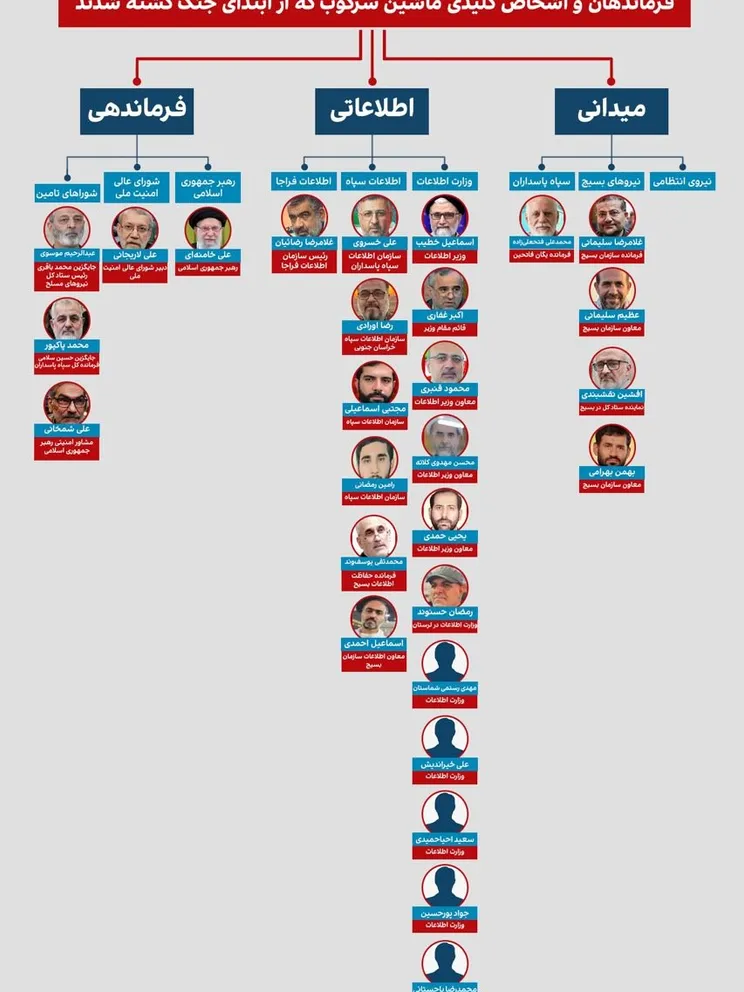
For clarity, these are top guys, and dated.
About 5,000 members of the IRGC suppression forces are dead with another 21,000 injured and likely out of the game.
Big dent in the ability of the regime to hold power.
To me, it’s still not enough. Islam in the present day is the root of probably 80-85% of the world’s problems.
You have to start somewhere.
Do not let perfect be the enemy of good enough.
You have to start somewhere.
Do not let perfect be the enemy of good enough.
It would be a much better use of my tax dollars (from what they normally spend it on) to fill a C-130 with Starlink mobile system packages in airdrop containers, and bomb the country (cities, anyway) with them so the people can get outside (non-propaganda) news.
The best way to combat information suppression is with the truth.
Apparently there’s between 40,000 and 50,000 Starlinks active in Tehran.
We’ve bombed the jamming and detection trucks.
This article defeated me with its extreme duplication of paragraphs and the indecipherable timelines in pseudo-Arab-calendar dates. Or maybe the April 16, 1404 dates are from six hundred and twenty two years ago?
Today is Shawwai 18, 1447, in the Hijiri calendar.
In fact, Iran declared war on Elon Musk
https://www.newarab.com/news/starlink-legitimate-target-iran-state-media-says
That’s my fault. I was translating and copying from Persian.
It doesn’t cut and paste easily, as it reads right to left.
I tried to fix dates, but obviously missed plenty.
I can speak Arabic, Hebrew, Spanish, and Ladino (and English, kind of, if you don’t mind a Texan accent), but Persian is way beyond me. Have lots of troubles.
wow. I think you should delete and start over.
It took a long time, lol.
Just skip the two parts that repeat.
Bkmk
bump
Disclaimer: Opinions posted on Free Republic are those of the individual posters and do not necessarily represent the opinion of Free Republic or its management. All materials posted herein are protected by copyright law and the exemption for fair use of copyrighted works.