Posted on 03/21/2026 10:25:34 AM PDT by fruser1
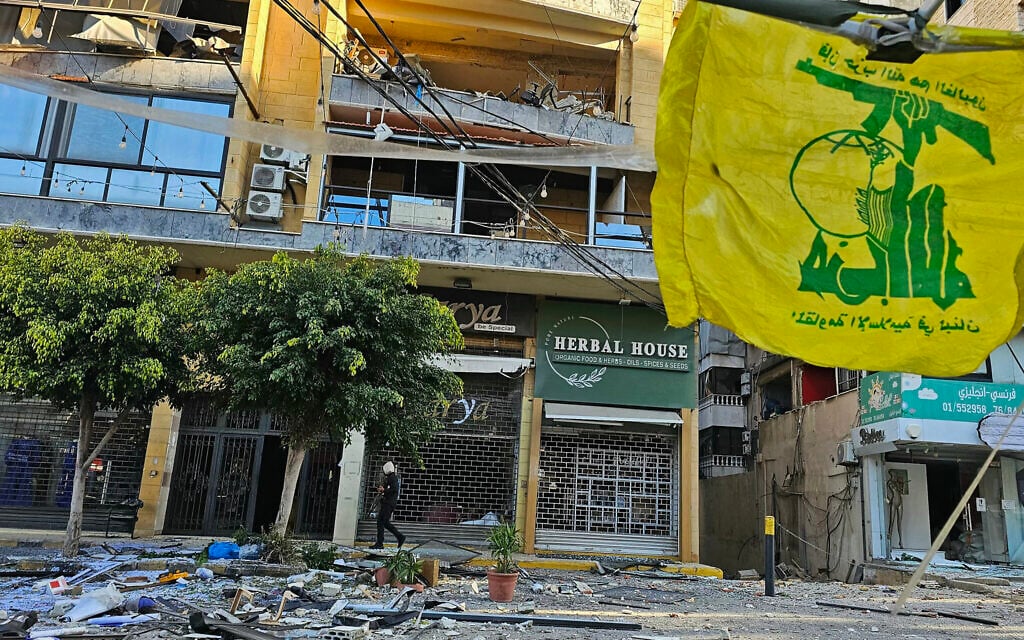
The two sources said IRGC officers tasked with helping Hezbollah recover arrived shortly after a ceasefire in November 2024, and set to work even as Israel continued to strike.
One of them said the deployment involved about 100 officers.
Changes implemented at their behest included replacing a hierarchical command structure with a decentralised one, comprising small units with limited knowledge of each other’s operations, helping to preserve operational secrecy.
They said IRGC officers also drew up plans for missile attacks against Israel that would be launched simultaneously from Iran and Lebanon — a scenario executed for the first time on March 11.
A senior Lebanese security source said Iranian commanders had helped Hezbollah rehabilitate and reorganize their military cadres. The source said he believed the Iranians were helping Hezbollah pace the current conflict rather than being involved in the detail of picking targets.
Another source briefed on the matter said the IRGC sent officers to Lebanon in 2024 to conduct a post-war audit of Hezbollah and took direct supervision of its military wing.
An additional two sources said the IRGC had embedded special advisers with Hezbollah last year to help it direct military affairs.
Andreas Krieg, a lecturer at the security studies department of King’s College London, said the IRGC “has basically reorganized Hezbollah as a far more flat system,” contrasting this with the political hierarchy that had emerged around Nasrallah before his death.
“That decentralized model that they’ve now implemented is also a bit more like what Hezbollah looked like in the 1980s — very small cells,” said Krieg, who has researched the group for 15 years. He described this as a “mosaic defence” that is also being used by the IRGC in Iran.
(Excerpt) Read more at timesofisrael.com ...
Ok.
So that will be Iran’s future: a resurgent constitutional monarchy fighting small cells of Shiite fundamentalist terror cells.
Same as the 1970s.
Only this time they will know what life will be like if the same trash takes over again.
Yup. There are about 200k IRGC.
The more that remain alive, the more difficult it will be (law of obviousity).
If the IRGC lose control, they will be hunted down. Their identities are known.
Plus no-one’s funding the IRGC this time, so it really would be smart of them to come to a negotiated settlement. But they’re not smart, so we’ll see what happens.
The Iranian thuggocracy is being terminated. with its weapons, weapons manufacturing plants, critical materials supplies, air force, radar systems, navy, and soon its oil export port.
they won’t be rebuilding any of their terrorist front groups again
That’s funny. I was just about to post the exact same things you both said!
Never mind...
The US approved Iran oil sales of $15,000,000,000,000 yesterday. You can find it in the news.
Sorry :-) $15,000,000,000.
1. How often Iran has threatened the U.S., Israel, or allies
Since the 1990s, Iran’s supreme leaders and Revolutionary Guard figures have repeatedly framed Israel as “illegitimate” and vowed its eventual destruction or “elimination.”dw+1
The “wipe Israel off the map” line, though often taken out of context, is part of a long‑standing rhetorical pattern of calling Israel a “cancer” or “Zionist regime” that must disappear.jcfa+1
Analysts describe Iran’s threat posture toward Israel as “persistent and existential in tone,” even if the precise wording varies from year to year.dw+1
It is not a handful of incidents; it is a continuous, doctrinal‑level threat over decades.
Iran regularly threatens retaliation against U.S. military bases, economic sanctions, and “regime‑change” rhetoric.
In recent years, Iranian officials have:
Warned the U.S. that it would retaliate if Washington struck Iran’s nuclear facilities.aljazeera+1
Declared that U.S. bases in the Gulf region are within range of Iranian missiles and drones.aljazeera+1
Promised to target Israel and U.S. interests simultaneously if attacked.nbcnews+1
Again, this is not a single “threat” but a repeated, escalating pattern tied to sanctions, nuclear talks, and periodic strikes.
Hezbollah, Iran’s key Lebanese proxy, has:
Repeatedly threatened to annihilate or “erase” Israel and its civilians in any full‑scale war.jcfa+1
Promised massive missile barrages targeting Israeli cities if Israel attacks Lebanon.aljazeera+1
Reacted to Israeli strikes with loud vows that Israel will “pay a price” and that retaliation will be devastating.bbc+1
So:
There is no single, neat count like “47 times Iran threatened the U.S.,”
But all three—Iran, its proxies (especially Hezbollah), and their leaders—have issued repeated, public, existential‑style threats against Israel and the U.S. over many years.dw+1
Here the record is clearer:
Direct missile and drone attacks on Israel
In recent years, Iran has launched ballistic missiles and drones at Israel in retaliation for Israeli strikes on Iranian targets.
For example, in 2026 escalations, Iran and Israel have engaged in reciprocal missile and drone strikes, with Iran launching barrages at Israeli cities and military sites.edition.cnn+2
Missile and drone attacks on U.S. and allied targets
Iran has targeted U.S. military facilities in the Gulf (e.g., bases in Qatar and other Gulf states), using missiles and drones, often in response to American strikes on Iranian sites.edition.cnn+1
In recent conflicts, Iran has launched missiles at Israel and U.S.‑linked installations, with some intercepted and some causing damage.aljazeera+1
2006 Lebanon War:
Hezbollah launched thousands of rockets at Israeli cities and military targets, starting a full‑scale war with Israel.[dw]
Ongoing border conflict with Israel:
Since 2023–2026, Hezbollah has maintained a daily or near‑daily campaign of rocket and drone attacks across the Lebanon–Israel border, in coordination with, and funded by, Iran.972mag+1
Attacks on U.S. interests:
Hezbollah has a long history of targeting Western, including U.S. and Israeli, interests, including embassies, military bases, and Jewish institutions, especially in the 1980s–1990s.[dw]
Iran, its leaders, and its proxies (especially Hezbollah) have repeatedly, over decades, threatened the U.S., Israel, and their allies with destruction, annihilation, and massive retaliation.jcfa+1
These threats are not a one‑time or rare thing, but a persistent, doctrine‑level posture.aljazeera+1
Actual attacks:
Iran has directly attacked Israel with missiles and drones in recent years, and U.S. and allied bases in the Gulf, in multiple rounds of retaliation following Israeli or American strikes.aljazeera+2
Hezbollah, as Iran’s key proxy, has launched massive rocket and missile attacks on Israel (notably in 2006 and repeatedly since 2023), and has a long history of attacks on U.S. and Western targets.aljazeera+1
Here is a bulleted list you can use or adapt, combining what was said above with distinct, documented threats and actions by Iran and its proxies (especially Hezbollah) against the U.S., Israel, or their allies:
Iran’s threats toward the U.S., Israel, and allies (non‑exhaustive)
Repeated rhetoric calling Israel “illegitimate” and vowing its elimination or “wiping off the map” by senior Iranian leaders (including former President Ahmadinejad and senior clerics), framing Israel as a “Zionist regime” that must disappear.dw+1
Calls for Israel to be “erased” or “wiped out” embedded in official Iranian statements and Revolutionary Guard rhetoric, even when not phrased in the exact “wipe off the map” wording.jcfa+1
Warnings that Israel will be “obliterated” or “pay an unacceptable price” if it attacks Iran’s nuclear facilities or key military sites.aljazeera+1
Threats to “retaliate massively” against U.S. interests in the Gulf if Washington strikes Iran, including targeting U.S. military bases in Qatar, Bahrain, and other Gulf states.edition.cnn+1
Warnings that Iran’s missile and drone reach extends to every U.S. base in the region, and that any U.S. aggression will be met with a “devastating” response.jcfa+1
Revolutionary Guard and clerical leaders repeatedly threatening to “end the regime of the Zionists” and to “liberate Jerusalem” through armed confrontation.dw+1
Iran’s actual attacks on the U.S., Israel, and allies (non‑exhaustive)
Direct missile and drone attacks on Israel:
In recent years (including 2024–2026 escalations), Iran has launched ballistic missiles and drones at Israeli territory in retaliation for Israeli strikes on Iranian sites in Syria and elsewhere.aljazeera+1
In 2026, Iran launched missile barrages toward Israel, intercepted or partially intercepted by Israeli air defenses, in response to Israeli‑U.S. strikes on Iranian targets.bbc+2
Missile and drone attacks on U.S. and allied facilities:
Iran has launched missiles and drones targeting U.S. military bases or partner‑nation bases in the Gulf region, including installations hosting U.S. forces.aljazeera+1
In the 2026 U.S.–Iran‑Israel escalation, Iranian missiles and drones were directed at U.S.‑linked installations and the U.S. 5th Fleet assets, though many were intercepted.cnbc+2
Proxy attacks and covert operations:
Iranian‑linked militias in Iraq and elsewhere have fired rockets at bases hosting U.S. troops in Iraq and the Gulf, often in coordination with Iranian guidance.[aljazeera]
Iran has been linked to plotting attacks on U.S. soil and abroad (including foiled plots), which U.S. officials have publicly attributed to Iranian intelligence or IRGC‑Quds Force direction.[aljazeera]
Hezbollah’s threats toward Israel and the U.S. (Iran’s key proxy)
Repeated vows to “wipe out” or “erase” Israel in Hezbollah rhetoric, often echoing Iran’s tone about Israel’s illegitimacy.dw+1
Threats that “all of Israel is within range” of Hezbollah’s rocket and missile arsenal if a war breaks out.[dw]
Public warnings that Israel will “pay an unbearable price” for any attack on Lebanon, vowing massive rocket barrages against Israeli cities.dw+1
Threats against U.S. and other Western interests, including warnings that any U.S. escalation in the region would face Hezbollah response.[dw]
Hezbollah’s attacks on Israel and U.S.‑linked interests
2006 Lebanon War:
Hezbollah launched thousands of rockets at Israeli cities and military targets, initiating a full‑scale war with Israel.[dw]
Ongoing border conflict with Israel (2023–2026):
Hezbollah has conducted daily or near‑daily rocket, mortar, and drone attacks across the Lebanon–Israel border, firing into northern Israeli communities and military positions.972mag+1
These attacks frequently trigger Israeli retaliatory strikes, creating a sustained low‑to‑medium‑level war zone along the frontier.[aljazeera]
Past attacks on U.S. and Western targets:
Hezbollah’s history includes attacks on U.S. and Western diplomatic and military targets, such as the 1983 Beirut barracks bombing and other hostage‑taking and bombing operations, often in Iran‑linked campaigns.[dw]
to summarize this concisely
- perplexity.ai
Iran has repeatedly, over decades, threatened the U.S., Israel, and their allies with systemic destruction, massive retaliation, and existential annihilation, especially against Israel.jcfa+1
Iran has directly attacked Israel with missiles and drones, and U.S. and allied facilities in the Gulf, multiple times in recent years, especially in 2024–2026 escalations.aljazeera+1
Iran’s proxy Hezbollah has issued persistent, existential‑sounding threats against Israel and U.S.‑linked interests, and has launched thousands of rockets and ongoing attacks across the Israel–Lebanon border, including a full‑scale war in 2006 and sustained bombardment since 2023.aljazeera+1
I guess this means you:be never seen a map of the Caspian sea?
Disclaimer: Opinions posted on Free Republic are those of the individual posters and do not necessarily represent the opinion of Free Republic or its management. All materials posted herein are protected by copyright law and the exemption for fair use of copyrighted works.