Posted on 12/13/2025 11:55:57 AM PST by delta7
Battery tech is evolving at such a pace that it’s difficult to keep up with what’s happening across the industry. On a global level, several OEMs have committed to commercialising solid-state batteries by the end of the decade. Toyota plans to launch its first solid-state battery-powered EV by 2028, while BYD and CATL are looking at 2027 for introducing their version of these new-age batteries. Enter, BMW. While the Bavarian marque was already invested in the idea with Solid Power, this new arrangement with Samsung SDI aims to fast-track...
(Excerpt) Read more at tech.yahoo.com ...
from AI:
Samsung's silver solid-state battery technology features a silver-carbon composite layer that enhances energy density, safety, and charging speed, making it a promising advancement for electric vehicles. These batteries can achieve a range of 600 miles, charge in just nine minutes, and have a lifespan of up to 20 years.... .....Overview of Samsung's Silver Solid-State Battery Samsung's silver solid-state battery technology represents a significant advancement in battery design, particularly for electric vehicles (EVs). This innovation utilizes a silver-carbon (Ag-C) composite layer in the anode, enhancing performance compared to traditional lithium-ion batteries....
....Impact on Silver Demand Each battery cell requires about 5 grams of silver, translating to approximately 1 kilogram of silver for a typical 100 kWh battery pack. If 20% of the global car production (around 16 million vehicles) adopts this technology, the annual silver demand could increase by 16,000 metric tons, significantly impacting the silver market.
I received word from an industry analyst....Samsung has been taking delivery of as much Silver as possible.....Hi Ho Silver!
Uh, are we going to put them in the same disposal site as turbine blades?
With the current huge Silver Bull run ( 110 percent gain YTD), after their lifespan ( 20 years) they will be recycled....” unobtainium” comes to mind.
Full battery production is slated for end of 2026/2027. Development and testing has been at light speed since 2023, which incidently was the beginning of Silver’s generational Bull run.....any coincidence?
Some caught the Silver generational break out in 2023.....still not to early to get in.
At present, the price of silver is about 2,000 dollars per kilogram.
100 kWh is about 1.33 the ammount of energy currently in the Tesla Model Y long range, so it is a pretty good standard.
US mines produce about 90 metric tons a month, or about 1000 metric tons a year.
World wide production is about 20 thousand metric tons per year.
The article claims demand for silver for batteries for electric cars could be 16 thousand metric tons per year.
https://discoveryalert.com.au/samsung-silver-solid-battery-technology-2025/
What Is Samsung’s Silver Solid State Battery Technology?
Understanding the Breakthrough Innovation
Samsung’s solid-state battery technology marks a paradigm shift from conventional lithium-ion systems. The key innovation lies in its oxide-based solid electrolyte, which eliminates flammable liquid components, significantly enhancing safety and thermal stability. The integration of a silver-carbon (Ag-C) composite layer within the anode enables thinner electrode designs while maintaining structural integrity during charge-discharge cycles. This architecture achieves an energy density of approximately 500 Wh/kg—nearly double that of mainstream EV batteries—by optimizing ion transport pathways and minimizing internal resistance. As the battery metals boom continues to shape global markets, Samsung’s innovation represents a significant leap forward.
Key Performance Advantages
The Ag-C composite anode directly contributes to the battery’s exceptional metrics. By leveraging silver’s high electrical conductivity and mechanical durability, Samsung has overcome traditional trade-offs between energy density and charging speed. Laboratory tests indicate that the solid-state design reduces dendrite formation, a common failure mode in lithium-ion batteries, extending cycle life to over 1,500 full charges without significant capacity degradation. These advancements address two critical barriers to EV adoption: range anxiety and charging infrastructure limitations.
How Does Silver Enhance Battery Performance?
The Technical Role of Silver in Solid State Batteries
Silver serves multiple synergistic functions in the battery’s architecture. Its high electron mobility facilitates rapid charge transfer at the anode-electrolyte interface, enabling the 9-minute fast-charging capability. Additionally, the Ag-C composite acts as a buffer layer, mitigating volume expansion during lithium-ion intercalation. This stabilization is critical for maintaining electrode integrity over the battery’s 20-year operational lifespan. Computational models suggest that silver’s catalytic properties may also enhance the reversibility of lithium plating, further improving efficiency. Recent progress in direct lithium extraction methods complements these advancements by ensuring a sustainable supply chain.
Quantifying Silver Content in Each Battery
Each battery cell incorporates approximately 5 grams of silver, translating to 1 kilogram per 100 kWh vehicle battery pack. At current silver prices (~$1,071/kg), this adds $1,071 to material costs per vehicle. However, the extended lifespan and reduced replacement frequency offset this premium. For context, global silver production stands at 25,660 metric tons annually. If 20% of the 16 million EVs produced yearly adopted this technology, silver demand would increase by 16,000 metric tons—representing 62% of current supply. According to a recent analysis by Samsung SDI, their solid-state batteries could potentially achieve the highest energy density in the industry......
Which is why we are witnessing historic withdrawals of Silver from the US Crimex and LBMA. Those manufacturing companies dependendent on Silver saw this two years ago....as did many Silverbugs.
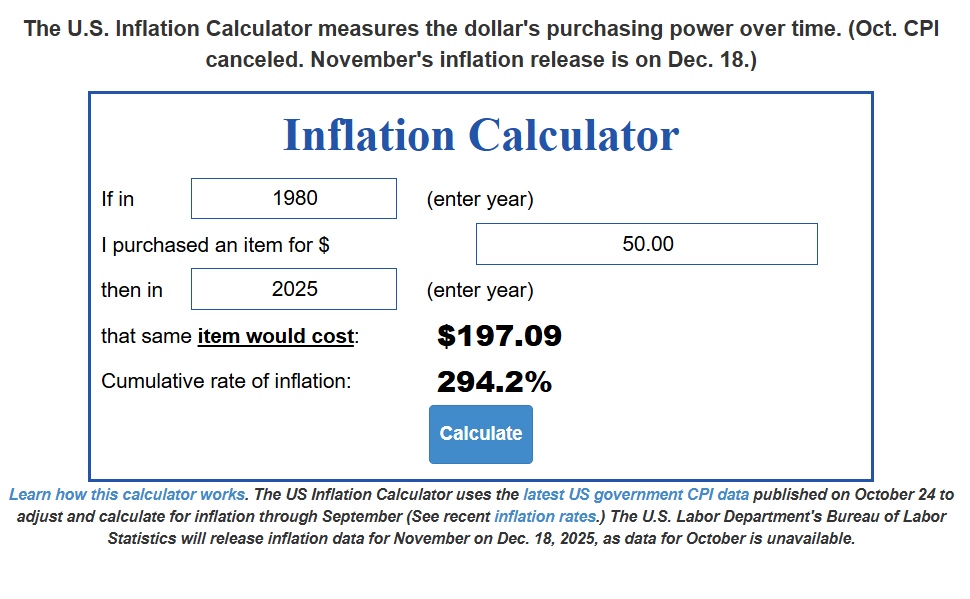
is a kilo of silver oer car is accurate, then silver content alone is over $2,000 per car @$62 per oz. If this tech. takes off it could be over $3000 when silver keeps moving up with the increased demand. That alone may not get this off the ground except for high end EV’s where customers don’t care about the cost.
In comparison lithium content is $100-300 per tesla battery.
“If a kilo of silver per car”
Thanks for the numbers. $1,071 per car increment may be a bargain for the projected increased range, longevity, convenience and safety.
If this tech. takes off it could be over $3000 when silver keeps moving up with the increased demand.
There is potential demand for a lot of batteries besides for electric vehicles.
IF the performance is as stated, autos will be a smaller sector of demand...batteries are used in about everything, from aircraft, to weapons, to computers.
JP MORGAN SELLS ENTIRE 200 M OZ SILVER SHORT POSITION, FLIPS LONG 750 M OZ!
Just in time for the next round of government mandated EVs that NO ONE WANTS
Thanks for the website. Looks like everyone but J six pack can see what is happening....time to Prosper....the paper and electron boyz are in for some surprises.
Just in time for the next round of government mandated EVs that NO ONE WANTS
“Each battery cell requires about 5 grams of silver, translating to approximately 1 kilogram of silver for a typical 100 kWh battery pack. “
1000 ÷ 5 = 200 cells.
No wonder Socrates lost $700,000,000.
If everybody did then the left would all of a sudden figure out an excuse for why they should be banned.
Yep, this could change the whole EV game. As with anything else, provide a solution that people see value in and they will crawl over broken glass to buy it. On the other hand, you can’t give away a bad product.
Silver is used in massive batteries for diesel electric submarines has been since the 1960s it is worth the cost when it’s a 4 to 5x increase in capacity vs lead acid batteries in the same space and much less mass. Silver was/is the metal of choice for heavy torpedo batteries too for the same reasons. The Tigerfish famously, it could run at 50 knots for miles and miles with zero wake and dive deep vs gas turbine power which must fight water pressure to exhaust its products.
Imagine a 500wh/kg battery for a diesel engine submarine that’s more than double what a silver zinc existing submarine battery can do. The Japanese have a diesel engine submarine with lithium ion cells that allow for 3 weeks submerged before they need to snorkel double or triple that with silver carbon based 500wh/kg tech. 6 weeks indiscretion time is game changing. On batteries a SSK is silent much MUCH quieter than a nuke boat. More than once a very quiet SSK has snuck under a CVN and got so close there would be no escape from the 6-8 heavy weight 55+ knot torpedoes. The USN canceled the only weapon that can stop a wake homing heavy weight the anti torpedo torpedo in a hit to kill mode they never got it to work right due to cost and bureaucracy it was killed. There is no defense against a wake homing heavy weight torpedo you can’t out run it some hit 80 knots, it ignores noise makers and countermeasures it’s following the wake that only mass can make you must hit it with explosives before it runs up under your keel or you are dead it’s as simple as that. Put a 5-10kt 12.5” diameter fission device and not only is the CVN gone it’s escorts are too. The Russians don’t do 10kt they have 650mm wake homing torps an they do 200-400 kilotons that’s a 5 mile wide death zone for anything underwater and 2 miles above it. Flat out carrier killers.
On the civy side a 500wh/kg battery would not only allow for 600 mile ranges at current pack mass in a Tesla sized sedan , plus under 10 min charges from a V4 supercharger it has the energy density to do EVTOL and ESTOL with 200-500 mile ranges respectively again with 10 min charges at the end points.
There is a STOL company with 9+ billion in preorders they are flying their production airframe for FAA certs right now. It holds 8 people, can takeoff in under 90m and land in 50m that’s smaller than a soccer field and that’s to a 50 foot clearance the ground roll is under 100 feet. It’s a gas turbine hybrid turbo alternator driving 8 electric props that bathe the whole wing in prop wash it doesn’t have a stall speed it can lift from a standstill but lacks the attitude control to do so, so it moves forwards will there is enough airflow over the rudder and tail for attitude control with blown rear surfaces it could do jump takeoffs less than a plants length roll just up and forwards. With 500wh/kg cells you can remove the turbine and it’s fuel and generator and just use the cells for a 500 mile range once in flight the large wing and sleek design means little power is needed to keep it flying at 200knots it glides on for a landing only using it’s prop wash at the last second to blow the wing and it’s huge flaps fora steep short roll out landing you have 8 reversible props too that can stop it in nearly a plane’s length. Impressive and why they have 9 billion in preorders. Every small field, parking deck roof, even rural roads and beaches, steam beds, anywhere flat with 90 meters by 30m of space is a LZ for this bird.
This opens up airtaxi like Uber Elevate is going to do in NYC. Dubai already has EVTOLs flying around doing trials and limited commercial service, Shanghai too.
Back in the day there was plans for multiple VTOL/STOL ports all around NYC on building tops on piers in the East River and Hudson too. The crazy one was a circular 300 meter diameter circle pier in the East River so you could takeoff into the wind regardless of which way it was blowing this STOL cuts that circle diameter to under 90 meters easily dine with driven piles into the sediments like any other pier. Airtaxis to JFK, LaGuardia and anywhere else inside a 500 mile range, their current hybrid has a 1000 mile range, 250 would be enough to cover the entire BALWASH corridor with airtaxis point to point using FAA NEXTGEN national airspace system that’s also point to point and fully electronic ATC.
Disclaimer: Opinions posted on Free Republic are those of the individual posters and do not necessarily represent the opinion of Free Republic or its management. All materials posted herein are protected by copyright law and the exemption for fair use of copyrighted works.