Posted on 05/04/2020 10:08:33 AM PDT by Kaslin
Israel is slowly emerging from the Corona crisis. As I said in a radio interview last week, Israel is the canary in the coal mine. Measures taken to arrest the spread of the Coronavirus and prevent an even wider outbreak were recognized internationally as being bold (some felt too much so) early on, with progressively severe restrictions going into place, somewhat ahead of the curve of many other countries. Now, as we emerge, the world will look at us as how to do it well, or how to learn from our mistakes.
Medically, while we’re not out of it yet by far, the total number of people infected is just over 16,000, with 232 deaths. Israel has passed a threshold of more than half, 9634, now recovered. Indeed, the curve is flattening. There’s reason to be optimistic.
Countries of similar size to Israel (9.2 million) have fared much worse. Sweden (10 million) has had over 22,000 cases and over 2600 deaths. Belgium (11.5 million) has nearly 50,000 cases and over 7,800 deaths. Austria (8.9 million) has fewer cases than Israel, 15,597, but nearly three times the death rate, almost 600.
However, as well as Israel has fared, it’s come at a tremendous price. The economy, which was doing quite well, has taken a major hit, arguably at a higher per capita rate than others. At the beginning of March, unemployment was under 4 percent. Today it is over 25 percent, more than 1 million unemployed out of just over 9 million. Much of this is in tourism which will come back, but the time it takes for the economy to recover is unknown. The impact will surely linger. Suicides have increased based on economic and emotional stress.
In a country built on Jewish values, the highest of these is to preserve life. There’s a healthy debate as to what that means now. Saving lives is paramount, but what if the number of non-medical Corona related deaths reaches, or exceeds, the number of those who died from the virus? Will it all have been worth it? There’s surely going to be a robust rabbinic dialogue about the many facets of what saving lives means. Is it simply medical; stopping bleeding, restarting the heart, performing surgery? Or will social/emotional factors be considered and redefine the term?
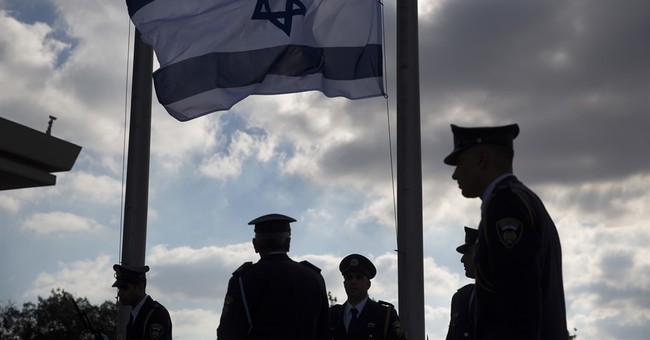
Another way that the Corona crisis has impacted Israel uniquely is through our military. In a country where most young men and women serve, the army is the biggest common denominator. Troops have been employed to enforce closures of whole cities and neighborhoods with high infection rates. Soldiers have also been called upon to deliver food, and provide other support, to people in these communities. Many of these are ultra-Orthodox areas, where military service is not only not required, but is frowned upon. Among the positive outcomes has been a building of relationships and trust between segments of the population that otherwise do not interact.
Additionally, the army has restricted leave for most soldiers to prevent infection and an outbreak within its ranks. Essential combat soldiers had more or less been in self-quarantine, on base, for several weeks. Because it’s a small country, soldiers are used to coming home regularly, usually for Shabbat and the weekend, if not every week, then every other week. That means they get home cooked meals, someone to do their laundry, and rest in their own beds, among family. Normally, even if a soldier is not able to come home for “extended” periods, relatives can drive to where they are stationed and bring food from home and maybe some clean clothes.
Essential combat soldiers have been isolated on base for several weeks, only recently starting to come home for long weekends. A friend quipped that even in a war we would see our children more frequently. My son was one of those who was let out finally, surprising my wife by walking in as she was on a work call, letting out a huge shriek of excitement. Unfortunately, we don’t have that on video.
But neighbors, including a local community rabbi, were able to capture this excitement with videos of soldiers coming home, sometimes surprising their family but always with an excited warm embrace. They put this to music beautifully, with traditional lyrics praising God.
Israel is probably the only non-Moslem country in which there is national recognition of the Islamic holy month, Ramadan. It’s been meaningful hearing the Prime Minister, President, and other leaders wishing “Ramadan kareem” to the nearly 20 percent of Israel who are Moslem, but beseeching them to stay home, avoid public gatherings and prayers, learning from the challenges of the Jewish holiday celebrations which were blamed for a spike in infections at the outset.
In some cases where there’s been a higher infection rate in certain Arab communities, some towns have been closed. The army and police have also been called in to help. Given nationalist and religious tensions that exists, it’s an unusually positive thing that the army and police presence has been largely welcomed, another way of breaking down barriers. In one case, an Arab member of Knesset was interviewed on the national news and was asked to address Israeli Arabs in Arabic. Maybe something good can come out of this long term.
Because of unique terrorist threats that exist in Israel, it’s common for people going into malls, bus and train stations, post offices and other buildings to be checked for weapons before entering. I’ve wondered, with the new norm that will probably linger for some time of people wearing masks, it will be another challenge in identifying potential terrorists. Security personnel profile based on looks, dress, behavior, and the like and will now be impeded visually with people’s faces covered.
Among unique segments of Israel’s population that have been hardest hit, elderly Holocaust survivors are experiencing loneliness coupled with PTSD of surviving from their younger days. Because elderly are at a higher risk, there’s a near universal value of children and grandchildren not visiting. About 50,000 survivors live below the poverty line who need urgent help.
Next week Israel will observe Lag B’Omer, a day on which a first century plague that is blamed for the death of 24,000, miraculously ended. May it be so for us all.
..................
Interesting.
https://www.worldometers.info/coronavirus/country/israel/
It does look like Israel is doing very well.
“...Austria (8.9 million) has fewer cases than Israel, 15,597, but nearly three times the death rate, almost 600.”
What stands out is Israel’s relatively low fatality rate, expressed either as deaths/reported cases or deaths/total population. I’m not sure how business lock-downs helped those numbers. Could they be due to different reporting practices or different/better medical care?
Is not Israel also have a company that is working on a vacine againt the coronavirus?
Disclaimer: Opinions posted on Free Republic are those of the individual posters and do not necessarily represent the opinion of Free Republic or its management. All materials posted herein are protected by copyright law and the exemption for fair use of copyrighted works.