The sniper.
Posted on 02/19/2020 4:04:06 PM PST by billorites
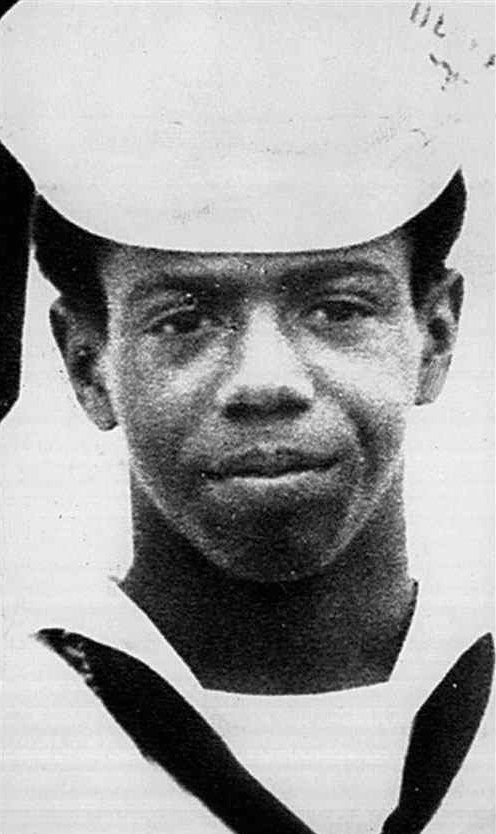
The decorated U.S. Marine Corps pilot who risked his life and military career to help New Orleans police halt the Howard Johnson’s hotel sniper attack that shattered the quiet of a Sunday morning and claimed seven lives in 1973 died Feb. 13 following a lengthy battle with cancer, according to his family.
Retired Lt. Gen. Charles “Chuck” Pitman Sr., whose heroics against Mark Essex that day earned him the eternal gratitude of city leaders and first responders, was 84.
In nearly four decades as a Marine, which included three combat tours in Vietnam, Pitman earned numerous medals: Silver Stars for valor; Distinguished Flying Crosses; and a Purple Heart, among others.
But in an interview with The Times-Picayune in 2013, Pitman said perhaps his proudest achievement was being named an honorary New Orleans Police Department captain for piloting the helicopter that turned the tide as police exchanged gunfire with Essex.
Pitman never sought permission from his superiors to fly that mission, he said, only forgiveness.
“The thing with him was, if you’re going to be a Marine, you’ve got to do what you’ve got to do,” his son, Charles Pitman Jr., said. “He was always happy he did what he did.”
Essex's crime spree began on New Year's Eve 1972, roughly six weeks after a clash between police and protesters at Southern University in Baton Rouge left two students dead. Essex — who sympathized with the Black Panthers radical group — went to New Orleans’ jail armed with a .44-caliber rifle and, hiding in the distance, fatally shot police cadet Alfred Harrell Jr. as he guarded a gate.
Essex then broke into a nearby warehouse and killed officer Edwin Hosli Sr., who went to the warehouse to investigate an alarm which Essex tripped.
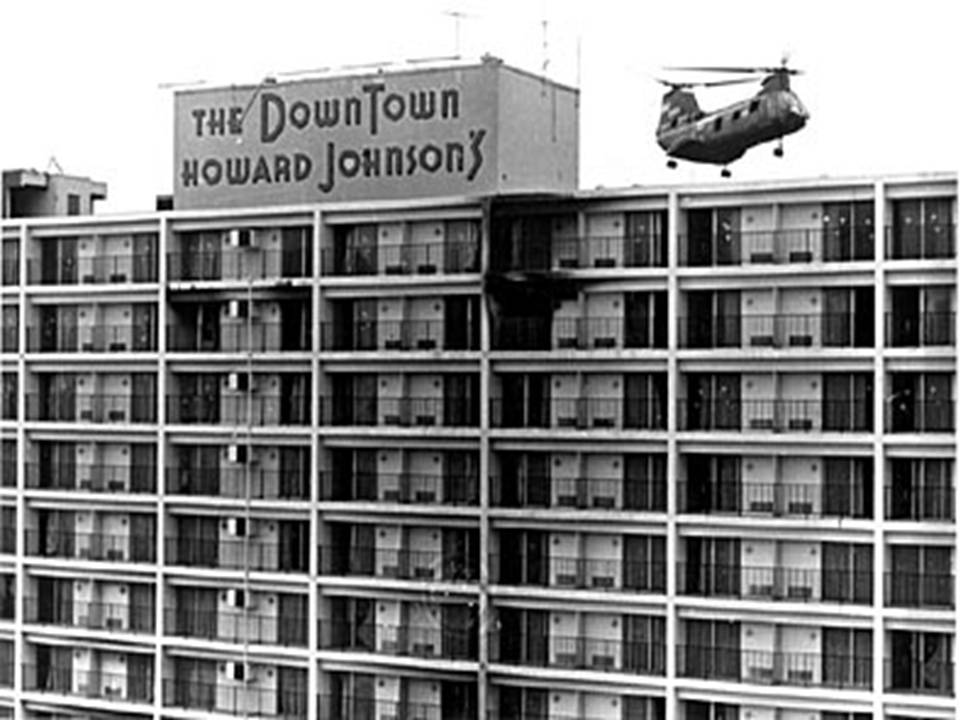
A week later, on Jan. 7, 1973, Essex arrived at the Downtown Howard Johnson’s Motor Lodge in the 300 block of Loyola Avenue — now a Holiday Inn — across from New Orleans City Hall. He killed the hotel’s general manager, its assistant manager, and a newlywed couple staying as guests.
He set fire to some of the 17-story hotel’s rooms, apparently to attract first responders to the scene. Armed with a .44-caliber carbine, Essex began firing at them as they arrived.
He fatally shot three NOPD officers: Phil Coleman, Paul Persigo and Deputy Superintendent Louis Sirgo. Essex continued shooting, wounding a dozen other people as he shielded himself in a concrete, rooftop cubicle, beyond the NOPD’s reach.
Like the rest of the paralyzed city, Pitman was watching news coverage of Essex’s attack, when he decided he’d had enough.
A 37-year-old lieutenant colonel in charge of a Marine air unit station in Belle Chasse, he gathered up a volunteer co-pilot and two crew members, and flew them all in a CH-46 Sea Knight helicopter to a parking lot near the hotel.
Several NOPD officers armed with rifles hopped aboard the twin rotor transport helicopter, which Pitman repeatedly flew over the rooftop. Essex would occasionally venture out to fire at the helicopter but return to his cover before the cops could get a clear shot on him.
On the critical flyover, Pitman doubled the helicopter back instead of retreating as he had on previous occasions. The maneuver caught Essex far from the cubicle, and — with a spotlight illuminating him — officers in the helicopter and on rooftops of surrounding buildings emptied their weapons.
Essex fell dead, having been shot more than 200 times. The crisis was over.
“If (Pitman’s involvement) would not have happened, we would have lost more people,” said Larry Preston Williams, who was among the officers who scrambled out to the hotel that day. “He was instrumental … in taking out Mark Essex.”
Nonetheless, Pitman later faced the possibility of a court martial, having deployed military personnel and resources to quell a municipal matter without first obtaining the proper authorization. But the matter was dropped after longtime U.S. Rep. F. Edward Hebert, a powerful New Orleans Democrat who at the time headed the House Armed Services Committee, intervened.
The Marine Corps transferred Pitman out of New Orleans in June 1973. The most difficult chapter of his career happened in 1980, when he took charge of helicopter crews who tried to rescue 52 Americans being held hostage in Iran. One of the helicopters collided with a transport plane, and eight military members died.
Pitman went on to become the Marine Corps’ deputy chief of staff for aviation in 1987 and earned the rank of lieutenant general in 1988.
Pitman retired from the Marines in 1990 and lived much of the rest of his life in Pensacola Beach, Florida. He was an aircraft maintenance company consultant and a special weapons and tactics training group adviser in Texas.
His son said reminders of his father’s accomplishments surrounded him in his final days. Both Naval Air Station Pensacola and the Texas hospital where the elder Pitman was being treated at the end flew their flags at half-masts, Pitman Jr. said.
Pitman’s survivors include his wife and four children. Details for a March 9 funeral at Marine Corps Base Quantico in Virginia are being finalized, Pitman Jr. said Tuesday.
I remember that. He used a Ruger .44 mag carbine. An extraordinary close range weapon. I think Ruger quit making it some time ago.
[ Retired Lt. Gen. Charles “Chuck” Pitman Sr., whose heroics against Mark Essex that day earned him the eternal gratitude of city leaders and first responders, was 84. ]
RIP Lt. Gen Pitman Sr.
[Essex — who sympathized with the Black Panthers radical group]
At least a couple of articles online compared this to the Dallas BLM sniper terrorist attack.
Nice little gun for deer and home defense.
If I was his CO...
I would make him do 10 pushups for unauthorized use of military equipment.
Then pin a medal on his chest.
Incredible story and man, RIP Sir!
One of our Freepers that has passed on was one of the deputies working for the NO sheriff’s department.We had discussions about this incident several times.
There is an “R” missing in there somewhere...
I recall seeing a photo taken from the CH-46. The Ruger was shot to pieces and the sniper was reduced to mostly hamburger.
Well done and RIP, Marine.
[200 times]
THAT is definitely lead poisoning.
I like many others watched it go down on TV. Trapped in a thick cement elevator gear room, the police shot, and shot and shot before Essex ran and was shot dead.
Fearing there might be another sniper in the gear room, the police continued to shoot, till they stormed the rooftop, blasting away, some police being hit by Ricochets. No one else was in the gear room.
HOWEVER, several months later I read in a newspaper article, that one of the people shot and survived was hit with a 30-06 bullet, and not the .44 mag that Essex used.
So, was there a second shooter or not.
There’s no criminal sheriff in New Orleans. We have a police department, plus a civil sheriff who runs the parish prison and provides courthouse security.
If someone was hit with a .30 caliber bullet, there are other possible explanations - such as the private citizens who loaned hunting rifles to the outgunned NOPD cops (this was before SWAT teams were commonplace). Might've been a ricochet or "friendly fire" from a borrowed rifle.
BTW, there are several YouTube videos showing the helicopter hovering near the hotel, with muzzle flashes coming from its side doors.
IIRC, the separate civil and criminal sheriffs’ offices were merged into one some years ago, when the separate civil and criminal courts were similarly combined.
Chapita was somehow involved. The discussion was probably 20 years ago and somehow he was LE in the incident. Thanks for the insight.
Disclaimer: Opinions posted on Free Republic are those of the individual posters and do not necessarily represent the opinion of Free Republic or its management. All materials posted herein are protected by copyright law and the exemption for fair use of copyrighted works.