Posted on 01/23/2020 4:09:02 AM PST by Kaslin
In July 2018, Commentary published an article by Yuval Levin that caused everyone who thinks about the balance of power among the branches in Washington, D.C., to say: "Of course! That's it exactly!" It had long been observed that Congress had, over the course of several decades, relinquished its powers to the executive and the courts. That wasn't news. Others had remarked that geographic sorting and gerrymandering had increased the ideological polarization of the two parties. This spurs members of Congress to side with presidents of their own party more than with their fellow legislators.
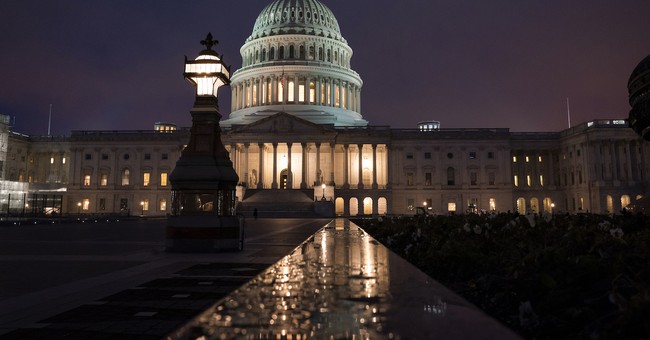
Levin's insight went further. The piece was titled "Congress is Weak Because Its Members Want It to be Weak." During Obama's presidency, Democratic members of Congress called upon the president to change immigration law by executive decree. The Republicans had majorities in both bodies in 2018 and a president who was willing to sign nearly anything, yet the Congress passed only tax reform and then elected to sit idle "waiting to see what the president will say next." Even worse, despite unified control, the Congress came close to a government shutdown, and neither body even considered a budget resolution -- the key legislative responsibility. "Congress," Levin wrote, "is broken."
How was that possible? Aren't politicians as ambitious as the Founders expected? They are, Levin argued, but their ambitions have been poured into different vessels. The story of Congress's decline is also found in other institutions of American life -- the family, universities, churches and more, as Levin elaborates in a new book, "A Time to Build."
In the case of Congress, he argues, the weakness arises from members choosing to treat the institution not as a durable form for collective action, but rather as a platform from which to burnish one's celebrity. Thus do we find members of Congress eschewing their fundamental duties as legislators to grandstand on cable TV or social media. When members are mere performers, Congress becomes only a proscenium and this, in turn, robs the institution of legitimacy and respect. Elected members frequently seek followers by heaping scorn on the institution they represent, with demoralizing effects. Whereas 42% of Americans had confidence in Congress in the 1970s, only 11% said as much in 2018.
"A Time to Build" diagnoses the decline of institutions as the source of many social ills, including loneliness and despair, which have been attributed to other causes. Levin is unconvinced that economic stagnation explains the anomie that characterizes our time. The financial crisis was traumatic, and doubtless had far-reaching effects, but the expansion that followed has now been underway for 12 years. Unemployment and interest rates are low. Wages are rising, especially for the unskilled. Yet the economic good times have not been accompanied by any diminution in malaise and division.
Institutions, Levin acknowledges, can be oppressive. Any good can be abused. But at their best, institutions serve as molds of character. They help to give life meaning by assigning us roles to play. To accomplish their worthy goals -- educating the young, settling disputes, disseminating the news and so forth -- they must teach self-control and enforce standards. By their nature, their purposes are larger than the individuals who comprise them. Those aims are undermined when members neglect loyalty to the institution and its standards in favor of personal display. "The discipline and reticence so essential to leadership, professionalism, responsibility, decency, and maturity," Levin writes, "are forcefully discouraged by the incentives of the online world." Ours is a selfie culture of "personalized micro-celebrity, in which we each act as our own paparazzi, relentlessly trading in our own privacy for attention and affirmation and turning every moment into a show."
Institutions channel our ambitions in more productive ways. Though many American institutions remain strong, Levin finds it significant that the one institution that has not seen a decline in trust over the past several decades is the military. Perhaps that's because the military is the most unapologetic "molder" of character in American life. "If you hear that someone attended Harvard," Levin offered at an American Enterprise Institute forum, "you may conclude that he or she is smart. But if you hear that they attended the Naval Academy, you'll probably conclude that this is a serious person."
Other institutions, from media companies to churches, could benefit from greater discipline about their core responsibilities and greater loyalty from their members. More of us should ask: "What should I do here, given my role or position?" Tom Wolfe labeled the 1970s the "Me Decade." Yuval Levin is arguing for an anti-me future. If more of us put a cork in our narcissism, pour ourselves into institutions and uphold their standards, our national discontent might be much diminished.
Thanks for posting this Kaslin!
What did you think?
The House of Representatives deserves the low regard in which it is held. It is not a representative body and cannot be unless we return to the original idea of one representative for every 30,000 persons. It would not be difficult. They could meet in a stadium or concert hall; they could vote on a computer network; they could all have offices in their own districts. (Discontented protesting representatives could meet on neighboring tennis courts.)
The Latin,”senatus”, implies respect due to great age. Our Senate is only senile. It also has earned the low regard in which it is held. It cannot function as a check on the rabble unless we return Article I Section 3 to original wording,”chosen by the legislatures of.”
Of course these two constitutional changes would not fix the other huge problem, that executive branch departments get to make laws and enforce them! We only complain about congress because we ignore that these bureaucrats are the real power over our lives.
Disclaimer: Opinions posted on Free Republic are those of the individual posters and do not necessarily represent the opinion of Free Republic or its management. All materials posted herein are protected by copyright law and the exemption for fair use of copyrighted works.