~~~~~~~~~~
That is, indeed what we all expected to find. (Note [in #52] that I went to considerable effort to sketch up how the lanyard could have been rigged to pull the trigger pins on all three of the fuzes shown in the B&W "'Singer' sketch". Heck, I even sketched a simple die that could have been used for forming and cutting the copper wire loops for guiding the trigger wires -- with a single hammer blow...)
BUT, that is not at all what was actually found:
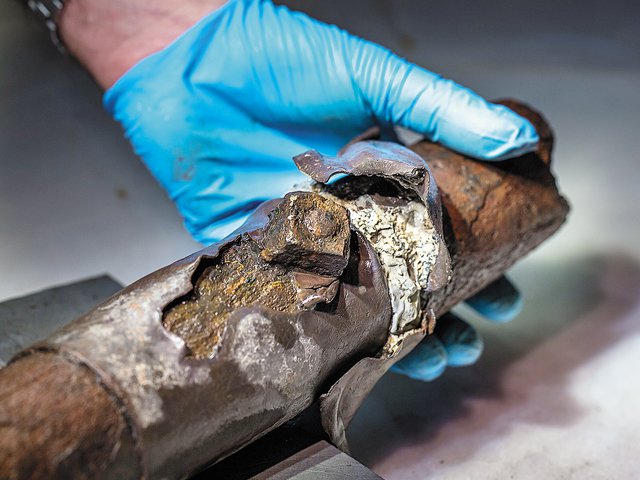
And, after final cleanup:

Note how the force of the explosion (at left) shoved the torpedo's "sleeve" back up the spar -- with the bolt ripping thru the copper as the sleeve did so... Could the evidence of the torpedo being bolted on at the time of the explosion be any clearer?
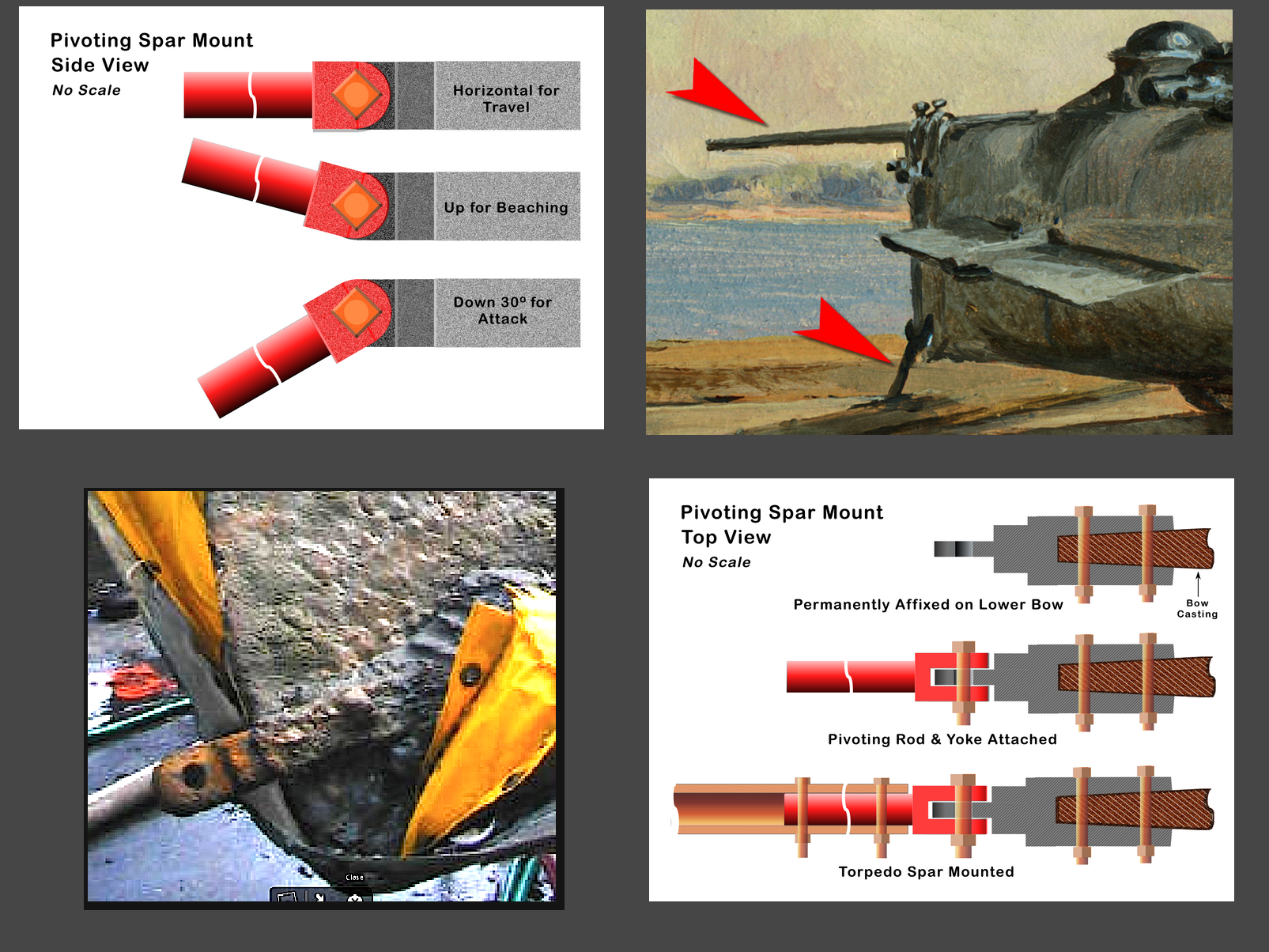
The torpedo was bolted to the spar. The spar was still firmly bolted to the pivoting Y-yoke rod, and the Y-yoke was still attached by the pivot bolt to the lug on the lower bow of the Hunley. And, yes, the separation distance from the explosion of 135 lbs of cannon powder was only twenty (20) feet. That's about as solid a path for shock transmission as one could ask for.
~~~~~~~~~~~~
FWIW, I am a "he", my main work on the project took place before the Hunley was raised -- and I still consult on occasion...