Posted on 03/23/2016 7:10:11 AM PDT by Kaslin
Let's look at the political angst over trade deficits. A trade deficit is when people in one country buy more from another country than the other country's people buy from them. There cannot be a trade deficit in a true economic sense. Let's examine this.
I buy more from my grocer than he buys from me. That means I have a trade deficit with my grocer. My grocer buys more from his wholesaler than his wholesaler buys from him. But there is really no trade imbalance, whether my grocer is down the street, in Canada or, God forbid, in China.
Here is what happens: When I purchase $100 worth of groceries, my goods account (groceries) rises, but my capital account (money) falls by $100. For my grocer, it is the opposite. His goods account falls by $100, but his capital account rises by $100. Looking at only the goods account, we would see trade deficits, but if we included the capital accounts, we would see a trade balance. That is true whether we are talking about domestic trade or we are talking about foreign trade.
The uninformed buys into the mercantilist creed that trade deficits are bad and trade surpluses are good. My George Mason University colleague Donald Boudreaux wrote a blog post titled "If Trade Surpluses are So Great, the 1930s Should Have Been a Booming Decade". The U.S. had a current account trade surplus in nine of the 10 years of the Great Depression, with 1936 being the lone exception. The fact of the matter is that our nation has registered current account deficits throughout most of our history, from 1790 right up to our modern period (http://www.econdataus.com/tradeall.html). Over that interval, we went from being a poor, relatively weak nation to the richest and most powerful nation in the history of mankind. So if, as our fearmongers would have it, current account deficits are so harmful, how did we accomplish that feat? Economies are far too complex to draw simple-minded causal connections between trade deficits and surpluses and economic welfare and growth.
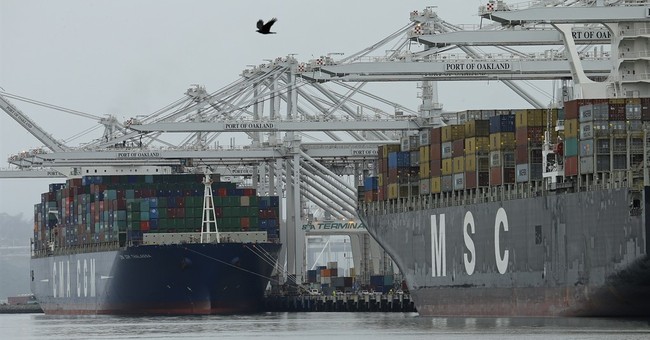
International trade operates under the same general principles as domestic trade. When we, as consumers, purchase goods from China and the Chinese do not spend a like amount for goods from us, there is a current account deficit. In 2015, Americans purchased $482 billion worth of goods from China. The Chinese purchased only $116 billion worth of goods from us, producing a current account deficit with China of $366 billion.
Now, here is my question to you: Do you think the Chinese are so charmed with green slips of paper with pictures of Benjamin Franklin that they just hoard them? No way. Instead of purchasing tangible goods, the Chinese purchase capital goods -- such as corporate stocks, bonds and U.S. Treasury debt instruments. The Chinese purchase more capital goods from us than we purchase of the same from them. That means the deficit on our current account is matched by the surplus on our capital account.
A large portion of the surplus in our capital account consists of U.S. Treasury debt instruments held by foreigners. As of the first quarter of 2015, the Chinese held nearly $1.2 trillion in U.S. Treasurys. Japan's holdings were slightly higher. European countries combined held over $1.5 trillion. Some politicians gripe about all the U.S. debt held by foreigners. Only a politician can have that kind of impudence. Guess who is creating the debt instruments that the Chinese and other foreigners hold. If you said it is our profligate Congress, go to the head of the class. If foreigners did not purchase so much of our debt, we would be worse off because the Federal Reserve Bank and the Treasury would create an inflation and there would be higher interest rates.
I fear that the angst over trade deficits is simply a front for being against peaceful, voluntary trade among people of different nations.
One said, it's no big deal because private citizens hold $87T in wealth, and that is miniscule compared to the debt. So answer #1 is 'we seize private wealth to pay off the debt.'
This article says it's no big deal because our trade deficit partners buy our debt instruments. So answer #2 seems to be, 'we can just devalue our currency to get out of this debt crisis'
Um, I'd rather close the trade gap and bring manufacturing back to America. Thank you just the same.
Here is a very important paragraph buried in the very middle of this article:
“International trade operates under the same general principles as domestic trade. When we, as consumers, purchase goods from China and the Chinese do not spend a like amount for goods from us, there is a current account deficit. In 2015, Americans purchased $482 billion worth of goods from China. The Chinese purchased only $116 billion worth of goods from us, producing a current account deficit with China of $366 billion. “
That is critical.
China is now buying up American companies with that money.
Meanwhile Chinese companies are protected, by requiring all investment in China, have a majority Chinese investor.
That is blatantly unfair.
Yet continues.
Very nice post Kaslin. It’s good to see the debunking of this Trade Deficit Nonsense expressed in simple terms. Hopefully at least a few Freepers will read past the first paragraph before posting their predictable responses.
Of course this analysis totally overlooks the value of Trade Deficits as a political weapon. The bigger they get the more votes come your way. An irresistible temptation to politicians. I think we all know who we are talking about here.
I have a 100% ‘trade deficit’ with my local grocery store, and I am perfectly fine with it. Thomas Sowell pointed this out too.
We give them money, they give us products we want to buy.
I have never understood the problem here. Can some explain?
I do understand we might want to build things here and buy them, but if they are built cheaper someplace else, then they will prevail.
It’s the unions that priced us out of competition.
When you have to pay someone $60K per year to sweep floors because of union regs, you get a dirtier plant than if you paid 2 people $30K each. When you must pay someone $80K to put part A into part B you get a very expensive product
Then is the solution to change our laws to require U.S. companies to have majority U.S. owners?
No, you threaten China with tariffs which will either make our products competitive, or you have American factories employing American workers manufacturing products, or you have China open up their markets for our goods and services.
If everything we buy comes from "someplace else", what need is there to employ anyone here? When the manufacturing sector dwindles, you have fewer consumers of products. Lower sales, companies cut more employees. Fewer employees, less consumer spending. Vicious cycle.
Bump this post.
Thank you.
“I’d rather close the trade gap and bring manufacturing back to America.”
Manufacturing is coming back here, and much of it never left. What’s not coming back, though, are manufacturing jobs in any great numbers. You can “blame” advances in manufacturing technology” for that.
I think I must be a racist. Ever since Milton Friedman died, it’s been my view that the only really, really good economists are black (Williams and Sowell). Williams certainly has the ability to explain complex principles in understandable terms. (Although, I tried his grocery store analogy here, a few weeks back, and was accused of being stupid.)
We have something of a free market economy in the U.S. The government cannot, or should not, just force those companies to manufacture here no matter what Trump is saying. How do you overcome the difference in the cost of manufacturing there as opposed to manufacturing here, especially with low margin items like textiles and consumer electronics?
Except it is not coming back here.
The current trade deficit with China is a brand new record.
Just as it has continued to increase every single year.
Year, after year, after year.
“I fear that the angst over trade deficits is simply a front for being against peaceful, voluntary trade among people of different nations.”
Nah, it’s just simple-minded people looking for an easy answer to problems that don’t have one, and dishonest people willing to prey on the simple-minded by promising them that the easy answer is actually going to work.
Tariffs would also make our goods that much more expensive. Business would have to invest in the manufacturing needed to create those items here, knowing that their profit margin could be eliminated by Congress at any time.
...or you have China open up their markets for our goods and services.
There is a difference between what we import from them and what they import from us. From China we get consumer electronics, textiles, furniture, toys, footwear, plastics, items that tend to be consumer based and lower margin. From us China gets aircraft, high end electronics, oil, chemicals, agricultural products, vehicles, good more targeted for Chinese business than consumers. How do you increase their demand?
I have a 100% ‘trade deficit’ with my local grocery store, and I am perfectly fine with it. Thomas Sowell pointed this out too.How simple minded can you be to say or not see the fallacy in that?
The grocery store purchases or consigns thousands of products from all over the world, including locally produced products not to mention the services they use like banking, insurance, accountants, utilities, refrigeration, electricians and the taxes they pay to name a few.
When those products are purchased or services used those companies or their employees might utilize services or purchase products from the company you work for or even your own services/products.
Sowell and Williams (and most all economists) are a couple of stooges that have never done anything productive to prove one word of their "deep thinking" economics.
Very nice post Kaslin. It’s good to see the debunking of this Trade Deficit Nonsense expressed in simple terms. Hopefully at least a few Freepers will read past the first paragraph before posting their predictable responses.
I love Walter Williams. I’ve referred to him as the black Milton Friedman
How would things look if he was our first black president?
Look at U.S. manufacturing output, measured in value added in constant dollars. It’s never been higher:
https://research.stlouisfed.org/fred2/series/OUTMS
But manufacturing labor productivity (output per worker-hour) has grown even faster:
https://research.stlouisfed.org/fred2/graph/?id=OPHMFG,
>> Ever since Milton Friedman died, it’s been my view that the only really, really good economists are black (Williams and Sowell) <<
Yes, and they are both distressingly old — Williams is 80, and Sowell is 85.
By the way, I think that after Sowell is gone, his influence will live on — thanks to his numerous masterful books. In the realm of political economy, I rate him second only to Milton Friedman in this regard.
Williams, however, as much as I truly admire the man, hasn’t published nearly so much, other than his newspaper columns. His current influence would seem due mainly to his delightful personality and his ability to explain things clearly via the the spoken word. So when he is gone, our collective memory of him is likely to fade away too quickly.
Anyway, it’s a sad commentary on the state of our contemporary culture that intellects like these two, black or white, are so rare.
>> dishonest people willing to prey on the simple-minded by promising them that the easy answer is actually going to work <<
Yep. There is an old-fashioned word for it — demagoguery.
Disclaimer: Opinions posted on Free Republic are those of the individual posters and do not necessarily represent the opinion of Free Republic or its management. All materials posted herein are protected by copyright law and the exemption for fair use of copyrighted works.