
Posted on 11/08/2013 10:13:58 AM PST by Kaslin
What is the proper role of debt in public policy?
Most people would agree that when a government borrows money, it should be used to fund projects today that will provide positive benefits to the community for years to come. That mainly means things like investing in physical infrastructure to support not just projects that have high costs to create, such as roads, bridges, water treatment facilities, airports or schools, but also that will also last for decades while providing a positive return on investment through increased economic activity.
Under no circumstances however should governments borrow large amounts of money for the sake of sustaining their day-to-day operations that they cannot pay off with their direct tax collections within the course of a single year. These are not just expenses like the wages, salaries, and benefits of government employees and the office supplies they consume, but also for things that have relatively short life spans, which means that they will need to be replaced within in much less than ten years time. Things like library books, computer software, mobile phones, police cars, trash bins, et cetera.
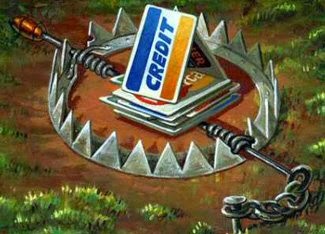
The reason why it is such a bad thing to begin using large amounts of debt to finance short-term operational expenses is because of the mismatch it creates between the life span of the expense and the term of the debt. It makes absolutely no sense to pay principal and interest payments for a government-issued bond for thirty years for the sake of buying something like police cars today that will most likely be decommissioned in less than five years time. By the time the debt that supported these kinds of expenses will be paid off, the benefits provided to the public will have been long forgotten.
When that kind of mismatch develops between the term of government-issued debt and the lifespan of the things it funds or sustains, it is a clear indication that the government has crossed the event horizon for its debt, which can now spiral out of control and become a debt death trap. In this situation, a government must issue ever-increasing amounts of debt to sustain the excessive spending ambitions of its politicians, who often will be long gone or perhaps even in prison by the time the bills they racked up through their fiscal malfeasance might fully be paid.
Unfortunately, that is the story of many local governments and municipalities around the United States, which are increasingly turning to bankruptcy proceedings to escape the fiscal recklessness of their civic leaders. And while it has not yet reached that point, it is today's developing story for the City of Chicago. The Chicago Tribune's Jason Grotto, Heather Gillers, Patricia Callahan and Alex Richards report:
When municipal officials want to build for the future, they have a powerful financial tool at their disposal: general obligation bonds that yield millions of borrowed dollars. The money is meant to let cities move forward on costly projects that will serve the community for decades.But in an unprecedented analysis of Chicago’s finances, a Tribune investigation found that city officials have long abused their borrowing privileges, spending funds meant for long-term initiatives on problematic short-term expenses from library books to legal settlements.
Residents know little about it, as Illinois law doesn’t require Chicago to ask voters’ permission before issuing bonds. And when the city can’t pay what it owes, it uses yet more borrowed money as leverage to push off payments on old bonds.
This pattern of fiscal recklessness, which started under former Mayor Richard M. Daley, created a mountain of debt that threatens the financial future of the city. Now Rahm Emanuel is groping for ways to deal with the problem along with a looming pension crisis and chronic budget deficits.
Once a debt death trap begins, an ever-increasing portion of a government's spending must go to support its debt obligations. The interest rates that the increasingly fiscally-distressed government must pay to its lenders for new debt to sustain its spending also increase at the same time, because the lenders recognize that the government is less capable of making its debt payments from its available tax collections, so they must protect themselves from an increased risk of default by charging a higher price for the money they lend.
That vicious cycle then repeats and becomes amplified over time, which makes it more and more difficult to escape from that situation as the government's debt situation spirals out of control and it becomes stuck in a debt trap of the politicians' own making.
Faced with that situation, many politicians increasingly turn to tax hikes to try to balance their government's books, but these measures invariably fail because of how adversely they affect the local economy that supplies the tax revenue that supports the government's operations. The negative impact of these tax hikes create a massive fiscal drag that far outstrips the impact of what simply cutting their government's unsustainable amount of spending to more fiscally-responsible levels would have been, if only they had been willing to reduce their spending.
So why don't the politicians do the fiscally-responsible thing and reduce the amount of their spending to a more sustainable level long before it even puts the government at risk of a debt crisis?
In many cases, the unsustainable level of spending that puts their government at risk is really what the politicians promised to deliver to their political backers in exchange for the endorsements and campaign contributions that help put them in power, which is why they resist taking that responsible action so strongly. It is far more important to them to meet their backers' needs than those of regular citizens, and particularly so when their political backers gain so much from the government's spending.
In the end, the only way out is to make the political sacrifice and cut government spending to sustainable levels, while at the same time defaulting on their debt obligations and seeking relief through bankruptcy. The people who get hurt the most as that process plays out are the regular citizens whose real interests were being ignored by the politicians all along.
And how that process will play out is the real story that is developing in Chicago today.
I disagree. Government should get completely out of the education system. Roads and bridges should be funded by the gas tax that already exists, not debt. Water treatment should be funded by the people who use that water system. Airports should probably be funded by airlines and others
Old Adage:
“There is nothing wrong with creating debt as long as you use that debt to create value.”
Too bad our federal government has ignored that sage advive for the last 80 years or more.
A lot of money supposedly earmarked for vital infrastructure is siphoned off for crap like bike trails or pays for public transportation that few of us use.
Our government have become cargo cuultists who think plopping down a bunch of money will attract business when they should be looking for where the need exists and doing only what they only have to do to promote it.
The trade bottleneck at the Detroit river crossing is a good example, fortunately Canada is picking up the tab for the new bridge.
Remember when the $900 Billion Obama Stimulus was going to upgrade the electrical grid and rebuild our bridges, highways, railroads and other infrastructure?
Now much of it is sitting in secret Swiss bank accounts.
The rest of it was wasted on goofy "green" projects as a way to funnel money to Obama's pals and financial backers.
One of the reasons tax revenue should be kept where its generated. It makes it easier for the people to keep tabs on it and it and the local politicians entrusted to manage it.
bump
Disclaimer: Opinions posted on Free Republic are those of the individual posters and do not necessarily represent the opinion of Free Republic or its management. All materials posted herein are protected by copyright law and the exemption for fair use of copyrighted works.