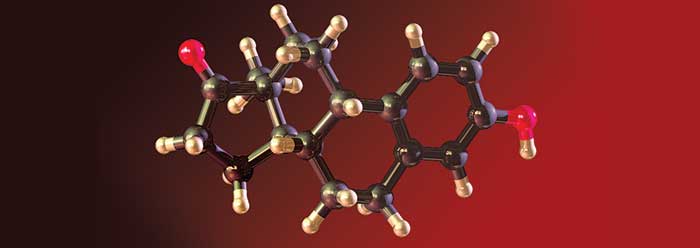
Image from online ICR article.
Posted on 09/12/2013 10:38:58 AM PDT by fishtank
Endocrine System Evolution: A Textbook Example? by Frank Sherwin, M.A. *
A student of zoology would be surprised to learn that, although researchers know much about the function of our endocrine system, they know essentially nothing about its supposed evolution.1
The creationist sees the incredible detail of the living world as part of God’s plan, purpose, and special design. Indeed, the various systems (e.g., digestive, muscular, circulatory, endocrine, etc.) of the human body working together is called homoeostasis, meaning the body is designed to maintain itself in a state of stable, healthy equilibrium.
The endocrine system is a complex arrangement of ductless glands that secrete hormones into the bloodstream. Hormones are regulatory substances (i.e., chemical messengers such as insulin and prolactin) produced by specially designed cells and are effective in low concentrations. As you read this article, dozens of hormones are flowing in your bloodstream—and these hormones are designed to impact only the cells that have special receptor molecules on their surfaces. If the matching receptor molecules are not on a given cell’s surface, the corresponding hormones do not affect that cell. Most of these receptor molecules are called G protein coupled receptors. God designed them to “sense” molecules (such as hormones or odors) outside the cell and activate special pathways inside the cell, resulting in a specific response.
The endocrine system is nothing short of fantastically complicated, and scientists are learning more about it every day. With each function and pathway elucidated, evolutionary explanations make less and less sense.
A 2013 zoology textbook by Stephen Miller and John Harley discussed the “evolution of endocrine systems.” With students and the public being overwhelmed daily with “the fact of evolution,” the authors committed just 220 words to endocrine system evolution! They wrote, “Endocrine systems could only arise following the evolution of circulatory systems that could carry hormones.”2 And they did not discuss “the evolution of circulatory systems” at all. They have, however, an evolution-based diagram that shows the “phylogenetic [evolutionary] trends in the circulatory systems of animals” (Figure 26.6).3 To the left of the diagram are black solid lines connecting the major groups of animals (e.g., mammals, birds, crocodilians, most reptiles, etc.). At the point where the solid lines meet one another, the name of the ethereal transitional animal is absent. To the right of these major animal groups is listed the kind of heart each group supposedly had. But these charts and descriptions do not address circulatory system evolution.
Returning to endocrine systems evolution, the authors simply wrote “that endocrine systems arose multiple times.” But they do not discuss how endocrine systems actually evolved. They do appeal to “a shared set of basic signal transduction mechanisms involved in paracrine communication [a type of cell-to-cell communication] in ancestral animals,” but this is hardly an explanation.2 How exactly did this intricate cell-to-cell communication evolve? “Basic signal transduction” is an oxymoron, since transduction is incredibly complex. Readers are invited to look this up online or in a recent physiology text, but they will not be able to find the names of these “ancestral animals” since they do not exist.
Miller and Harley also used two well-worn words that are ubiquitous in evolutionary literature and explain nothing: “over time.” Darwinists often use generous portions of “time” to gloss over macroevolutionary problems—but this is not evidence for evolution. The zoology student is left knowing less about endocrine system evolution than he or she did before reading those cryptic 220 words.
The similarities of function and structure of vertebrate circulatory systems (including hearts) and endocrine systems reflect that they all have the same wonderful Creator. Truly, His amazing work is “clearly seen” in all of His creation (Romans 1:20).
References
Even more surprising, this statement can be made regarding virtually every biological system in people and animals.
Miller, S. and J. Harley. 2013. Zoology, 9th ed. New York: McGraw Hill, 479. Ibid, 487.
* Mr. Sherwin is Research Associate, Senior Lecturer, and Science Writer at the Institute for Creation Research.
Cite this article: Sherwin, F. 2013. Endocrine System Evolution: A Textbook Example? Acts & Facts. 42 (9): 15.
Image from online ICR article.
Wait til the general public becomes more aware of the function of and evolution of the endocrine system
This is a weird piece with no detectible thesis, just a slam to ‘creationists’ and no real statement that I can easily find, skimming.
The scientific facts are there, though not widely published
Birth control of all types are messing with the endocrine system in general and even among families and among childre
So his complaint is that “an introductory general zoology text” “written for the non-majors or the combined course, presented at the freshman and sophomore level” (as Amazon describes it) doesn’t go into exhaustive detail on the evolution of one particular system? And that somehow proves something negative about evolutionary science or something?
Pretty weak.
This reminds me of the question. . .what can first, our immune system or our need for one?
its easy to believe in macroevolution if one believes that new biochemical pathways, which involve multiple enzymes working together in sequence, and nano-machines, requiring multiple protein/enzyme components, sometimes 10 or 20 at the same time, often in a necessary programmed sequence,and hormones and cells with the particular necessary hormone receptors, originate by a lucky accident
Disclaimer: Opinions posted on Free Republic are those of the individual posters and do not necessarily represent the opinion of Free Republic or its management. All materials posted herein are protected by copyright law and the exemption for fair use of copyrighted works.