Posted on 03/18/2010 8:21:31 PM PDT by ErnstStavroBlofeld
The multinational Lockheed Martin F-35 achieved its first vertical landing today, a major step forward for the struggling stealthy single-engine fighter test program.
The vertical landing took place about 1:23 p.m. EDT at Naval Air Station Patuxent River, Md. The aircraft rode more than 41,000 lb. of thrust to achieve the vertical landing; this milestone is key in proving the aircraft will be suitable for the U.S. Marine Corps, and British and Italian forces.
The landing occurred after an 80-kt. short takeoff at 1:09 p.m. About 13 minutes into flight, Grant Tomlinson, F-35 lead short-takeoff-and-vertical-landing test (Stovl) pilot for Lockheed, positioned the aircraft at 150 ft. above the landing site where he hovered for about 1 minute and then commenced the descent to the runway, according to company officials.
The test took place with BF-1, the first Stovl JSF off the production line. It was powered by Pratt & Whitney’s F135 engine.
The test comes only weeks after Defense Secretary Robert Gates said he would withhold $614 million in future award fees from Lockheed for the duration of the remainder of F-35 development. The development program has been extended by 13 months, and 122 aircraft were clipped from the near-term production profile to pay for a cost overrun
(Excerpt) Read more at aviationweek.com ...
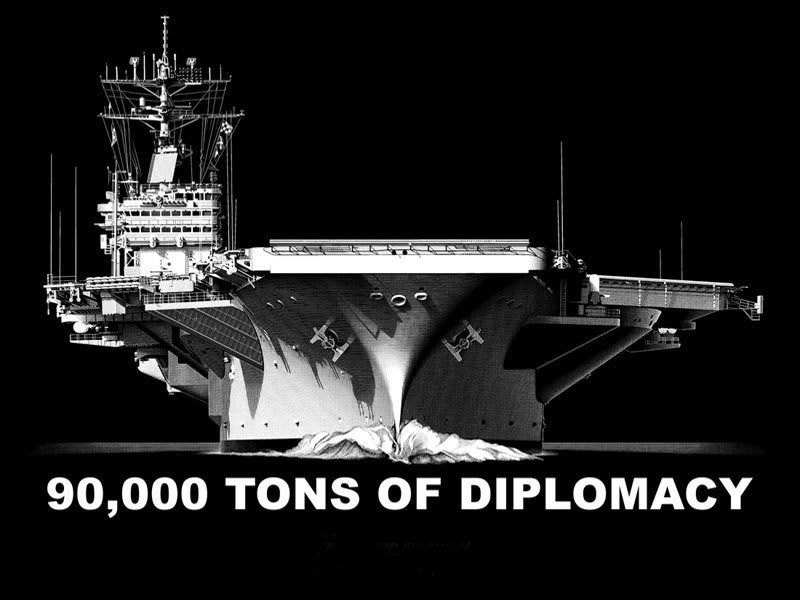
If you can succeed at the VTO thing you might could claim the thing would pay for itself by letting you get rid of the gigantic aircraft carriers.
If you can succeed at the VTO thing you might could claim the thing would pay for itself by letting you get rid of the gigantic aircraft carriers.
Uhh.....I don’t think you understand.
Thanks null and void.
And, she could be thousands of miles from an airstrip.
A sub skipper would likely see that as a big target. How many jeep carrier sized vessels could you build to carry VTO F35s for the same money, and how stealthy and how fast could you make them?


You can claim the moon is made of cheese if you want. However, the Marine Corps has been flying the Harrier since 1970, succeeding at that "VTO thing". Since then 10 Nimitz class CVNs have been commissioned.
It all comes down to physics.
A conventional aircraft relies on thrust and lift to attain flight.
An aircraft like the F-35B if it takes off vertically or uses a short take off profile, relies primarily on thrust, which uses a large amount of fuel.
For example, the Harrier if it takes off vertically uses so much fuel that it only has a range of about 100 miles.
During the Falklands War, Royal Navy Harrier launching off small carriers equipped with ski-ramps could only maintain combat air patrols of about 15 minutes before having to head home. This allowed the Argentinians almost uncontested bomb runs against Royal Navy ships.
If the Royal Navy had the HMS Ark Royal, a large aircraft carrier which launched long range conventional aircraft like the F-4 Phantom, it would have been a very difficult proposition for the Argentinian Air Force. Sadly, Britain decomissioned the Ark Royal in 1978 as a cost saving measure.
That, and a big carrier commands a LOT of anti-submarine assets.
Maryland PING!
Disclaimer: Opinions posted on Free Republic are those of the individual posters and do not necessarily represent the opinion of Free Republic or its management. All materials posted herein are protected by copyright law and the exemption for fair use of copyrighted works.