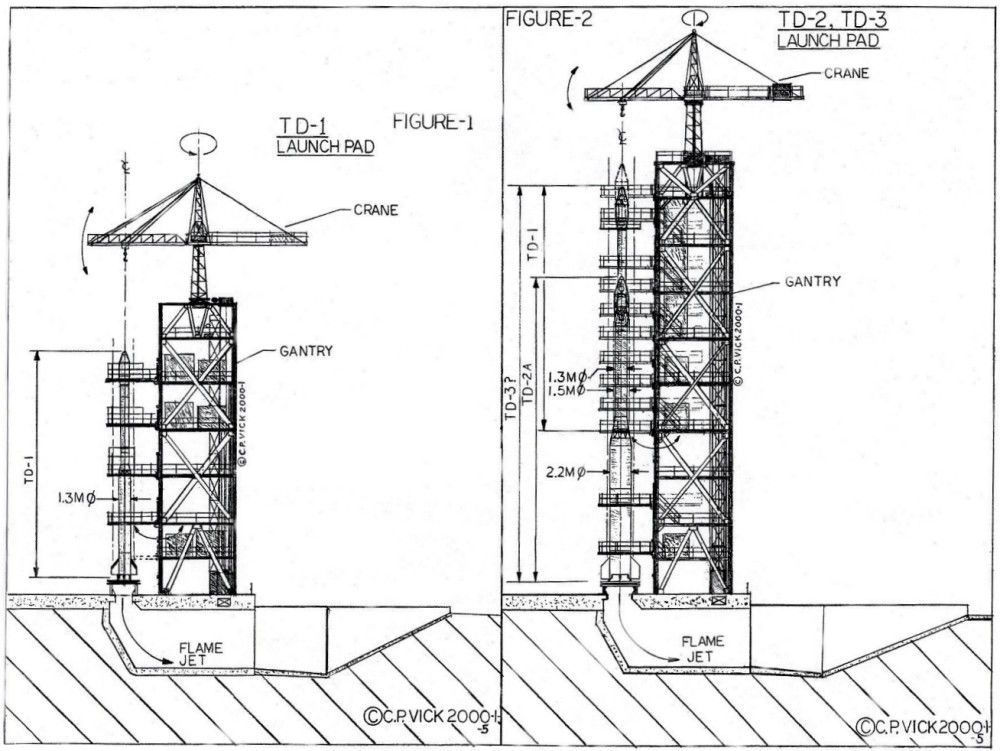
Rocket Gantry of a Taepondong at the Musudan complex
Posted on 01/21/2010 10:51:22 PM PST by ErnstStavroBlofeld
Japanese researchers announced their discovery that the North Korean Taepodong 2 missile that was tested last April, was eight times more accurate than the Taepodong 1 that was tested in 1998. No precise figures were given, but it's likely that accuracy for the Taepodong 2 is several hundred meters (the radius of the circle the missile warhead is likely to land in). North Korea has been working on Taepodong 2 for over a decade. The earlier model Taepodong 1, launched in1998, went about 1,500 kilometers. A 2006 Taepodong 2 test barely got off the ground before crashing. Last Aprils test only went about 3,000 kilometers. Future models of the Taepodong 2 might make it out to 7,000 kilometers or more.
Missiles of the Taepodong class are too expensive to use with conventional warheads, so accuracy isn't that critical. Early model Russian ICBMs were expected to land within a few kilometers of where they were aimed. No big deal, since these missiles were carrying large (several hundred kiloton, up to several megaton) nuclear weapons. At the moment, North Korea has only a few, large, crude nuclear weapons. Unless they received technical assistance from someone who had already developed nuclear weapons that can function in a missile warhead, it will take a decade or more before North Korea has a workable nuclear warhead on their Taepodong 2 missile.
(Excerpt) Read more at strategypage.com ...
Ping
Ping!
A missile with such a silly name couldn’t possibly ever hurt us.
Even Saddam Hussein was able to make a ballistic missile (Scuds). Crazy Kim never ceases to amaze me with his country's ineptitude. I have a feeling that if North Korea and South Korea ever went to war again, South Korea would roll right over the North (assuming of course that China doesn't get involved).
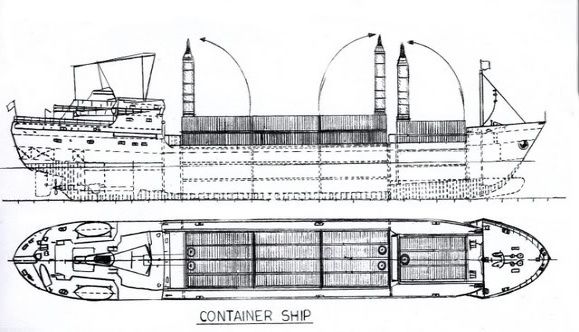
OPLAN-5027
Disclaimer: Opinions posted on Free Republic are those of the individual posters and do not necessarily represent the opinion of Free Republic or its management. All materials posted herein are protected by copyright law and the exemption for fair use of copyrighted works.