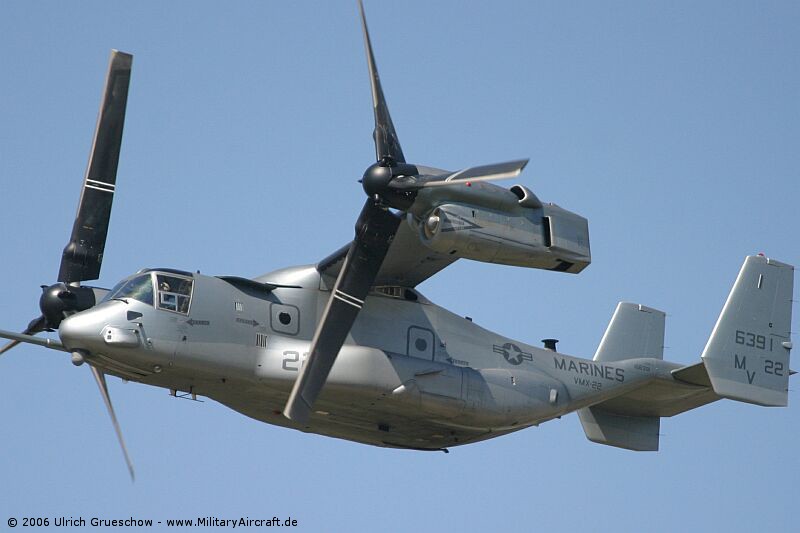
Posted on 09/08/2009 2:05:43 PM PDT by Yo-Yo
The U.S. Marine Corps is acting as the lead service on the Bell-Boeing MV-22 Osprey tiltrotor, with three deployments to Iraq under its belt and a squadron flying from the deck of the USS Bataan amphibious assault ship. Meanwhile, the U.S. Air Force Special Operations Command (Afsoc) is growing its own fleet of CV-22s, steadily building hours and mission profiles.
The Marines have recently suffered critiques from Washington for cost and performance issues, most notably in a May Government Accountability Office (GAO) report that cited the aircraft’s “unresolved operational effectiveness and suitability issues.” But the service takes exception to several deficiencies in the report. “We worked with the GAO for months, showed them everything, and yet we still think that their report misses the mark,” says Lt. Gen. George Trautman, deputy commandant for Marine Corps aviation.
The report covers ground trodden by the program for more than two decades, listing problems Trautman says the service is addressing or has dealt with already. Support for the platform has not ebbed among certain lawmakers despite a June declaration from Rep. Edolphus Towns (D-N.Y.), chair of the House Committee on Oversight and Government Reform, that the aircraft should be “put out of its misery.” Rep. John Murtha (D-Pa.), chairman of the House Appropriations defense subcommittee, traveled to Camp Lejeune, N.C., in August to seek what he called the “ground truth” behind claims made against the MV-22. “I’ve found that if you want to know the truth and understand the facts, it’s imperative that you get out into the field and speak one-on-one with those operating these systems,” says Murtha. “The Marines are very satisfied with the MV-22’s operations.”
The Afsoc fleet has not been subjected to similar scrutiny. While the Marines struggle to raise mission capability rates on the MV-22 from 62% in Iraq, Afsoc officials reported a 74.2% rate from an overseas deployment last year. Afsoc’s numbers are based on 93 sorties over 314 flight hours during the multinational Flintlock exercise in Africa last year. For this mission the entire logistics capability was focused almost solely on executing operational sorties there. The MV-22s have flown 55,000 hr. in three deployments in Iraq. Reliability and maintainability “are not meeting my full expectations yet,” says Trautman. Murtha notes as well that during his conversations with Marines about the MV-22, “the only concern they raised was the availability of spare parts, which is not uncommon for new systems.”
There have also been problems, for example, with the MV-22’s pitch-control bearings, which were designed to last for the life of the system but have begun to wear out, according to Col. Matt Mulhern, former MV-22 program manager. Also, difficulties in the operation of the engine air-particle separator (EAPS) are driving officials to look for an electric system to replace the hydraulic one. A direct correlation has been found between problems with the EAPS and engine wear and tear. In the short term, vanes fitted into the inlet are expected to better control the flow of air into the EAPS.
Program officials are also working on a fix for 85 wiring bundles in the engine nacelles. Dirt mixed with moisture was found to be chafing the wires’ coating and eventually the wires themselves.
Another issue is the soaring cost per flight hour of the MV-22s. The prediction for Fiscal 2009 was $5,362 per flying hour, yet the actual cost is 119% higher, $11,748, according to a May 18 memorandum for the House Armed Services seapower and expeditionary forces subcommittee. One factor driving the spike is the cost to repair the aircraft—without a depot facility, the service is forced to buy new parts. Mulhern has said the cost per flying hour is expected to go down by 20% within the coming year.
Afsoc has gained some hands-on experience training and operating with the CV-22’s specialized systems, including the Suite of Integrated Radio Frequency Countermeasures (Sirfc) that deployed with the aircraft during Flintlock. This complex defensive system was for a long time a watch item for the program because of development challenges. However, Maj. Dale Linafelter, Afsoc’s CV-22 requirements officer, says the system has operated well and officials have used it in various electronic warfare tests and for training in the U.S.
“Sirfc has been a success,” he says. “Because of its complexity, it was a challenge not only for the designers and engineers, but for the air crews.”
For the Flintlock deployment, the CV-22 also included the M240 ramp-mounted gun. Afsoc is training its crews to use a 50-cal. ramp-mounted gun on the CV‑22 as well, both for its superior range and its coverage of the backside of the aircraft.
A belly-mounted defensive weapon being designed by BAE Systems is still in testing and is “something we hope to get our hands on this year,” says Linafelter. It is desirable for 360-deg. defensive coverage, he adds.
While Afsoc is continuing to train crews for the young CV-22 fleet, the pacing item for the program is actually aircraft deliveries, Linafelter says. Five aircraft are expected in Fiscal 2010 and in 2011, and eight in Fiscal 2012. “They are producing crews fast enough that an accelerated delivery schedule . . . is what we are looking for,” he says.
The Marines have been able to celebrate several MV-22 successes; the most notable may be the aircraft’s first ship-to-shore medical evacuation mission. On June 29, the service announced it had used two MV-22B Ospreys to rescue a sailor who had sustained head, hip and chest injuries after falling. As the aircraft were returning to the USS Bataan June 25 after a routine mission, the pilots were notified of the emergency situation. The aircraft landed on the ship, loaded up the patient and medical personnel and traveled 147 naut. mi. in 37 min. to a regional airport, where an ambulance transferred the sailor to a hospital for treatment.
While the Ospreys were deployed and touted for their abilities to move Marines safely and quickly into combat zones, rescue missions figure strongly in the aircraft’s development heritage. The Ospreys were designed with combat, search-and-rescue (CSAR) missions in mind, and the tiltrotor was considered a frontrunner early on in the Air Force’s now-canceled CSAR-X replacement fleet competition.
The tiltrotor was ultimately ruled out because it was deemed too expensive. But now that the Pentagon has ordered a review of the whole CSAR mission, the V-22 may just find itself back in the running.
The maintenance piece is also garnering some attention. On July 15, Naval Air Systems Command of Patuxent River, Md., awarded the Bell-Boeing Joint Project Office a $24.5-million time-and-materiel contract for delivery of “safety correction actions, reliability and maintainability improvements and quick reaction capability improvements.” A $6-million contract also went to Northrop Grumman for configuration upgrades to the MV-22’s infrared countermeasures.
A new Maintenance Training Facility at New River, N.C., has been established to help the Marines learn how to tackle maintenance issues. The plant is a 40,000-sq.-ft. classroom, complete with a 26,900-sq.-ft. bay that can accommodate up to four MV-22s. The facility includes a sophisticated simulation environment that lets future Osprey technicians puzzle out real-world problems at their own pace.
Just down the road, at the Fleet Readiness Center East (FRC-East) in Cherry Point, the Marines now perform their real depot work. They schedule depot maintenance based on the calendar versus flight hours. Col. David Smith, FRC-East commanding officer, says MV-22s will begin to arrive at the facility after they’ve been operational for 60 months. He estimates the center will handle nine of the tiltrotor aircraft in the next couple of years, which should take approximately 3,500 man-hours over 90 days.
All eyes are on the Osprey’s impending deployment to Afghanistan. Demand for a flexible platform that can perform at high altitudes in hot temperatures is on the increase—and most helicopters cannot meet the requirements. The Marines have little doubt, though, that their tiltrotor is up to the task. “Afghanistan , especially with the dispersed nature of the forces in the south, is tailor-made for the Osprey,” says Trautman. “We see the Osprey contributing in a manner that no other aircraft can.”
That is one ugly bird, and not ugly in a good way like the warthog.
I’m sorry....those things look like they have way too many moving parts to be flying into combat landing zones.

Beauty in the eye of the beholder? The first time I saw one was when one was passing over I-10, near Hurlbert Field in the Panhandle of Florida. Awesome looking and making the a sound unlike anything I’ve ever heard.
Fast-Forward 10 months....hitching a ride on one is a treat and I feel special ‘cause my nephew crews on one in the Air Force. I ended up buying the whole crew drinks that night.
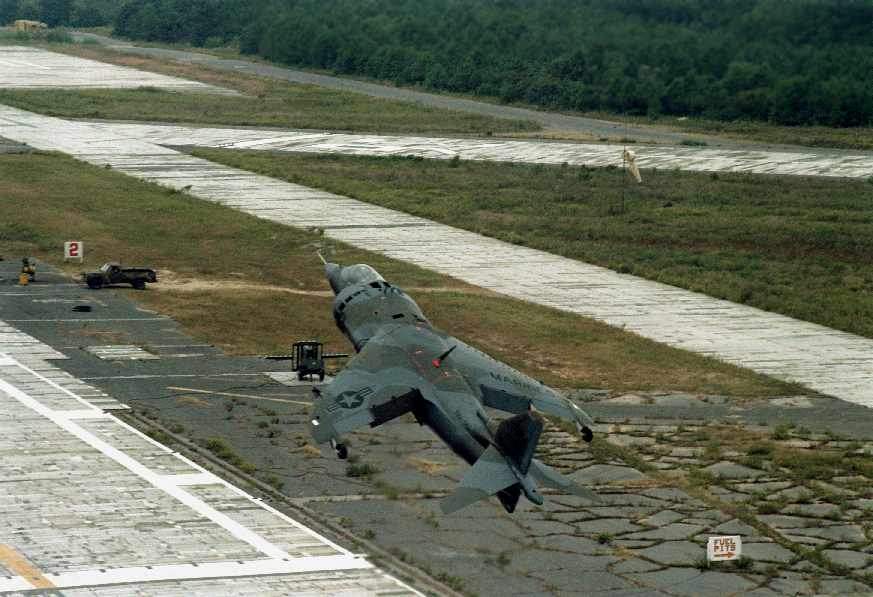
?......yes. Both have twin rotors and blade tilting but the tilt mechanism of the Osprey scares the heck out of me.

Glad to see it up there enabling our troops.
This is a bad “open-item” list for a 25 year old program!
I hired engineers away from that program in 1985!
I wonder if losing a synch shaft in a Sea Knight scares the hell out of you too.
At 277 mph cruise, that's $42.41 per mile, which happens every thirteen seconds.
And I wonder how much of that cost is 'expensive fuel'?
How is that relevant?
The Swiss Army Knife of Military Aircraft!
I flew CH-46’s in a former life, I would jump at the chance to fly an Osprey.
If you’d had ever been aboard a Sea Knight when it lost a synch shaft you’d know.
Disclaimer: Opinions posted on Free Republic are those of the individual posters and do not necessarily represent the opinion of Free Republic or its management. All materials posted herein are protected by copyright law and the exemption for fair use of copyrighted works.