
Posted on 10/01/2007 3:08:25 AM PDT by Virginia Ridgerunner
When Sputnik took off 50 years ago, the world gazed at the heavens in awe and apprehension, watching what seemed like the unveiling of a sustained Soviet effort to conquer space and score a stunning Cold War triumph.
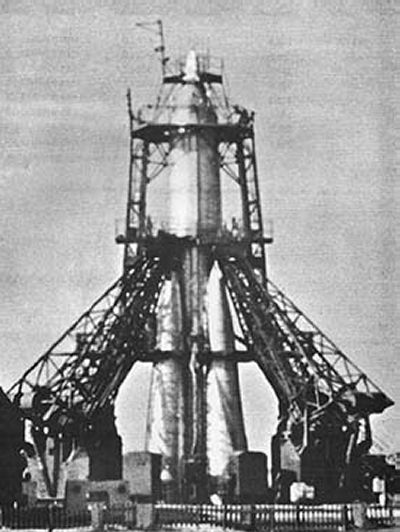
And that winking light that crowds around the globe gathered to watch in the night sky? Not Sputnik at all, as it turns out, but just the second stage of its booster rocket, according to Boris Chertok, one of the founders of the Soviet space program.
But 50 years later, it emerges that the momentous launch was far from being part of a well-planned strategy to demonstrate communist superiority over the West. Instead, the first artificial satellite in space was a spur-of-the-moment gamble driven by the dream of one scientist, whose team scrounged a rocket, slapped together a satellite and persuaded a dubious Kremlin to open the space age
(Excerpt) Read more at news.yahoo.com ...
The only reason the Russians are first at planting a flag on the sea bed at the North Pole is because no one else was interested enough to do so.
Sputnik is one of my earliest memories, at only 4 years old.
And now it’s spoiled by knowing it was just the booster.
(Having worked in the missile & satellite biz all of my adult life, this makes sense.)
I was 8 years old when I watched what I thought was Sputnik crossing the night sky. Very exciting! Now it turns out people were only seeing the booster rocket. lol Oh, well. I guess the booster qualified as a satellite, also. A man-made object put into orbit.
I recall reading that Wernher von Braun had a plan for launching the world’s first satellite by adding some small simple rocket as a fourth stage on top of a Redstone Arsenal 3-stage rocket. But this, if successful, would have upstaged the Vanguard satellite program, which had already fallen behind schedule. The story said that the General commanding Redstone Arsenal ordered von Braun to personally “climb the gantry to the top of the rocket and make sure there was no fourth stage installed”. So the USA missed its place in history due to internal politics.
Well, there was also a conflict between two competing U.S. versions of what American space exploration should look like. The Pentagon wanted the military to take the lead, and in fact had the Army’s Jupiter C rocket ready to go in 1956, while Eisenhower insisted that the effort should be civilian led to avoid the political perception that the U.S. was going to militarize space. Hence, we get both Sputnik (in 1957) and NASA (in 1959).
It’s a pity that Comerade Rocket Scientist does not get more recognition today.
Disclaimer: Opinions posted on Free Republic are those of the individual posters and do not necessarily represent the opinion of Free Republic or its management. All materials posted herein are protected by copyright law and the exemption for fair use of copyrighted works.