
The USS Nashville anchored off the coast of Beirut, Lebanon in July, 2006
Posted on 07/14/2007 8:16:01 PM PDT by sukhoi-30mki
Indian Navy Seeks Second Troop Carrier From US
Saturday 14th of July 2007
The Indian Navy has sought a second troop carrier from the US to build on its newly acquired capabilities but Washington would have to clear the sale of the ship before a deal was negotiated, a senior US military officer said Saturday.
'The Indian Navy has expressed interest in the USS Nashville. Congress has not yet approved the ship for transfer (sale). That is likely to happen next year and we can then begin negotiations,' Lt. Gen. Jeffrey Kohler, director of the US Defence Security Cooperation Agency, told reporters here.
The Indian Navy had last month commissioned INS Jalashva, formerly the USS Trenton landing platform dock (LPD) it purchased for $53.5 million. The ship is expected to sail to India later this month from Norfolk, where it was extensively refitted after being decommissioned from the US Navy.
Kohler also admitted to a $5 billion cost escalation in the Jalashva deal.
'Both sides had agreed to control costs but unexpected issues arose. For instance, we had estimated that four ballast tanks needed work. It turned out to be twice the number,' he explained.
'There was the question of standards. We felt the tanks needed two coats of paint. The Indians said they needed four coats and we complied. Then, the cost of fuel had not been factored in. This alone cost $1 million. All this added up,' Kohler added.
The vessel was originally expected to cost $48.3 million. This has now gone up to $53.5 million.
Kohler also said the two navies had 'learnt a lot by working together' on refitting the ship.
'I can say that Indian officers and sailors can serve as a model to their tremendous leadership abilities and their capacity to absorb technology,' he added.
'We've learnt a lot by working together,' Kohler maintained, adding: 'The next time, we will be well prepared.'
The Indian Navy had sorely felt the need for a vessel like Jalashva in the wake of the 2004 Indian Ocean tsunami as it found it difficult to berth its vessels carrying rescue material as the jetties in most of the affected areas had been damaged.
In such a situation, a ship like Jalashva would anchor offshore and unload personnel and material via the four mechanised landing craft and six helicopters the vessel carries.
For military operations, Jalashva is capable of carrying 900 troops in full combat gear.
The USS Nashville anchored off the coast of Beirut, Lebanon in July, 2006
In an indirect way, this indicates that the US is supporting India’s effort to become a voting member of the UNSC, and also supports India as a balance to China in southern Asia and the Pacific.
That is, what matters in international affairs are four things: having a large, powerful economy; having a large, powerful military; an ability to project that military for both international and offensive operations; and the willingness to do so.


http://www.hindu.com/2007/07/13/stories/2007071354331500.htm
U.S., Japan, Australia and Singapore navies to participate in manoeuvres

A joint naval exercise between India and the U.S. in 2005, a file photo.
NEW DELHI: India will hold its biggest naval exercise with the U.S., Japan, Australia and Singapore in the Bay of Bengal in September this year, senior security officials here said on Wednesday.
The decision comes amid China’s concerns over last month’s meeting between India, the U.S., Japan and Australia and assurances by India and Australia that security and defence issues did not form part of the meeting’s agenda.
The concern over “encirclement of China’ was strong enough for Beijing to issue a demarche to all four nations, demanding the purpose behind the meeting. A demarche is a formal diplomatic communication from a country seeking information from another.
Sources said the naval exercise would see the participation of three aircraft carriers, two from the U.S. and one from India, besides several warships. This could be a rare occasion of a large flotilla undertaking manoeuvres in international waters close to India.
The spadework for the exercise was done earlier this year, well before the June meeting. The location of has been chosen to maintain distance from the arc of the Pacific Ocean skirting the borders of Russia and China where such moves could arouse Beijing’s sensitivities.
‘Malabar’ exercise
The last exercise of such magnitude took place in 2005 when the U.S. aircraft carrier USS Nimitz and INS Viraat participated in the annual bilateral exercise “Malabar.”
Later, after the Presidential fleet review last year, the two navies met at “short notice” south of Sri Lanka. An aircraft carrier was involved in the exercise.
For Australia, war games of this magnitude would be the first ever with India although the two sides had held preliminary exercises earlier. An Indian warship made port calls at Perth and Sydney. Later, an Australian warship arrived in Goa but exercises were called off due to bad weather.
Japan’s first interaction with the Indian Navy took place off its coast in April this year along with the U.S. Navy. However, the Indian Navy tried to balance out these interactions by touching base with China, Russia and Vietnam.
Meeting without agenda
Although the June meeting was held without any agenda and the participants decided not to publicise it or the agenda, visiting Australian Defence Minister Brendan Nelson told newspersons on Wednesday that security and defence issues were not on the agenda.
Australia was happy with its existing post-World War II security arrangements and did not wish to complicate matters by forging another security grouping in the region.
Bilateral arrangements
“We do not wish to have quadrilateral strategic dialogue in defence and security matters. We wish for separate bilateral arrangements,” Dr. Nelson said.
“We were conscious of not trying to create the impression of a gang-up against them [China]. I think at this time, none of the others wants to either,” a senior official of the Ministry of External Affairs told The Hindu after the June meeting.
The meeting was preceded by a joint statement on May 1 by U.S. Secretary of State Condoleezza Rice, Defence Secretary Robert M. Gates, Japanese Foreign Minister Taro Aso and Defence Minister Fumio Kyuma which spoke about a “common strategic objective” of “continuing to build upon partnerships with India to advance areas of common interests and increase cooperation, recognising that India’s continued growth is inextricably tied to the prosperity, freedom, and security of the region.”
Maybe they should check the cruise lines for ships that are about to be retired.
Somebody got hosed in that deal. You could buy a couple of nuclear subs or large Nimitz class carrier for less than that. Shoot, I'll take a contract to put 4 coats of paint on any ship in the navy for $5 billion.
Congress would rather spend the time blaming the President for the trade deficit.
H.M.S. - Her Majesty's Ship A.M.B. - Atta's My Boat - Italian Navy
ping
I was on the Nashville back in the late 80’s. It was a pretty decent experience.
|
|
AIRCRAFT UNDERWATER |
|
| - | ||
© Vice Admiral Vinod Pasricha, AVSM, VSM, NM (Retd.)
Images © Vice Admiral Vinod Pasricha (Retd.) via NHQ, New Delhi
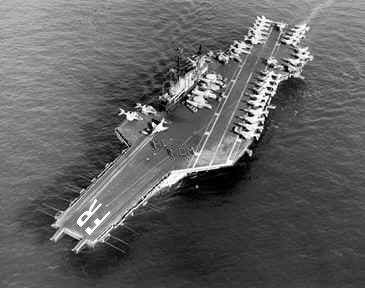
"Brakes, Brakes, Brakes," ordered an urgent voice over the aircraft radio. Unfortunately, Commander Peter Debrass was to recollect this only as, "Some crackling sound which I could not distinguish," and wondered who was conveying a message and to whom. This crackle at noon on 04 March 1976, began the opening chapter of two fateful minutes in the life of this experienced naval aviator. Peter completed his basic flying training at the IAF stations at Jodhpur and Secundrabad. He then came back to the Navy for his operational flying training on the Vampires, soon converting onto the Sea Hawks, the carrier based fighters. An absolute delight to fly, the Sea Hawks formed the main strike force of the carrier. As one of Indian Navy's ace pilots, Peter continued to fly with dexterity and smoothness and was soon an obvious selection for the flying instructors course, where like everywhere else, he topped the honours list. On 04 March 1976, Peter was embarked on INS Vikrant as the Commanding Officer of Indian Naval Air Squadron 300. Identified as 'The White Tigers', because their crest displays this magnificent beast leaping into the air, the Squadron had embarked on board only the previous day.
Peter was the leader of four Sea Hawks and since the Squadron was operating from INS Vikrant after a break of six weeks, he spent quite some time highlighting aircraft drills and possible emergencies whilst briefing his formation on the sortie profile. "Remember that you are being launched (naval terminology for a catapulted take off) from the carrier after a break. Approach the catapult chocks gently, stop the aircraft in time and signal to the Flight Deck Officer that you are ready." For a launch from the carrier, the aircraft is required to fulfil two conflicting conditions. The first requires the aircraft engines to be revved up to full power as soon as it is loaded on the catapult. At the same time, the aircraft must remain at rest with its brakes off. What seems an impossibility is made easy by the introduction of a hold-back unit. One end of this unit is secured to the aircraft and other to the deck keeping the aircraft stationary. The aircraft end of the hold-back has four claws held together by a steel ring. With the jerk of the catapult firing this ring breaks, the claws open and the aircraft is free to move.
Unlike expectations, the catapult has no elastic rubber components with an aircraft stretched in the centre. It basically comprises two steel cylinders connected to a launch hook (shuttle) which moves along a tracked rail on the catapult. High pressure steam is trapped in the cylinders. When this steam is released, the shuttle travels forward at high speed. By connecting a wire ring (bridle) between the shuttle and the aircraft, this movement of the shuttle is transferred to the aircraft pulling it ahead. At this moment, the hold-back ring parts and the aircraft is shot into the sky. As precision and timing are of great significance, the entire operation is controlled by the Flight Deck Officer (FDO), who communicates with the pilot through a code of hand signals and flags and with the flying control position (flyco) on intercom. The FDO drops a green flag to launch an aircraft and in an emergency raises a red flag which is used to freeze the launch procedure. No matter how often one witnesses a catapulting off the deck, the fascination never wears off. One moment you see an aircraft at rest on the flight deck and by the time you blink your eyes, it is airborne ahead of the carrier having achieved its flying speed of over 200 km/h in a takeoff run of less than 30 metres. As the first aircraft gets into the air, one hears the familiar call "Leader Airborne." Over the years, a desire for brevity has changed this call to "Leader Borne."
"Go over the emergence drills on the catapult," Peter queried his wingman, David McKenzie, during the sortie briefing. David had revived these often enough and immediately rattled them off, "A 'Premature Breakout' will occur on the launch if, for some reason, the bridle disengages before the shuttle is fired. This may cause the aircraft to surge forward. In a 'Cold Shot', the power generated by the steam may not be enough for the aircraft to attain flying speed after the launch. In both cases look at the FDO, but keep the power on. If he crosses his red and green flags, chop the throttle and sit on the brakes. If he doesn't, just brace yourself for the impact with the water, hoping that the aircraft can be nursed into level flight."
|
The Sea Hawk takes a dive, nose-down, right after clearing the ship - while the men aboard stare in horror. |
"Right. Let's man aircraft," said Peter and with that the four pilots went off to the flight deck to strap up into their Sea Hawks. As the carrier turned into the wind, Lieutenant Commander (Flying), affectionately called Little (F), blared over the flight deck broadcast, "Stand clear of jet pipes and intakes. Standby to start up the Hawks. Five, four, three, two, one, start up." All four starter cartridges fired simultaneously and a moment later, the engines started revving up. Pre-flight checks were completed and the R/T checked out. The search and rescue helicopter was ordered to get airborne and with all ready for the launch, Little (F) switched on the amber light, thereby permitted aircraft movement on the flight deck. Being the leader, Peter's aircraft moved straight onto the catapult. Little (F) flicked the control light to green and Peter started his launch procedure. All systems go, he gave the hand signal to the FDO who, after a last minute check, dropped his green flag and waited for the micro-second before the catapult would fire. As all eyes watched from flyco, Little (F) saw that something was amiss. The sequence had somehow gone awry as the hold-back parted and the bridle dropped down. The Sea Hawk was moving even before the catapult had fired. A second later, the shuttle shot forward but of what use? The aircraft and bridle had already disengaged. "Brakes, Brakes, Brakes," came the reflex R/T call from Little (F). David McKenzie and his colleagues heard this urgent message but on Peter's headset it came only as a crackle.
"Something seems wrong," thought Peter, "but since there is no signal from the FDO all must be well." Years of training to not throttle back on launch unless specifically signalled had its effect. The FDO noticed the bridle falling but could not figure out why? In that split second before he put his hands up to cross his flags, the Sea Hawk had overtaken him. He ran behind the aircraft, but was no longer in Peter's field of vision and so the Sea Hawk majestically plunged into the sea. Captain (later Admiral) Ram Tahiliani, in command of INS Vikrant was sitting on the Captain's chair on the bridge. Having himself commanded No.300 Squadron and been Little (F), his reactions were copy book and instantaneous. "Starboard 30. Stop both engines," followed immediately by "Full astern both engines." Both these orders are given only in a serious emergency. But the momentum of the carrier with its 20,000 tons displacement took time for the speed to reduce and the aircraft was already under INS Vikrant. The Martin Baker ejection seat of the Sea Hawk sends the pilot into the air along with the seat and his chute. For the parachute to deploy, the aircraft must have a forward speed of at least 175 km/h. As Peter fell off the deck, he realized that the aircraft did not have the necessary speed to eject and there was little that he could do to prevent his going into the sea.
"Should I eject underwater?" came the next thought. Theoretically it was possible but Peter also knew that in practice no one had ever tried it. For an underwater ejection to be successful, the aircraft would have to first sink for seven seconds to at least thirty feet so that when separation between the parachute and the pilot occurs, both are still below the surface of the water. "Thousand one, thousand two…….thousand six, thousand seven," as he counted it occurred to him that the propeller noise had died down, so the carrier must have crossed over." With that he pulled the blind. Bang! The ejection seat fired. What Peter didn't appreciate was that the carrier was still very much on top of him. It was only that the propellers had been stopped and thus there was no noise. The rescue helicopter, call sign 'Jumbo' was at its station, flying just clear of the carrier abreast the catapult. Strapped in this helicopter was the air crew man diver, ready to jump into the water to reach the ditched pilot and hoist him up by a winch into the Jumbo.
Lt. Timky Randhawa, the pilot of this Alouette was to later recall, "I saw the Sea Hawk plunge into the water at an altitude of 45º just twenty yards ahead of the ship. Immediately after hitting the water it started sinking very fast. It was almost fully underwater when the ship hit the starboard wing of the aircraft. Immediately after that I observed glass pieces flying out of the water on the port of the ship. At this stage I dropped a marine marker to mark the position and asked the air crew man diver to standby to jump. But thereafter, there were just no signs of the pilot or the aircraft." Action alarms sounded on board the ship and it was ready to deal with this emergency. The doctor, medical and rescue teams, and look-outs were all alerted with every one on the flight deck searching the water but Peter was nowhere in sight. Suddenly Jumbo called out "Flyco, I see a Mae West on the starboard side a little away from the ship. Am proceeding to investigate." This inflatable life jacket, aptly named after Ms Mae West, is bright orange in colour and is invariably the first object to be sighted during a search. Timky had done well, soon as his elated call came over the R/T, "It's Peter all right and he has given me a thumbs up signal." Relief all over and in less than a minute Jumbo had landed back on deck with Peter safe and sound. The entire chain of events had taken less than a hundred seconds. All was well and he was back with the Squadron.
"After I pulled the blind, the next thing that I became aware of was that I was scraping against the ship's side. I tried to push with my hands and kick with my feet to clear the ship. However, I felt I could not get away as there was a lot of turbulence in the water. I released my parachute which was dragging me down and inflated by Mae West whilst still underwater. Suddenly I found I was thrown away from the ship's side. When I surfaced I was well clear of the ship and was immediately picked up by Jumbo and brought back on board." Today, Admiral R.H. Tahiliani is at the helm of the Indian Navy as the Chief of Naval Staff, whilst INS Vikrant which has just completed 25 years of glorious service is commanded by Captain Peter Debrass. Their reactions when asked about the accident that occurred exactly ten years ago is, "We were lucky." Luck, perhaps yes, but it was years of experience, correct training and good drills which ensured reflexive and immediate actions. Peter's decision to wait before the ejection and Admiral Tahiliani's order to go 'Full Astern' causing the backwash to push him away from and not into the propellers, are together responsible for his second life. If Peter had time to make his R/T call on that fateful day, he would definitely have said, "Leader Reborn."
Captain Vinod Pasricha - Little (F) on that fateful day
June 1986
http://www.bharat-rakshak.com/NAVY/History/1970s/Pasricha.html
Got that from the wikipedia page on the Nashville.Dang!!!
I agree, the other summed figures in the article shows that they meant million not billion. It's just that we are so used to American shipyard cost overruns in the billions of dollars.
Whackypedia strikes again.
Post or FReepmail me if you wish to be enlisted in or discharged from the Navair Pinglist.
This is a medium volume pinglist.
Disclaimer: Opinions posted on Free Republic are those of the individual posters and do not necessarily represent the opinion of Free Republic or its management. All materials posted herein are protected by copyright law and the exemption for fair use of copyrighted works.


