Skip to comments.
Manifesto for a new “WE” (Major It's Not Islams Fault Alert!)
Tariquamadan ^
| 7/7/2006
| Tariq Ramadan
Posted on 07/07/2006 11:45:03 AM PDT by Dallas59
We have ample reason to be concerned. The situation of Muslims in Western societies has, for the last twenty years, been fraught with difficulty. If anything, this situation has worsened over the last five years. The “war against terror” launched after the events of September 11, 2001, along with repeated terrorist attacks throughout the world, increased tensions arising from social problems or from immigration have combined to portray Islam-and Muslims in general-as a threat to the societies of the West. Fear, and its accompanying emotional and often irrational reactions, has become a part of the public mindset. Such reactions, while often legitimate and understandable, are also being exploited with increasing frequency for political and electoral ends.
From Canada to Australia, by way of the United States and Europe, hardly a Western society has been spared its own searing questions of “identity”, its own “integration”-related tensions, and its own debate on the place of Muslims within its confines. Muslims, meanwhile, realize that the atmosphere has become more highly charged, that suspicions have deepened; they have become the subject of debates that are neither entirely transparent, nor very healthy. Muslims find themselves faced with clear-cut alternatives: they can accept their lot and adopt the attitude of the “victim”, the “discriminated minority”, who withdraws into itself and never ceases to justify itself or they can face up to their difficulties, become full-fledged subjects of their own History, and take the necessary corrective measures. It is only natural that they complain of the treatment handed them, that they criticize the racism and daily discrimination they must endure, but in the final analysis, their fate is in their hands. Nothing will change until they accept full responsibility for themselves, become constructively critical, and self critical, and respond to the creeping evolution of fear with a firmly grounded revolution of trust.
Handling fears; facing legitimate questions
Events of recent years have brought Western populations face to face with new realities and self-doubts as deep as they have been challenging. The increasingly visible presence of millions of Muslims in their midst has made them aware that their societies have changed: cultural homogeneity is a thing of the past, the question of their own identity has become complex, the real social mixing is an ideal that can only be achieved with difficulty, particularly when social problems such as unemployment, racism and marginalization multiply. This sense of instability, combined with the presence of a religion and a culture seen as “foreign,” has given rise to fears, and to questions that are perfectly legitimate, even though they may be expressed with a certain confusion. Are Muslims truly capable of living in secularized societies? Are their values compatible with those of democracy? Can they live side-by-side, and mingle with, their non-Muslim neighbors? Can they combat the shocking behavior exhibited in their name, in the form of terrorism, domestic violence, forced marriage and the like? Can they free themselves from their social ghettos, those breeding grounds of unemployment, insecurity and marginality?
Faced with these questions, Muslims must rise to the occasion. They must express confidence in themselves, in their values, in their ability to live and to communicate with full serenity in Western societies. The revolution of trust for which we appeal will depend, first and foremost, on self-confidence, on confidence in one’s convictions: the task is to reappropriate one’s heritage, and to develop toward it a positive yet critical intellectual attitude. They must be capable of affirming that the teachings of Islam summon Muslims first and foremost to the spiritual life, to introspection and to self-reform. They must forcefully insist that Muslims are expected to respect the laws of the countries in which they reside, and to which they must be loyal. Millions of Muslims are, in fact, already proving every day that “religious integration” is an accomplished fact, that they are indeed at home in the Western countries whose tastes, culture and psychology they have made their own.
Still, faced with legitimate fears, Western Muslims cannot simply minimize or downplay these questions. They must, as a matter of utmost urgency, develop a critical discourse that rejects the victim’s stance, one that criticizes instead radical, literal and/or cultural readings of the sources. In the name of the guiding principles of Islam, they must take a stand against, for instance, the use and misuse of their religion to justify terrorism, domestic violence or forced marriage. The future of the Muslim spiritual community will necessarily require institutions of religious training (Islamic studies, Islamology, imam training schools, etc.) to be established in the West and help to respond to western citizens’ expectations. With the same critical attitude, they must learn to make distinctions; they must not endorse the confusion that surrounds the debates related to their societies: social problems, unemployment, marginalization and immigration are not “religious problems” and have nothing to do with Islam as such. It is imperative to reject the “islamization” of educational and socio-economic issues that require political, not religious, solutions.
One of the most effective ways of responding to legitimate fears is to separate problems into their component parts, but without disconnecting these closely related elements. “Deconstructing without disconnecting” means that we accept, first and foremost, the obligation to distinguish what is strictly religious in nature from educational, social or immigration-related issues, and then analyze how cause-and-effect relationships are established at the socio-political grassroots. Citizens of the Muslim faith must contribute to a reformulation of the political questions of the day. Seen in this light, unemployment, school failure and delinquency have, as we already mentioned, no connection with Islam. Yet it is vitally necessary to grasp the reasons why Muslim citizens and residents bear the brunt of failure in these very areas. What new political, social and city-planning policies can we propose to redress this state of affairs, new initiatives that would enable us to combat segregation and self-segregation, and encourage a greater social justice and mixing at all levels of society?
Exploiting fear
The arguments that were, yesterday, the sole province of parties of the extreme right have unfortunately found a home within traditional mainstream parties. Political leaders increasingly play upon fear to mobilize voters and to promote increasingly hard-line policies for managing social problems, security and immigration. At a loss for creative, innovative ideas for promoting cultural pluralism or for combating unemployment and social ghettoization, they prefer the dangerous rhetoric of protecting “identity” and “cultural homogeneity”, of defending “Western values”, of imposing strict limitations on “foreigners” with, of course, the whole apparatus of new security laws to fight terrorism. These political discourses play upon deep-seated apprehensions, perpetuate confusion over the terms of debate, and promote a binary approach to socio-political issues. The implicit terms of the debate is often reduced to a distinction between two entities: “We Westerners” and “They, the Muslims”, even when citizens are Muslims.
The constant return to the same questions in national political debates (violence, women, integration, etc.) is far from innocent; the question of “Islam” often becomes a diversionary tactic that political parties employ to undermine their adversaries and attract voters. Racist and xenophobic speech proliferates; the past is reinterpreted so as to exclude Islam from the slightest participation in the creation of the Western identity, henceforth redefined as purely Greco-Roman and Judeo-Christian; individuals are tested at the border to determine their “moral flexibility” of immigrants, and laws reinforcing security become reflexive in these times of fear and instability, not to mention the policies of intransigence whose ultimate effect is to criminalize immigrants and asylum seekers.
In response to these attempts at exploitation and, on occasion, to the manipulation that accompanies them, citizens of the Muslim religion must behave contrary to the natural reactions. Instead of withdrawing from the public debate and into isolation, they must make themselves heard, step out of their religious, social, cultural or political ghettos and move forward to meet and reassure their fellow citizens. The policies of those who exploit fear are intended to create precisely what they claim to combat: by perpetually accusing Muslims of not being integrated, of setting themselves apart, of setting up barriers between “them” and “us” and of shutting themselves up in a religious identity they view as exclusive, the intellectuals and politicians who warn against the “naivety” of other politicians, against “the Islamic threat” or the “failure” of pluralist society or of multiculturalism, spread suspicion, create divisions and try to isolate the Muslims. As citizens, Muslims are today called upon to establish a rigorous critique of these very alarmist pronouncements that badly conceal the ideology they promote. In the name of Western values the Muslims must fight against policies that normalize common racism and discriminatory treatment, that stigmatize a portion of the population. The true loyal citizenship is a critical loyalty which means to refuse to have to permanently prove one’s belonging to the society in full knowledge of one’s responsibilities as citizen, lay claim to one’s rights and carry out a thoroughgoing critique of government policies when these policies betray the ideals of a democratic society.
A new “We”
If there is a contribution that Muslim westerners can bring to their respective societies, it is surely that of reconciliation. Confident in convictions, frank and rigorous in their critical outlook, armed with a broader understanding of Western societies, of their values, their history and their aspirations, they are ideally placed to engage their fellow citizens in reconciling these societies with their own ideals. The vital issue today is not to compare social models or experiences in a fruitless debate (as we have witnessed between the United States, France and Great Britain) but more simply, and in a far stricter and more demanding way, to take the measure of each society by comparing the ideals affirmed and proclaimed by its intellectuals and politicians, with the concrete practices that can be observed at the social grassroots: human rights and equality of opportunity (between men and women, people of different origins, skin colors). We must bring constructive criticism to bear on our societies, and measure words against deeds: all the citizens must adopt toward their society the same healthy self-critical attitude that Muslims must demonstrate toward their community.
Our societies are awaiting the emergence of a new “We”. A “We” that would bring together men and women, citizens of all religion-and those without religion-who would undertake together to resolve the contradictions of their society: the right to work, to housing, to respect, against racism and all forms of discrimination, all offenses against human dignity. Such a “We” would henceforth represent this coming together of citizens confident in their values, defenders of pluralism in their common society and respectful of the identities of others; citizens who seek to take up the challenge in the name of their shared values at the very heart of their societies. As loyal and critical citizens, as men and women of integrity, they join forces in a revolution of trust and confidence to stem the onrush of fear. Against shallow, emotional, even hysterical reactions they stand firm for rationality, for dialogue, for attentiveness, for a reasonable approach to complex social questions.
Local, National
The future of Western societies is now being played out at the local level. It is a matter of greatest urgency to set in motion national movements of local initiatives, in which women and men of different religions, cultures and sensitivities can open new horizons of mutual understanding and shared commitment: horizons of trust. These shared projects must henceforth bring us together, and give birth to a new “We” anchored in citizenship. Of course, “intercultural” and “interfaith” dialogues are both vital and necessary, but they cannot have the impact of the shared commitment of citizens in the priority fields : education, social fractures, insecurity, racisms, discriminations, etc.
Together they must learn to question educational programs, and to propose more inclusive approaches to the sum of remembered experience that make up today’s Western societies. These societies have changed, and the teaching of history must change apace; it must include the multiplicity of these experiences; it must even speak of the dark periods of history, those of which new citizens of the West have often been the original victims. Alongside the Enlightenment, and the progress and achievements of science and technology, something must also be said about slavery, about colonialism, about racism, genocide, and more. Objectively, without arrogance nor permanent sense of guilt. At the risk of touching off a competition for most-wounded victim status, a more objective reading of the memories building the current national History must be made official. On the social level, we must commit ourselves to a far more thoroughgoing social mixing in both our schools and our communities. Far more courageous and creative social and urban policies are needed, of course. But even now citizens can foster human interchange in and through projects focused on local democratic participation. National political authorities must go along, facilitate and encourage such local dynamics.
Western societies will not win the battle against social insecurity, violence and drugs through the sole security-based approach. What we need in our communities are social institutions, civic education, local job-creation, and confidence-building policies. Local political authorities can do much to transform the prevailing atmosphere of suspicion, and citizens, including Muslims, must not hesitate to knock on their doors, to remind them that in a democratic society the elected representative is at the service of the voter, and not the opposite. It is imperative that we become involved in national affairs, that we not allow ourselves to be carried away by the passions generated on the international scene. Still, it is clear that a critical discussion of how immigration is managed has yet to take place in the West: it is no longer possible to strip the Third World of its riches and in the same breath treat those who flee poverty and dictatorial regimes as criminals. Not only is such behavior unjust and inhuman; it is intolerable. To be and to remain the voice of the voiceless of Iraq or Palestine, of Tibet or Chechnya, of abused women and of AIDS victims (particularly in Africa, even though medication exists), is to take a stand for reconciliation in the name of the ideals of dignity, human rights and justice too often sacrificed on the altar of short-term political gain and geostrategic interests. In times of globalization, both local mutual trust and global critical mind pave the road towards reconciliation between civilizations.
A revolution of trust and confidence, of critical loyalty, the birth of a new “We” driven by national movements of local initiative: such are the contours of a responsible commitment by all the citizens in Western societies-for they lay claim to the benefits of a responsible, citizen-based ethic; for they want to promote the western cultural richness; for they know that survival will depend, imperatively, upon a new sense of political creativity. Citizens must work in the long term, above and beyond the electoral deadlines that paralyze politicians and hinder the formulation of innovative, courageous policies. When the elected official has nowhere to turn, when he no longer can translate his ideas into reality, it falls to the voters, to the citizens, to lay full claim to their ideals, and to make them a reality.
TOPICS: Crime/Corruption; Foreign Affairs; United Kingdom; War on Terror
KEYWORDS: blamethevictim; doublespeak; fifthcolumn; islam; itsnotmyfault; jihad; jihadinamerica; jihadineurope; terrorists; war; wehaditcoming; west
Navigation: use the links below to view more comments.
first 1-20, 21-22 next last
Not on your life dude...Islam is not compatible with anything accept enslaving and killing those who are not Muslims.
1
posted on
07/07/2006 11:45:06 AM PDT
by
Dallas59
To: Dallas59
This guy is forbidden from entering the US and France.
2
posted on
07/07/2006 11:49:37 AM PDT
by
Dallas59
To: Dallas59
NEVER FORGET
================= EXHIBIT 1 ================
London


================= EXHIBIT 2 ================
Madrid


================= EXHIBIT 3 ================
AMERICANS MURDERED ON A BRIDGE IN FALLUJA BY ISLAMIC SUBHUMANS


The War for Infinite Justice MUST BE ESCALATED
================= EXHIBIT 4 ================
TORTURE OF AMERICANS BY ISLAMIC SUBHUMANS

The War for Infinite Justice MUST BE ESCALATED
================= EXHIBIT 5 ================
VERY PARTIAL LIST OF ISLAMIC TERRORIST ACTIVITIES
Full list is pages and pages and pages and pages.
1968 Robert Kennedy assassinated
1972 Munich Olympics Sep-5,1972 (Black September)
1976 Entebbe Hostage Crisis, June 27, 1976
1979 Iran Hostage Crisis, Nov. 4, 1979 444 days
1979 Grand Mosque Seizure, Nov 20,1979
1981 Assassination of Egyptian President, Oct 6,1981
1982 Assassination of Lebanese Prime Minister, Sept 14, 1982
1983 Bombing of US Embassy in Beirut6, April 18,1983
1983 Bombing of Maring Barricks, Beruit, Oct 23,1983
1984 Hizballah Restaurant Bombing, April 12,1984
1985 Egyptian Airliner Hijacking, Nov 23,1985
1985 Rome Airport murders
1985 TWA Flight 847 hijacked, U.S. Navy diver murdered
1985 Achille Lauro hijacking, Homacidal maniac lived in saddams Iraq
1986 Aircraft Bombing in Greece, March 30, 1986
1988 Pan Am 747 Flight 103 Bombing, Lockerbie, 100's murdered
1988 Berlin Discoteque Bombing, Dec 21,1988
1992 Bombing in Israeli Embassy in Argentina, March 17,1992
1993 Attempted Assassination of Pres. Bush Sr., April 14,1993
1993 First World Trade Center bombing, February 26th, 7 Killed, Hundreds injured, Billions
1994 Air France Hijacking, Dec 24,1994
1995 Attack on US Diplomats in Pakistan, Mar 8,1995
1995 Military Installation Attack, Nov 13, 1995
1995 Kashmiri Hostage taking, July 4,1995
1996 Khobar Towers attack
1996 Sudanese Missionarys Kidnapping, Aug 17,1996
1996 Paris Subway Explosion, Dec 3,1996
1997 Israeli Shopping Mall Bombing, Sept 4, 1997
1997 Yemeni Kidnappings, Oct 30,1997
1998 Somali Hostage taking crisis, April 15,1998
1998 U.S. Embassy Bombing in Peru, Jan 15, 1998
1998 U.S. Kenya Embassy blown up, 100's murdered
1998 U.S. Tanzania Embassy blown up, 100's murdered
1999 Plot to blow up Space Needle (thwarted)
2000 USS Cole attacked, many U.S. Navy sailors murdered
2000-2003 Intifada against Israel - 100's dead and injured
2000 Manila Bombing, Dec 30,2000
2001 4 Commercial airliners hijacked, 250+ murdered
2001 World Trade Center attacked, 2800+ murdered
2001 Flight 93 murders
2001 Pentagon attacked, 180+ murdered
2002 Reporter Daniel Pearl, kidnapped and murdered
2002 Philippines American missionary, Filipino nurse killed
2002 July 4, El Al attack Los Angeles LAX, several murdered
2002 Bali bombing - 200 dead, 300 injured
2002 Yemen, French Oil Tanker attacked
2002 Marines attacked / murdered in Kuwait
2002 Washington D.C. sniper
2002 Russian Theater attacked, 100+ dead
2002 Nigerian riots against Miss World Pageant, 200 dead, dozens injured
2002 Mombasa Hotel Attacked, 12 dead, dozens injured
2002 Israeli Boeing 757 attacked by missiles, fortunately no one injured
2002 August Hotel bombing in Jakarta, Indonesia. 12 dead, dozens injured.
2003 Rusian concert bombing
2003 Phillipines airport and market bombing
2003 Foiled SAM plot in the USA
2003 UN Baghdad HQ Bombing
on and on and on and on their terrorism has gone .........
The War for Infinite Justice MUST BE ESCALATED
================= EXHIBIT 6 ================
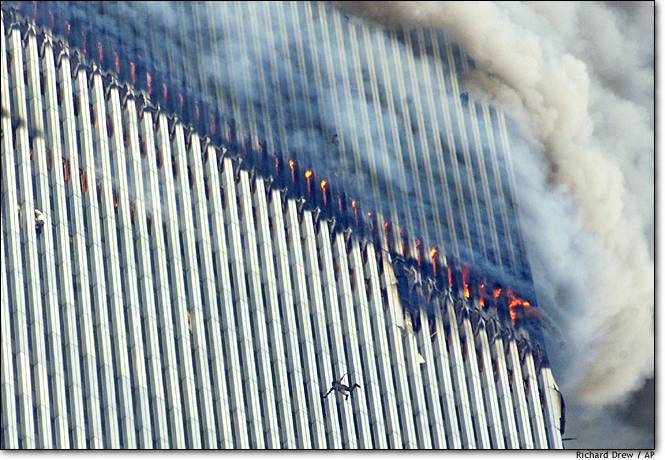
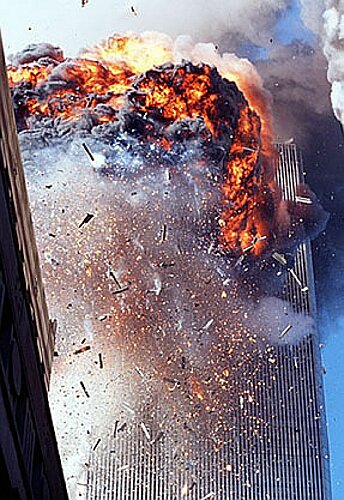

The War for Infinite Justice SHOULD HAVE BEEN ESCALATED IN 2001
================= EXHIBIT 7 ================
Russia at Beslan.


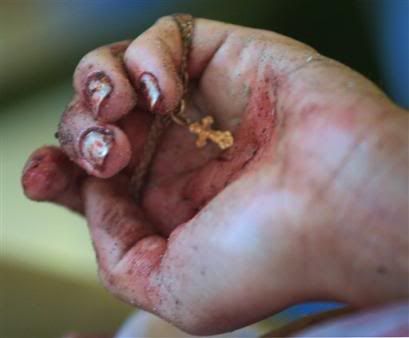
================= EXHIBIT 8 ================
=========== Documents linking Atta, Saddam, Nidal, bin Ladin ===========
Handwritten letter dated Feb. 19, 1998 linking bin Laden and Saddam Hussein
discussing arrival of a secret envoy sent by bin Laden to Iraq.
The signature beneath the letter is a codename, "MDA" - the Mukhabarat.

================= EXHIBIT 9 ================
===========
"Islam isn't in America to be equal to any other faith,
but to become dominant. The Qur'an should be the highest authority in America,
and Islam the only accepted religion on earth"
--Omar Ahmed, Chairman of the Board of CAIR (Council of American Islamic Relations), San Ramon Valley Herald, July 1998
Qur’an 8:12 “I shall terrorize the infidels.
So wound their bodies and incapacitate them
because they oppose Allah and His Apostle.”
Qur’an 8:57 “If you gain mastery over them in battle,
inflict such a defeat as would terrorize them,
so that they would learn a lesson and be warned.”


3
posted on
07/07/2006 11:51:32 AM PDT
by
Diogenesis
(Igitur qui desiderat pacem, praeparet bellum)
To: Dallas59
Why does the Western world have to "reform" itself?
Saudi Arabia, Iran, and Somalia are a couple examples of places that permit no human rights when it comes to religion.
"Do as I say, not as WE do..."
4
posted on
07/07/2006 11:51:33 AM PDT
by
weegee
(Seasons greetings and happy holidays this June-July!)
To: Dallas59
The implicit terms of the debate is often reduced to a distinction between two entities: “We Westerners” and “They, the Muslims”, even when citizens are Muslims. Except that there are plenty of Muslims who see it that way, too.
5
posted on
07/07/2006 11:51:35 AM PDT
by
Gordongekko909
(I know. Let's cut his WHOLE BODY off.)
To: Dallas59
Right off the bat the author had two points going against him.
First name Tariq. (as in Aziz)
Second name Ramadan.
6
posted on
07/07/2006 11:52:19 AM PDT
by
Bigh4u2
(Denial is the first requirement to be a liberal)
To: Dallas59
This is a crock from beginning to end.
7
posted on
07/07/2006 11:53:26 AM PDT
by
sageb1
(This is the Final Crusade. There are only 2 sides. Pick one.)
To: Dallas59
"blah, blah, blah.....have combined to portray Islam-and Muslims in general-as a threat to the societies of the West" And the fact that every terrorist ever has been a muslim shouldn't corrupt your thinking!
8
posted on
07/07/2006 11:55:43 AM PDT
by
patriot_wes
(Law of Unintended Consequences; Infant Baptism = an unbelieving, unsaved church.)
To: weegee
"Why does the Western world have to "reform" itself?"
We don't.
9
posted on
07/07/2006 11:55:54 AM PDT
by
sageb1
(This is the Final Crusade. There are only 2 sides. Pick one.)
To: Dallas59
This sentence holds the crux of the problem:
This sense of instability, combined with the presence of a religion and a culture seen as “foreign,” has given rise to fears,
I work in midtown Manhattan. There is no more culturally diverse place on the planet. When the author says the "presence of a religion and a culture seen as "foreign" " that gives rise to fears" he has it exactly backward.
The thing that gives rise to fears is the "foreign" religion that tries to believes glory and martyrhood can be achieved by blowing up buildings, buses, cars, pizza parlors, subways, clubs etc...
The thing that gives rise to fears is "Is today the day where a group of 5 muslim terrorists will rent a van, pack it with explosives and detonate it outside of my building?".
The thing that gives rise to fears is getting out of my train and waiting to take the escalator out of Penn Station while thinking "Is today the day a suicide bomber will detonate right here and kill 100 people?
Here in midtown we do not have any problem with Christians, Jews, Buddhists, Hindus, Zoroastrians, Animalists or anything else as long as they obey the law. We have a problem with Islam because its violent ahderents hide amongst us tend to blow themseleves up while trying to kill as many innocent civilians as possible. We have a problem with people like the author who then tries to let them claim victim status.
No, the problem does not lie with the inhabitants of Manhattan. The problem lies with the people who commit heinous acts in the name of religion, a practice that should have died hundreds of years ago.
To: Dallas59
[to the author]
And what about the life of Christians and Jews in the Islamic world?
To: Dallas59
Obviously, a man of intellect. If the issue were not so serious, it might be worth it to "de-intellectualize" this article to see the practicalities of the vision he has for this new "We" society.
Unfortunately, he and Muslims who think like him are not going to be leading the parade up Main Street. It is the bast@#ds that are currently murdering ice vendors in Bhagdad streets because it wasn't available in the time of the Prophet are the one who are driving this issue. Would we even be talking about this if it wasn't for their willingness to intimidate and even murder to get their way? Those SOBs really DO intend to impose Sharia on the West if we are too gutless to stop them.
Moral and physical steel and plenty of it is the only proper answer for this challenge.
12
posted on
07/07/2006 12:36:16 PM PDT
by
Captain Rhino
( Dollars spent in India help a friend; dollars spent in China arm an enemy.)
To: Dallas59
"The situation of Muslims in Western societies has...been fraught with difficulty."
Duh! Islam is not a Western religion. Muslims are not a part of Western society. They are the square peg trying to force itself into the round hole, the fart in a crowded elevator, the brown shoes with the black suit. They don't belong, aren't wanted, need to leave. Take a hint!
13
posted on
07/07/2006 12:36:43 PM PDT
by
beelzepug
(I suffer no fool lightly!)
To: Dallas59
Are Muslims truly capable of living in secularized societies?Are their values compatible with those of democracy? Can they live side-by-side, and mingle with, their non-Muslim neighbors? Can they combat the shocking behavior exhibited in their name, in the form of terrorism, domestic violence, forced marriage and the like? Can they free themselves from their social ghettos, those breeding grounds of unemployment, insecurity and marginality? IMO:NO!
To: Dallas59
15
posted on
07/07/2006 12:41:04 PM PDT
by
expatpat
To: Dallas59
the racism and daily discrimination they must endure Those insolent infidels giving them dirty looks and muttering insults and refusing to step down off the sidewalk to make way for Allah's faithful.
16
posted on
07/07/2006 12:43:11 PM PDT
by
Alouette
(Psalms of the Day: 60-65)
To: Dallas59
The situation of Muslims in Western societies has, for the last twenty years, been fraught with difficulty.No problem. Just let them go back to the sh*hole they came from, and the problem goes away. Let them bitch about their problems with the locals in their own Muslim country.
17
posted on
07/07/2006 12:43:20 PM PDT
by
expatpat
To: expatpat
Tariq, I have news for you. Americans will NEVER submit to Islam. Not now. Not ever. We will fight you until the last man is standing, and I assure you it will be one of ours, not one of yours. We will never accept submission to your moon god, never submit to your enslavement of life, never submit to your primitive ideas of society, never submit to dhimmitude. Get used to it, Tariq. WE, not you, are the wave of the future.
18
posted on
07/07/2006 12:47:14 PM PDT
by
sdillard
To: Dallas59
Memo to self: Buy more ammo.
19
posted on
07/07/2006 1:01:17 PM PDT
by
Jumpmaster
(Teddy is all wet.)
To: Dallas59
If you actually read the article, I think there is little said that most Americans would disagree with.
For instance In the name of the guiding principles of Islam, they must take a stand against, for instance, the use and misuse of their religion to justify terrorism, domestic violence or forced marriage.
There is considerable debate about whether the author actually believes these principles or is just a master of doubletalk. But a lot of what he says sounds much better than CAIR, for instance.
20
posted on
07/07/2006 2:14:11 PM PDT
by
Restorer
Navigation: use the links below to view more comments.
first 1-20, 21-22 next last
Disclaimer:
Opinions posted on Free Republic are those of the individual
posters and do not necessarily represent the opinion of Free Republic or its
management. All materials posted herein are protected by copyright law and the
exemption for fair use of copyrighted works.
FreeRepublic.com is powered by software copyright 2000-2008 John Robinson