
Posted on 04/24/2006 3:55:22 PM PDT by billorites
Scott Crossfield, the University of Washington graduate who was the first man to fly at twice the speed of sound, was found dead Thursday in the wreckage of his single-engine plane in Georgia.
Crossfield, 84, dueled with Chuck Yeager a half-century ago in piloting rocket- powered aircraft. He helped design and then piloted the sleek X-15 rocket plane. He was a legend to aeronautic students at the UW, but he considered his cutting-edge career an ordinary profession.
|
AP | |
| UW grad, pilot Scott Crossfield sits in a centrifuge machine to experience extreme acceleration. He was first to fly at twice the speed of sound. | ||
Air traffic monitors had lost radio and radar contact with Crossfield on Wednesday as he was en route from Alabama to his Virginia home. Thunderstorms were reported in the area.
The cause of the crash, about 50 miles northwest of Atlanta, is under investigation. Crossfield was believed to have been the only person aboard.
"We're in a state of shock," said Adam Bruckner, chairman of the UW's Department of Aeronautics and Astronautics. "He was sort of a hero here to our department, our students, our faculty and others.
"What better role model can you imagine than someone who flew the greatest and the latest and then helped design an even better one?"
 |
||
| Crossfield | ||
Crossfield, a native of Berkeley, Calif., enrolled at the UW in 1942, interrupting his studies to serve as a Navy fighter pilot and instructor during World War II. He returned to Seattle to earn a bachelor's degree in 1949 in aeronautical engineering and a master's degree in aeronautical science in 1950. He worked in the UW's Kirsten Wind Tunnel from 1946 to 1950.
After graduate school, he joined the National Advisory Committee for Aeronautics (NACA), the predecessor of NASA, as a research pilot.
The Cessna 210A in which Crossfield died was a puny flying machine compared with the rocket-powered aircraft he flew as a test pilot. During his heyday, he routinely climbed into some of the most powerful, most dangerous and most complex pieces of machinery of his time, took them to their performance limits or beyond -- "pushed the envelope," as test pilots put it -- and usually brought them back to Earth in one piece.
Six years after Yeager broke the sound barrier, Crossfield set the Mach 2 record in November 1953, going twice the speed of sound and reaching about 1,300 mph in a Douglas D-558-II Skyrocket. The plane reached an altitude of 13.6 miles.
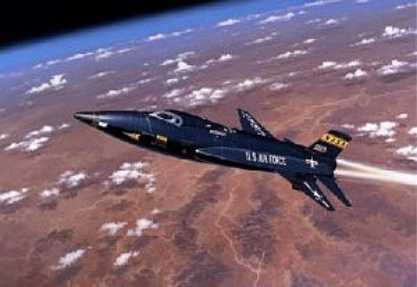
He left NACA in 1955 to help North American Aviation design and build the X-15, then flew the unproven aircraft in dangerous tests to prove its airworthiness. He piloted the rocket plane more than a dozen times, reaching a maximum speed of Mach 2.97 -- about 1,960 mph -- and climbing 16.7 miles above the Earth in 1960.
Crossfield is a hero, said former astronaut Bonnie Dunbar, president and chief executive officer of The Museum of Flight in Seattle, which gave him its Pathfinder Award in 1998.
"I remember when I was in high school, the physics book said it was impossible for man to break the sound barrier," she said.
In a 1988 interview with Aviation Week & Space Technology, Crossfield downplayed any talk of heroism.
Test pilots are "all just people who incidentally do flight tests," Crossfield said. "It is a profession just like anything else.... In my mind, we should divest ourselves of this idea of special people (being) heroes, if you please, because really they do not exist."
In other interviews over the years, Crossfield would say that he never thought he was making history, only progress; that he had a reputation as an iconoclast for challenging accepted methods; and that "every day, we were doing things we'd never done before."
During the 1950s, Crossfield embodied what came to be called "the right stuff," dueling Yeager for supremacy among America's Cold War test pilots. Yeager broke the sound barrier in 1947. Only weeks after Crossfield reached Mach 2, or twice the speed of sound, Yeager outdid him.
"He's really one of the major figures," said Peter Jakab, aerospace chairman at the Smithsonian's Air and Space Museum in Washington, D.C. "He was not only the great cutting-edge research pilot ... but after that, he continued to be a great adviser and participant in all aspects of aerospace."
 |
||
|
AP | |
| Scott Crossfield uses his hands to demonstrate how his helmet was hitting the cockpit canopy as he took the X-15 rocket plane through its first flight. In 1960, he reached a maximum speed of 1,960 mph. | ||
NASA Administrator Michael Griffin hailed him as "a true pioneer whose daring X-15 flights helped pave the way for the space shuttle."
In "The Right Stuff," author Tom Wolfe's history of the dawn of the space age, Wolfe portrayed Crossfield, Yeager and other members of the brotherhood of test pilots as possessors of "the right stuff," which the author defined as "the ability to go up in a hurtling piece of machinery and put his hide on the line and then have the moxie, the reflexes, the experience, the coolness, to pull it back in the last yawning moment -- and then to go up again the next day, and the next day, and every next day."
The first group of seven NASA astronauts was selected in 1959. Bob Jacobs, a NASA spokesman, said Thursday that Crossfield never applied, though he did some engineering work on the Apollo space program. Many test pilots sneered at the Mercury program and did not consider it real flying; they regarded astronauts as little more than "Spam in a can" because their capsules were controlled from the ground.
Attempts to break the sound barrier in the years after World War II involved high stakes and some big egos.
On Oct. 14, 1947, Yeager finally reached the landmark, pushing his orange, bullet-shaped Bell X-1 rocket plane past 660 mph over the Mojave Desert in California. His feat was kept top secret for about a year.
The now 83-year-old Yeager, in his book "Yeager: An Autobiography," described friction between the military pilots and the civilian NACA pilots. He groused that Crossfield "was a proficient pilot, but also among the most arrogant I've met. ... None of us blue suiters was thrilled to see a NACA guy bust Mach 2."
In a 1997 interview with The Orlando Sentinel, Crossfield said that he "knew a lot of good pilots and Chuck (Yeager) was just one of them. He was probably near the bottom of my list. His main goal as a test pilot was to see what airplanes were good for military use. I was a research pilot ... but many people tried to put us in the same book."
The competition did not end at Mach 2. On Dec. 12, 1953, just a few days before the 50th anniversary of the Wright brothers' first flight, Yeager bested Crossfield when he flew an X-1A to a record speed of more than Mach 2.4, or more than 1,600 mph.
The upcoming Wright anniversary had weighed on his mind, Yeager wrote: "The television networks had scheduled special programs about Crossfield and his Mach 2 flight. ... Our plan was to smash Scotty's record on December 12."
Nowadays, the best fighter jets can fly well over Mach 2.
Crossfield left NACA in 1955 to work for North American Aviation on the X-15 project, including its first flight, an unpowered glide, in 1959. Other early X-15 test flights were made by pilots Joe Walker and Robert White.
In one of his test flights, Crossfield reached about three times the speed of sound on Nov. 15, 1960, in an X-15 launched from a B-52 bomber. The plane reached an altitude of 81,000 feet.
There were some close calls. During an X-15 flight in 1959, one of the engines exploded. The emergency landing broke the aircraft's back just behind the cockpit, but Crossfield was not injured, according to the Edwards Air Force Base Web site.
Less than a year later, a malfunctioning valve caused a catastrophic explosion during a ground test while Crossfield was in the cockpit. He again escaped injury.
In later years, he was an executive for Eastern Airlines and Hawker Siddley Aviation and a consultant to the House Science and Technology Committee.
"I am an aeronautical engineer, an aerodynamicist and a designer," he told Aviation Week & Space Technology. "My flying was only primarily because I felt that it was essential to designing and building better airplanes for pilots to fly."
More recently, Crossfield had a key role in preparations for the attempt to re-enact the Wright brothers' flight on the 100th anniversary of their feat on the sand dunes near Kitty Hawk, N.C. Crossfield trained four pilots, and one of them, Kevin Kochersberger, was selected for the Dec. 17, 2003, attempt.
But in the end, unsuitable weather doomed the attempt to get the replica into the air. The plane plopped into wet sand as the crowd of 35,000 groaned.
Among his many honors, Crossfield was inducted into the National Aviation Hall of Fame in 1983.


Ping the aviation crowd?

At 84, you have to wonder if he should have been flying. Old age, and some of the problems it can cause do not care who you once were.
But, at least he died doing what he liked doing. You can't ask for a better way to go after a long and exciting life.
Prayers Up... RIP
Wasn't this the same university that Gregory "Pappy" Boyington, Medal of Honor winner, graduated from? Didn't the student government vote that he was not the kind of person the university should honor with a memorial?
You and me both. Scott Crossfield was one of the names I knew by heart as a fourth grader in love with spaceflight, back in the early '60's, before everything hit the fan in America. Yeager, Apt, White, Kinchloe; all heroic names I remember.
(steely)
On April 06th, the same student body, who had a member who did not want any more honoring of 'rich white men' (Boyington being mostly Amerindian and not rich), voted to create a memorial to the CMoH (Congressional Medal of Honor) awardees who had attended Univ of Washington.
"But, at least he died doing what he liked doing. You can't ask for a better way to go after a long and exciting life."
Yes, what a way to go. We should all be so lucky.
Yeah, ugly and unseemly IMHO.
A minority of the students engineered this diss.
It certainly doesn't reflect the common opinion of faculty or students.
Oh, my God.
If that happens to me...
I hope no one's taking pictures.
If that happens to me...
I hope no one's taking pictures.
If you make it to 84, you might need to find another hobby
I was going to comment that the schlock sci-fi movie, FIRST MAN INTO SPACE, was loosely based on the real life speculation that Crossfield might "punch it out" on his last X-15 flight. However, the movie's release date was in 1959, and Crossfield flew his last X-15 flight in Dec. 1960.
Actually, I find these dates confusing, because the movie is clearly based on the X-15 program, and Crossfield made the first powered X-15 flight in Sept. 1959 . Geez, I'm gonna have to find this thing and watch it to see what kind of footage it had.
Anyway, I was just a kid, and I saw this movie first-run after being fooled into thinking it was a straight aerospace movie. Of course, it's a monster movie, and my friend and I got scared and ran out into the lobby. The usher told us we had to stay seated or leave, so I did see the ending, which turned out to be rather touching.

Robert Scott, who wrote God is My Co-Pilot flew an F16 at age 82.
We had some very bad thunderstorms in the area where he crashed. Thunderstorms in the mountains it a light plane is not good.
In a 1997 interview with The Orlando Sentinel, Crossfield said that he "knew a lot of good pilots and Chuck (Yeager) was just one of them. He was probably near the bottom of my list. His main goal as a test pilot was to see what airplanes were good for military use. I was a research pilot ... but many people tried to put us in the same book."
Chuck knew the systems of his aircraft inside and out.
That's why Col. Boyd selected him to fly the X-1. He was more than just test pilot, seeing how these prototypes would be useful for the military. He had a sheer instinct for knowing what the aircraft was capable of.
R.I.P. Scotty...
Good article!
Disclaimer: Opinions posted on Free Republic are those of the individual posters and do not necessarily represent the opinion of Free Republic or its management. All materials posted herein are protected by copyright law and the exemption for fair use of copyrighted works.