It can't be done.
It's too expensive.
The border is too long.
We can't build it with our meager with our modern machinery, technology, and pre-fabrication capabilities. It's beyond our abilities now.
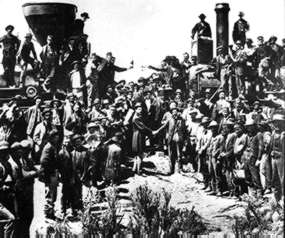
Nope, can't be done.
Posted on 11/28/2005 6:00:09 PM PST by Sybeck1
REPORT FROM CONGRESS By Congressman Roger F. Wicker
WICKER CALLS FOR U.S.-MEXICO BORDER FENCE
A plan to construct a security barrier along the 2,000 mile boundary between the U. S. and Mexico is at the heart of the most sweeping legislation ever introduced to fight illegal immigration and protect America's borders. I have joined as a co-sponsor of this bill, which would strengthen immigration law and send a message to the world that the U.S. is serious about solving this critical problem.
The TRUE Enforcement and Border Security Act includes provisions to increase border patrol agents, give law enforcement authorities more tools to catch and deport illegal aliens, and stiffen penalties on employers who hire undocumented workers.
NATIONAL SECURTY AT STAKE
U. S. Rep. Duncan Hunter, whose district includes the U.S.-Mexico border area in San Diego County, California, is the bill's author. He is also chairman of the House Armed Services Committee. The chairman correctly points out that illegal immigration has grown beyond a problem for states in the southwestern U.S. It has become a national security issue, and it is time for decisive action.
"Prior to September 11, 2001, illegal immigration was considered a regional issue without national implications," he said. "We quickly learned on that day that this is a national issue, affecting each and every American." While security efforts have increased in recent months, hundreds of people cross the U.S.-Mexico border illegally each day. This is a vulnerability that could be exploited by Al Qaeda operatives or other terrorist groups seeking entry into the U.S.
Illegal immigration is also having an impact on state and local governments and in communities all across the country. This growing influx is putting a financial burden on schools, our health care system, and delivery of other basic services.
FENCE FROM PACIFIC TO THE GULF
The bill's most noteworthy provision is creation of a border security zone which would run from the Pacific Ocean to the Gulf of Mexico. It would include the states of California, Arizona, New Mexico, and Texas in a plan to utilize "fencing, roads, and technology infrastructure" to secure the border from illegal crossings. It would be accompanied by addition of 25 new entry points to accommodate legal cross-border traffic.
While critics of the fence idea argue it would be costly, Chairman Hunter explains that the expense is only a fraction of the burden American taxpayers are shouldering for an estimated 11 million people in the country illegally today. The plan faces opposition from liberal political groups within the U.S., and from environmentalists, but support for the fence is growing. It is hard to deny the effectiveness of such a barrier. Federal authorities report that illegal entries have decreased dramatically in the areas where fencing has been used.
MORE AGENTS, MORE ENFORCEMENT
The legislation would authorize 10,000 new border patrol agents and 1,250 new investigators. It would create an Assistant Attorney General for Immigration Enforcement to focus on apprehension and deportation activities. These efforts include speeding court action against suspected illegals, alien smuggling/trafficking enforcement, and more emphasis on sanctions against employers who hire illegal workers.
The employer-sanction provisions are an essential element of any reform effort because they eliminate financial incentives that motivate many workers to come to the U.S. illegally.
The problem of illegal immigration is admittedly complex. If answers were easy, this would have been accomplished long ago. But any solution clearly begins with a secure border. I look forward to the debate on the bold idea of a security fence and the accompanying enforcement provisions. The outcome will reveal how seriously we view the problem of illegal immigration.
ping
Missipp ping!
ping
ping
It's only complex because Congress makes it so.
first Mexican customs facility in the United States
http://www.insidebayarea.com/businessnews/ci_3254225 ^ | 11/27/2005 | Garance Burke
Posted on 11/27/2005 4:42:00 PM PST by cope85
New Kansas City customs port may expedite trade with Mexico Region hopes to capitalize on growing cross-border trade By Garance Burke, Associated Press
KANSAS CITY, Mo. — Shipping American cars and electronics to Mexico may become much cheaper and faster early next year when the first Mexican customs facility in the United States is expected to open in the heart of the Midwest. It may be nearly 1,000 miles to the border from Kansas City, but this industrial hub will soon start building an inland port that would whisk thousands of trucks through export inspections and shoot them back out onto the North American Free Trade Agreement corridor, where they can roll through the border without further delays.
The $3 million facility, which would be the first foreign customs office inside the United States, will likely be approved by the U.S. and Mexican governments by year's end and is scheduled to open next May, said Chris Gutierrez, president of Kansas City SmartPort Inc., a nonprofit organization promoting the project.
Planners say manufacturing industries in the upper Midwest and Canada would be the first to benefit from the new customs operation, which they believe could expand to handle cargo from across the country.
Mexican government officials confirmed the two countries had agreed on the overall proposal, though both nations said finer points of the agreement were still being negotiated by customs officials — including security concerns and the legal standing of Mexican customs officials working in the United States.
After a visit to Kansas City in May, U.S. Customs and Border Protection Commissioner Robert C. Bonner said the pilot proposal was "bold and imaginative" and could transform Kansas City into a "major new trade link" that would fit well with new border security initiatives to pre-approve cargo.
"We've always had the railroad and the river and the airlines and the roads, but this will open up tremendous new business opportunities for Kansas City," said Kansas City councilwoman Bonnie Sue Cooper, who said she proposed the idea to the Mexican Finance Minister Francisco Gil Diaz last year.
In the 1940s, Kansas City — at the intersection of two major interstate highways along the Missouri River — was one of the country's largest rail distribution centers.
Now plans are to fill a gravel lot that once held cattle with a big-box building that will process long lines of big rigs packed with goods for export to Mexico.
Providing the containers stay electronically sealed once they're inspected, the trucks will be free to cross the border and avoid further inspections, resulting in efficiencies and cost savings.
"Kansas City is the geographical
heart of the United States and of the entire NAFTA region," said Everardo Suarez, Mexican consul general in Kansas City. Once the agreement is completed, Kansas City would essentially function like a Mexican port.
The transition to the global economy comes just in time: since the city's stockyards and airline industry declined, it has been struggling to rebuild itself as a leader in global logistics.
"I think this project would go a long way to transform trucking," said Chaz Jones, a research analyst with Morgan Keegan, a Memphis investment bank. "Truckers typically get paid per mile. The more time cargo spends moving on the road, the more revenue it generates for a carrier."
In recent months, delays at the hurricane-damaged port of New Orleans and bottlenecks at Long Beach and Los Angeles have caused companies to look for alternative trade routes. Industry analysts said Wal-Mart Stores Inc. is one of several companies moving freight through Mexico as an alternative to using West Coast ports; Wal-Mart spokespeople would not confirm the move.
Because so much trade between NAFTA partners is carried by truck, Midwestern cities with good transportation infrastructure stand to capture some of that trade flow.
In August 2005, trucks carried 64 percent of imports from Canada and Mexico and 80 percent of U.S. exports to those countries, according to the Bureau of Transportation Statistics.
San Antonio has also invested significant efforts to develop a competing inland port. But Kansas City officials hope the customs facility will give the city a leg up, especially once the project's second phase, which will allow rail cars to clear Mexican customs as well, is completed.
Kansas City Southern owns two Mexican train lines which means they can send freight from the Midwest directly to the Mexican port of Lazaro Cardenas, where car manufacturer Mazda Motor Corp. has begun shipping vehicles from Japan to Kansas City.
"There might not be enough volume to open a rail facility today, but we certainly expect that will increase in the next few years," said Warren Erdman, a vice president at Kansas City Southern. "We have great interest in the proposal."
You go Congressman Roger F. Wicker! A Guy with balls and brains is exactly what we need. Pay attention GWB.
A fence will work and could save this country billions in the long run.
We have the momentum, now we must see it through. Weeks ago, people scoffed at the idea of a wall/fence at the border. Now the politicians in Washington are feeling the heat, and we're getting close. We need an Israeli style wall as soon as possible, and we need a huge enforcement effort far beyond anything being contemplated now to see this through. Keep up the good work, folks; we're being heard.
That's just a risk we'll have to take.
Good for Hunter, but that figure on illegal aliens appears about 9M low.
Not if it's a wicker fence.
Whoa! Is it doable?
I was thinking that was a very low ball park figure; but I applaud what he wants to do.
Yeah.
The great wall of China was a complete waste of time. (s)
The Israeli wall is a waste as well. (more s)
Disclaimer: Opinions posted on Free Republic are those of the individual posters and do not necessarily represent the opinion of Free Republic or its management. All materials posted herein are protected by copyright law and the exemption for fair use of copyrighted works.