  |
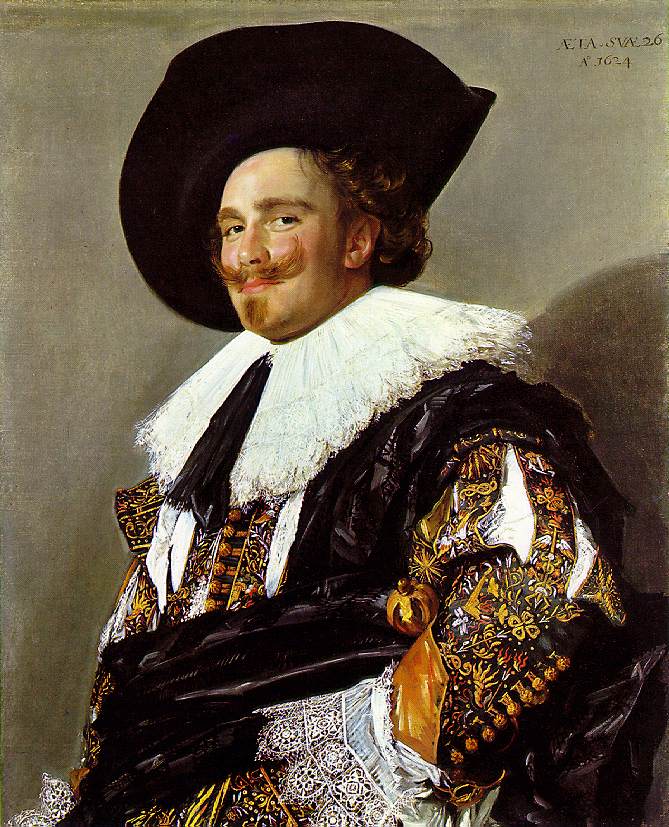
Guys who look like that do not "dethrone" guys like this. Europe waves goodbye. |
Posted on 03/03/2005 10:11:47 AM PST by Willie Green
For education and discussion only. Not for commercial use.
President George W. Bush's "charm offensive" in Old Europe largely fizzled, but that was okay. The issues that divide the United States and the European Union are still there, and that's good. The EU still wants Washington to join the Kyoto Protocol climate treaty and the International Criminal Court, while planning to sell weapons to China and still criticizing American policy in Iraq. In opposing the EU on all these issues, the Bush administration is acting wisely in defense of U.S. national interests.
An issue that was missing from the various joint statements and appearances of President Bush with European leaders was trade. The EU has been very aggressive in attacking U.S. economic policy at the World Trade Organization. Yet, in his radio address just prior to leaving on his European tour, President Bush cited trade as an area of transatlantic cooperation, saying, "America's strong ties to Europe are reflected in the largest two-way trading and investment relationship in the world. Today more than a fifth of all U.S. exports go to the European Union, and millions of Americans depend for their paychecks on the local affiliates of European parent companies." What he did not mention was that in 2004, the United States suffered a $110 billion trade deficit with the EU, with imports running 164% ahead of exports.
In his new book The United States of Europe: The New Superpower and the End of American Supremacy, Washington Post reporter T. R. Reid offers a "warning" about a "geopolitical revolution of historic dimensions." The European Union will become a "second Superpower" that sees itself not as the ally of the United States, but as its competitor in creating a new world order. This new order will be based on the utopian aspirations of 19th century liberalism: economic integration, disarmament, and world government, with a hefty dose of democratic socialism in the form of a comprehensive welfare system and corporate statism.
Reid bases his thesis of rising EU power on the size of its economy. In 2003, its 25 member nations had a combined Gross Domestic Product (GDP) of roughly $12.8 trillion, compared to U.S. GDP of $10.9 trillion. On a per capita basis, Europeans averaged $36,000 to an American's $40,000, though the EU figures look better due to the declining value of the dollar as U.S. finances have been hammered by massive trade deficits.
European firms are innovative and aggressive, and the EU has been fostering continental amalgamation to build giant "champion" firms that can win larger world market shares in key industries. European capital has also been very keen on buying up productive American assets, particularly brand names and high-tech firms. At a time when the Bush Administration is cutting back government funds for research and development, the Europeans are planning new "research areas" to bolster technology. Sweden pioneered cell phones, and the heavily subsidized Airbus outsold Boeing worldwide in commercial jets last year.
French President Jacques Chirac and German Chancellor Gerhard Schröder have expressed their desires to jointly spearhead European industrial policy. Engineering, aerospace, pharmaceuticals, shipbuilding, and other strategic manufacturing sectors were at the core of their discussion of how to create "champion" industries that can challenge American firms in critical markets – including the U.S. market.
Yet, EU economic growth has been slower than in the United States, with higher unemployment and lower productivity. Europe's cradle-to-grave welfare system saps vitality. High taxes and a culture that favors using productivity to increase leisure rather than output (the average Frenchman or German works the equivalent of ten weeks less per year than the average American) means that the EU has weaker domestic demand. It must rely more heavily on exports to tap into more vibrant foreign markets. Europe's GDP grew at a sluggish 1.8% in 2004 and may do even worse in 2005. Europe's best companies have been shifting more jobs abroad, led by a German exodus to China.
Germany has long been considered the economic powerhouse of the EU, but domestic job growth has slowed with most new positions of the low-wage variety. Workers are unlikely to see their pay rise substantially this year. January retail sales were down 0.3%, the third decline in four months. For that reason, German economic growth will remain among the weakest in the euro zone this year. The lack of domestic demand will drive German and other European firms to seek an ever larger share of the American market, to displace American firms and workers. Germany, with exports equal to about one-third of GDP, is a prime example of how trade is a poor substitute for domestic economic growth.
It is questionable how long Europe can maintain its drive for commercial advancement given the "pervasive technophobia" than Reid found there. British Prime Minister Tony Blair told him, "There's been a loss of faith in science, without any doubt, in Europe." The EU in the 21st century suffers from what historian John Brewer defined for the 18th century as "the Dutch disease, a malady that prevented a nation enjoying unequaled individual prosperity and extraordinary commercial sophistication from remaining a state of great influence and power."
The EU social model eschews the use of military force and thus Brussels cannot really play the role of a great power. International law, embodied in multilateral organizations like the United Nations and the World Trade Organization, is the "progressive" way the EU wants to conduct politics. The EU is the "civilian great power" that Jean Monnet envisioned in 1947. Most of it members would be hard pressed to field a brigade of first-class troops.
The reason European opinion has been so angry over Iraq is that Washington revealed the impotence of the EU paradigm. Paris and Berlin could prevent Washington from gaining a majority on the UN Security Council, but that did not stop the United States from invading Iraq and overthrowing a regime with which France and Germany had substantial economic ties. Nor did any EU member opposed to the American action have the military means to intervene and protect its interests. To the horror of self-styled progressives everywhere, Washington demonstrated that it could make things happen in ways Europe no longer can.
Unfortunately, the Bush administration has not shown the same resolve at the WTO or in the global commercial struggle. Mounting a challenge to the economic base upon which American power rests was a major goal of French socialist Jacques Delors, the father of the euro currency. If the preeminence of the dollar can be eroded, Washington will lose a powerful strategic advantage. The WTO, meanwhile, was designed to inhibit the United States from taking any unilateral action to protect its economic base. More great powers have been humbled by financial distress than by defeat in war, and this is the Achilles heel of American superiority – about which the Bush administration seems unaware.
Old Europe is not rising, it is in decline. The threat it poses to America is like that of a drowning man who pulls a stronger swimmer down with him in a final death grip. American leaders need to be on guard against EU rivals undermining U.S. firms. Nowhere is this danger greater than in the defense industry, where companies like the French-German EADS aerospace conglomerate or the French electronics giant Thales want the Pentagon to bail them out from the collapse of European military power. Americans should see Europe's distress as an opportunity to more firmly establish their own economic superiority. The priority in Washington should be to put U.S. industry and finances back on a firm footing by ending the massive trade deficit with Europe, as well as with China.
ping
answer: no.
The EU will have to move somewhat away from socialism, IMO, to dethrone America as a superpower. OTOH, the US will have to stop moving toward socialism if she wishes to retain her pre eminince.
"Old Europe is not rising; it is in decline," along with the comment about a drowning man pulling down a stronger swimmer, are the most accurate comments in this article.
Not that I have anything against Europe, and wish it to flourish and prosper.
The problem being, Europe is not likely to flourish and prosper as long as they let the old men of Paris, Brussels, and Berlin run things.
Combined with the apathy running rampant in America today and I'd say... Bingo!
Look what the British-Europe has done to Canada?
The reason European opinion has been so angry over Iraq is that Washington revealed the impotence of the EU paradigm. Paris and Berlin could prevent Washington from gaining a majority on the UN Security Council, but that did not stop the United States from invading Iraq and overthrowing a regime with which France and Germany had substantial economic ties. Nor did any EU member opposed to the American action have the military means to intervene and protect its interests. To the horror of self-styled progressives everywhere, Washington demonstrated that it could make things happen in ways Europe no longer can.
I think Europe's problem is the same one Senator Kerry shares: an instinct to appease.
It wasn't a "charm offensive" - it was - THIS IS THE PROGRAM - GET IN - GET OUT - OR GET OUT OF THE WAY!!
| |
Guys who look like that do not "dethrone" guys like this. Europe waves goodbye. |
And watch the havoc that creates.
I have seen posted here that the CIA evaluators say the EU has about 15 years of life left befor switching to a core EU with satelite format.
Does anyone have any links or specifics on that report?
Europe has always been fractious; self-interest always wins the day there.
Nineteenth century will not survive 21st century reality.
Disarmament?.......history shows that the strong will eat the weak, time and time again. Especially in these times.
We don't need the EU to dethrone America.
America is doing a damn good job of dethroning itself, with its globalist, andi-American agenda, and with Bush and the Republicans in bed with the Democrats regarding Marxist style social spending.
Disclaimer: Opinions posted on Free Republic are those of the individual posters and do not necessarily represent the opinion of Free Republic or its management. All materials posted herein are protected by copyright law and the exemption for fair use of copyrighted works.