NASA Confirms SpaceX's Starship Refueling Estimate! | 17:21
Ellie in Space | 232K subscribers | 1,683 views | October 23, 2026
Posted on 10/23/2026 3:35:53 PM PDT by SunkenCiv
NASA Confirms SpaceX's Starship Refueling Estimate! | 17:21
Ellie in Space | 232K subscribers | 1,683 views | October 23, 2026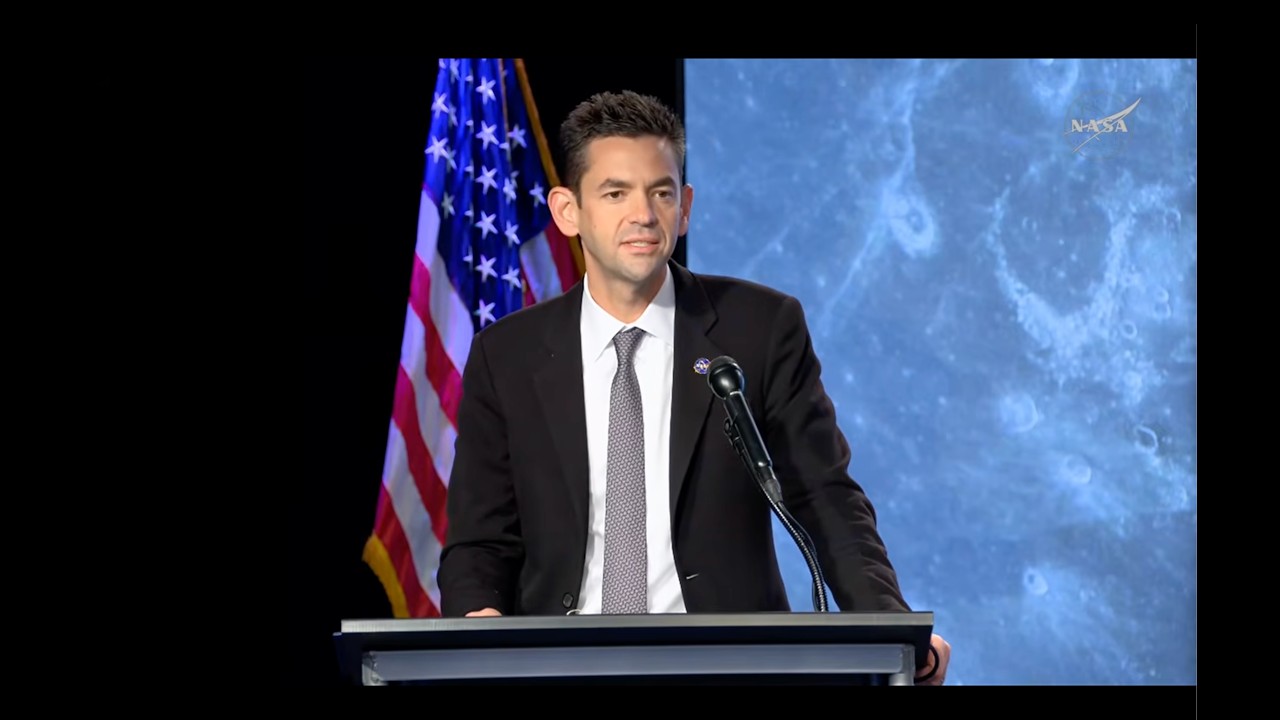
(Excerpt) Read more at youtube.com ...

|
Click here: to donate by Credit Card Or here: to donate by PayPal Or by mail to: Free Republic, LLC - PO Box 9771 - Fresno, CA 93794 Thank you very much and God bless you. |
YouTube transcript reformatted at textformatter.ai *may* follow.
🚀🛰️
Transcript
If you guys have been wondering what’s going on with Artemis 3, we just got a pretty lengthy update from NASA. It was about a two-hour live stream, so I wanted to make this highlight video for you because there’s a lot to cover. And these developments don’t just involve NASA. SpaceX and Blue Origin are also part of the equation.
In this Artemis Acceleration Live, NASA talked about a new mission architecture for Starship, an updated estimate for how many refueling launches SpaceX will actually need, major changes to NASA’s lunar space suits, and a completely different approach to getting astronauts to the lunar surface. And NASA is still targeting 2028 for the first American astronauts to walk on the moon in more than 50 years. And hard to believe we’re already almost in 2027, so it’s going to be a tight timeline.
Jared Isaacman, who is the NASA administrator, made it very clear that NASA is done accepting the slow pace of development that has characterized so much of the Artemis program. And here we are today, very much in a new space race. And despite decades of accumulated knowledge and extraordinary advancements in technology, this race will be much closer than it ever needed to be.
And why is that? I mean, China achieved its John Glenn moment, its first solo orbital human space flight just 23 years ago. Now, at that point, not only had NASA won the first space race, we put our astronauts on the moon six times. And at that point, we had flown 113 space shuttle missions before China had put their first astronaut in space. And from there, in 2003, a Chinese space program once in its infancy has since deployed hundreds of communication satellites, earth observation satellites, and military satellites. They’ve developed autonomous lunar landers and rovers. They’ve returned samples from the far side of the moon. And they are preparing alongside Russia to build a moon base of their own.
Now, China will soon have reusable rockets. They have spacecraft and landers and an infrastructure for a credible two-launch architecture to put their astronauts on the lunar surface in the next three years. Now this is a story as much about their discipline, focus, and urgency. It is about the weight of institutional inertia and misplaced priorities and decades of decisions, some imposed upon us and others of our own making, that have held America’s space program back. And that brings us to the moment we find ourselves in today.
Because the appetite for tolerating and defending the status quo has reached its conclusion. No longer will we create programs that are too big to fail and too costly to succeed in the hopes of trying to make everyone happy. We will not compromise our architecture, performance, or capabilities to accommodate the lobby of suppliers or to preserve technologies. Time has passed. We will not allow layers of process and bureaucratic inertia and endless deliberation to take precedence over engineering progress and getting hardware built and flown. We will not outsource our expertise anymore, and we will not dilute ourselves into believing that more time, more money, and flying less will somehow make our work safer or more achievable.
We are here for the mission and to deliver the outcomes the world expects of the most accomplished space agency in history. And what I am describing is not some long-overdue disruption. It’s not entrepreneurial thinking or tech industry pixie dust or some new management philosophy. It’s about our own history. It’s a playbook this agency knows really well. The same playbook that went from Apollo 7 splashdown to Apollo 11 in just 9 months.
He compared where NASA is today to October of 1968. At that point, Apollo 7 had just splashed down. Apollo 8 was preparing to launch. And within nine months, Neil Armstrong and Buzz Aldrin would be walking on the moon, which is really crazy to think about. NASA went from its first crude Apollo mission to landing humans on another world in less than a year. Jared’s argument is that with all the technology and experience we have today, NASA should be capable of moving much faster than it has been.
[ad text redacted]
So, Artemis 3 is going to be a very different mission. NASA is targeting summer of 2027 for this mission, which will send four astronauts into low Earth orbit. And unlike the original Artemis 3 plan, this mission will not attempt a lunar landing. Instead, NASA wants to test something that has never been done before. It’s planning to bring together three of the most powerful rockets in the world for one coordinated mission.
The Space Launch System or SLS rocket, SpaceX’s Starship, and Blue Origin’s New Glenn. First, Blue Origin will launch its Blue Moon test lander into Earth orbit aboard New Glenn. That spacecraft will be capable of waiting in orbit for up to a month, although NASA wants to minimize the time between launches.
Next, NASA will launch four astronauts aboard Orion using the SLS rocket. On approximately flight day three, Orion will rendezvous and dock with Blue Moon. And this is a really important test because the astronauts will actually enter the Blue Origin spacecraft. They’ll evaluate its environmental control and life support systems, test how the two vehicles communicate and operate together, and practice emergency procedures.
After that, things get really interesting. SpaceX will launch a Starship test vehicle into orbit. Orion will separate from Blue Moon and rendezvous with Starship around flight day 8. Now, unlike the Blue Origin demonstration, the astronauts will not enter Starship. Instead, NASA plans to conduct a roughly 2-hour docking demonstration. The goal is to understand how Orion and Starship behave when they’re connected, including their navigation, attitude control, and the physical forces involved in docking. And this is particularly important because Starship is an enormous spacecraft compared to Orion. NASA needs to understand how these two very different vehicles interact before attempting a mission around the moon.
The entire Artemis 3 mission is expected to last about 14 days with the ability to extend to 17 days if needed. And NASA says virtually every hour is already being allocated to tests, scientific experiments, and operational objectives. So NASA is essentially now trying to follow the Apollo approach: test complicated systems incrementally instead of attempting everything for the first time during an actual lunar landing.
Now, let’s get into what I think is one of the biggest stories from this entire briefing. How many Starship launches will SpaceX actually need to refuel its lunar lander? This has been one of the biggest questions surrounding Starship’s role in Artemis. We know that Starship will need a substantial amount of propellant to conduct a lunar mission. And because it can’t launch from Earth carrying all the propellant required for the entire mission, SpaceX plans to transfer cryogenic propellant between vehicles in orbit. But the question has always been, how many launches will that take?
During the briefing, a reporter brought up an estimate of approximately 22 refueling flights that had been discussed at a previous event. But Elon Musk recently disputed that number on X, suggesting the actual requirement would be closer to 6 to 8. And NASA’s Artemis program manager Jeremy Parsons gave a pretty revealing answer. He said NASA is not currently tracking a requirement as high as 22 launches and that SpaceX’s estimate of 6 to 8 is closer to what the company is planning for. But the final number will depend on several things including how much propellant Starship can carry to orbit, how efficiently it can transfer that propellant, and how much it lost during the process.
For example, NASA discussed conservative propellant losses of around 5 to 10%. That might not sound like a lot, but when you’re talking about enormous quantities of cryogenic propellant, even a small percentage can make a big difference. And that’s why the next major SpaceX demonstration is so important. NASA says SpaceX is targeting early 2027 for its first orbital propellant transfer demonstration between two Starships. The plan involves launching one Starship from Starbase in Texas and another from Kennedy Space Center in Florida. This test is intended to demonstrate the technologies needed to transfer propellant in orbit and eventually support a depot-based lunar architecture.
If SpaceX can demonstrate efficient large-scale propellant transfer, it will remove one of the biggest technical uncertainties facing the entire lunar Starship program. But until that happens, the 6 to 8 launch figures should be seen as a target, not a proven requirement. Also, NASA said that SpaceX is making significant progress toward flight 15. And we just saw flight 14 in September, the first orbital flight ever for Starship. But flight 15 could potentially involve a return to the launch site and an attempted catch of both the Superheavy booster and Starship itself. There’s also upgrades to the Raptor engines, including hardware improvements intended to address relight problems identified during previous flights. And they’re expecting the next Starship flight around November. So, flight 15 could be in less than a month.
But Jared says that SpaceX wants to eventually reach a near-weekly Starship launch cadence, which I know would be awesome for so many of you that want to see a Starship launch, but don’t necessarily have two to three weeks to spend down at Starbase if things get rearranged. NASA is also considering a significantly different architecture for how Starship and Orion will travel to the moon during Artemis 4. Under the accelerated concept presented, SpaceX would still assemble and refuel its lunar Starship in Earth orbit. But instead of having Orion travel independently to lunar orbit and rendezvous with Starship there, NASA is exploring a different approach. Starship would instead dock with Orion in high Earth orbit and actually help propel Orion toward the moon. In this architecture, Starship would perform the trans-lunar injection burn, effectively pushing the combined spacecraft toward lunar orbit. NASA says this could simplify the overall mission, reduce the number of required launches, and improve the probability of success. The agency has already approved modifications to Orion that would allow it to support this type of maneuver, and fabrication work is underway.
This also helps address a long-standing limitation of the Orion spacecraft. Orion was designed around an architecture that uses a relatively distant lunar orbit which places additional performance demands on the landers. NASA now wants more flexibility to get Orion closer to the lunar surface, and that’s a major theme throughout this briefing. Rather than forcing commercial landers to accommodate every limitation of NASA’s existing architecture, NASA is now modifying its own hardware to make the entire mission more achievable. And while SpaceX is getting a lot of attention, NASA made it clear that Blue Origin is still a serious contender to land the first Artemis astronauts on the moon.
Blue Origin is developing its Mark 2 crude lunar lander and NASA presented an accelerated architecture for that system as well. The plan involves launching three transfer vehicles derived from Blue Origin’s Mark 1 technology along with the Mark 2 lander. These transfer stages would work together to move the lander from Earth orbit toward the moon. Eventually, Orion would rendezvous with the Blue Origin lander in an elliptical polar lunar orbit where the crew would transfer into the lander for their descent. And this architecture could reduce some of the complexity associated with earlier mission plans.
Blue Origin is also preparing for New Glenn’s return to flight with pad operations targeted to resume in November. And its uncrewed Mark 1 cargo lander is expected to fly next year. Those missions are important because they will test engines, propulsion systems, and other technologies that share commonality with the future crude lander. NASA says that it wants to wait as long as possible before deciding which company will conduct the first Artemis lunar landing. Both companies, SpaceX and Blue Origin, have a path toward the 2028 landing, and NASA wants to preserve that competition while gathering more test data.
NASA also announced some significant hardware changes that could make these early lunar missions easier. First, the space suits. NASA and Axiom Space are developing a simplified lunar space suit called the sorty suit. They’re trying to reduce its mass from more than 500 lb to approximately 250 lb. The original suit requirements were designed around much more demanding future lunar missions. But NASA doesn’t necessarily need all those capabilities for its first short-duration moonwalks. So the new sorty suit will be optimized for shorter scientific excursions near the lander with a minimum surface EVA duration of 2 hours. NASA can then introduce more capable space suits as the lunar base expands and astronauts begin conducting longer surface operations.
NASA is also developing a stretched version of the United Launch Alliance’s Centaur upper stage. This upgraded stage would carry approximately 50% more propellant than the standard Centaur 5. And combined with a potential additional kick stage, it could give NASA greater performance and flexibility when sending Orion toward the moon. The goal is to reduce the burden on the commercial lunar landers and increase the number of opportunities NASA has to execute a successful mission.
So after all these announcements, the big question is whether NASA can actually meet its timeline. In fact, that was one of the questions from the reporters in the audience. Everything that has to happen between now and 2028 is an extraordinary amount of work. SpaceX still needs to demonstrate orbital propellant transfer, continue improving Starship’s performance, and eventually conduct an uncrewed lunar landing. Blue Origin needs New Glenn to return to flight to demonstrate its lunar hardware and complete development of its crude lander. And NASA needs to launch Artemis 3, qualify the necessary hardware, and prepare Orion and SLS for a much more demanding lunar mission.
But with new leadership, NASA has been making a lot of changes. I think they have a good shot of making it work. NASA even said it has cut some hardware processing times in half. It’s also reduced certain engineering issue resolution times by as much as 85%. And in one example, NASA engineers redesigned and fabricated a hydrogen quick disconnect system in-house in less than 5 months after a previous approach was expected to cost tens of millions of dollars and take years. So there is about two hours condensed into less than 20 minutes.
Hopefully, you guys enjoyed this update. One more thing, too. This was also a really big detail. Artemis 3 will feature Starlink, two Starlink terminals to give us some of the best coverage and footage that we’ve ever seen. So, that will be very exciting. A lot of really cool things and hard to believe that we’re already almost in 2027. So, yes, these timelines are pretty tight, but I really think that NASA has a chance to pull it off just in time.
She just had a baby didn’t she?
A few months back.
look at the ears on that dude ...
Hey, at least she’s stopped bringing it up in every video.
She looked good that day.
Wow, here the goal is manned boots on the Moon in 28. The other transcript posting indicated a 31/31 time frame, if I got it right.
That’s a big difference. I guess they gave to go go go if the Chinese are progressing so rapidly.
ugh, 31/32.
Disclaimer: Opinions posted on Free Republic are those of the individual posters and do not necessarily represent the opinion of Free Republic or its management. All materials posted herein are protected by copyright law and the exemption for fair use of copyrighted works.