Skip to comments.
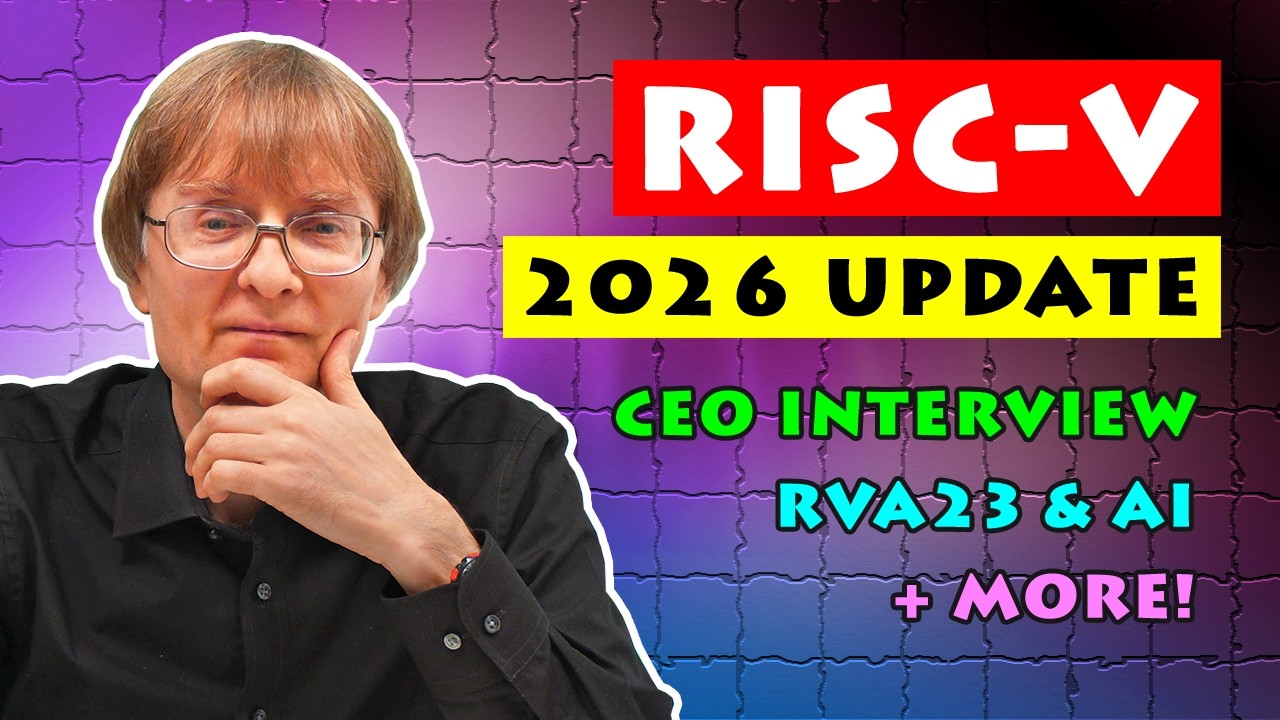
RISC-V 2026 Update [20:48]
YouTube ^
| April 19, 2026
| ExplainingComputers
Posted on 04/21/2026 8:03:39 AM PDT by SunkenCiv
Christopher Barnatt explores the rapidly growing RISC-V landscape, highlighting recent industry acquisitions and the adoption of the RVA23 profile for improved software compatibility. The overview covers developments in automotive, server, and AI sectors, alongside new hardware advancements and enhanced Linux support for this open-standard instruction set architecture. RISC-V annual review, including RVA23 silicon, AI, RISC-V in automotive, and an interview with RISC-V International CEO Andrea Gallo. RISC-V 2026 Update | 20:48
ExplainingComputers | 1.17M subscribers | 45,433 views | April 19, 2026
(Excerpt) Read more at youtube.com ...
TOPICS: Business/Economy; Computers/Internet
KEYWORDS: arm; linux; riscv; rva23
1
posted on
04/21/2026 8:03:39 AM PDT
by
SunkenCiv
Comment #2 Removed by Moderator
To: SunkenCiv
It’s hard to take a grown man with that hairstyle seriously.
To: SunkenCiv
What is old is new again.
To: Decombobulator
His family is AI bots and say he looks good.
To: Decombobulator; ImJustAnotherOkie
He’s the Capt Kangaroo of tech videos! How could anyone distrust Capt Kangaroo!
6
posted on
04/21/2026 8:47:43 AM PDT
by
SunkenCiv
(TDS -- it's not just for DNC shills anymore -- oh, wait, yeah it is.)
To: SunkenCiv
Apple was planning on moving to RISC-V eventually. I assume it will accelerate under their new hardware focused CEO. Why continue paying ARM when RISC-V is free ???
7
posted on
04/21/2026 9:57:12 AM PDT
by
libh8er
To: SunkenCiv
I used to work for Intel, and they’re concerned about ARM, but they’re absolutely scared to death of RISC-V. “In a few years, that’s all you’ll see”.
To: SunkenCiv
When the Raspberry Pi Foundation was developing the RP-2350 MCU used in the Pico 2, a pair or RISC-V cores was included in the chip as well as the primary dual Arm Cortex-M33 processors. It was a “corner of the desk” project by one of the engineers and switching was included to be able to select either ARM or RISC-V cores. With a focus on education, it was an experiment to see how the two architectures would compare in real-world embedded applications.
In various tests running actual DSP-based code, the RISC-V cores consistently perform as well or better than the ARM cores. They are much smaller, and being open-source do not carry the license fee required for ARM.
This bodes well for powerful new future microcontrollers with multiple RISC-V cores along with the highly innovative features the Pico is known for, such as its 3 programmable locic PIO blocks and the clock-doubling HSTX IO.
9
posted on
04/21/2026 11:12:10 AM PDT
by
bigbob
(We are all Charlie Kirk now)
To: bigbob
And here I thought that RISC as such had been co-opted piecemeal by ARM, nVidia, and even in part by the Intel chips.
10
posted on
04/21/2026 1:55:32 PM PDT
by
Dr. Sivana
("Whatsoever he shall say to you, do ye." (John 2:5))
Disclaimer:
Opinions posted on Free Republic are those of the individual
posters and do not necessarily represent the opinion of Free Republic or its
management. All materials posted herein are protected by copyright law and the
exemption for fair use of copyrighted works.
FreeRepublic.com is powered by software copyright 2000-2008 John Robinson