Skip to comments.
BREAKING: Artemis II Likely To Roll Back to VAB, Slips to April Launch [13:42]
YouTube ^
| February 21, 2026
| Ellie in Space
Posted on 02/21/2026 9:31:17 AM PST by SunkenCiv
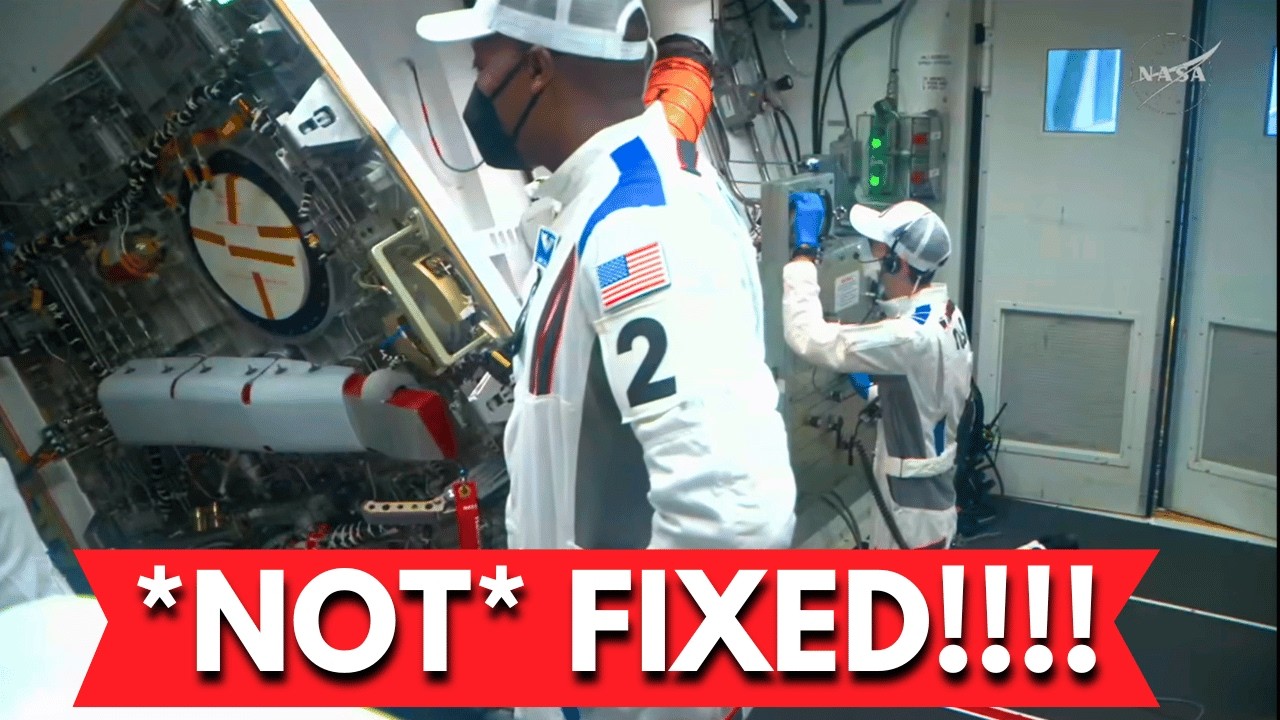
[snip] I just had to pull my video that I made last night about the leaks being solved. No more hydrogen leaks with Artemis and the launch being no earlier than March 6th. I literally just woke up and the information is now completely changed and it's not good. Jared Isaacman shared on X that after overnight data showed an interruption in helium flow in the SLS interim cryogenic propulsion stage, teams are troubleshooting and preparing for a likely roll back of Artemis 2 to the vehicle assembly building at NASA Kennedy. This will almost assuredly impact the March launch window... And remember, they didn't have like the entire month of March. They only had a few days in March. So, this will almost certainly make it if they roll it back that it is not going to be in March. It's going to happen in April. But this is a huge bummer because in that hour-long press conference Friday, they were super confident that the leak issue was over... [/snip] BREAKING: Artemis II Likely To Roll Back to VAB, Slips to April Launch | 13:42
Ellie in Space | 219K subscribers | 3,264 views | February 21, 2026
(Excerpt) Read more at youtube.com ...
TOPICS: Astronomy; Business/Economy; Science; Travel
KEYWORDS: anthonybyers; apollo11; artemisii; bluemoon; blueorigin; boeing; canada; christinakoch; ellieinspace; elonmusk; filters; gemini8; helium; jaredisaacman; jeffbezos; jeremyhansen; johnhoneycutt; lockheedmartin; loriglaze; moon; nasa; neilarmstrong; reidwiseman; seals; sls; spaceshuttle; spacex; srb; starship; starshiphls; themoon; ula; victorglover
Navigation: use the links below to view more comments.
first 1-20, 21-40, 41-52 next last
1
posted on
02/21/2026 9:31:17 AM PST
by
SunkenCiv
To: AdmSmith; AnonymousConservative; Arthur Wildfire! March; Berosus; Bockscar; BraveMan; cardinal4; ...
Unless this gets a lot better during the next wet dress and nothing new arises, Artemis II should do the mission crewless.
2
posted on
02/21/2026 9:33:41 AM PST
by
SunkenCiv
(TDS -- it's not just for DNC shills anymore -- oh, wait, yeah it is.)
To: SunkenCiv
That’s what musk does.He can put a bunch of women, and have the black captain, a chinaman, and they sit in their seats and they don’t move for hours. The “pilot” doesn’t push a single button or touch a single screen. It’s all flown like a Robo taxi from the ground.
Transcript
So, I just had to pull my video that I made last night about the leaks being solved. No more hydrogen leaks with Artemis and the launch being no earlier than March 6th. I literally just woke up and the information is now completely changed and it's not good. Jared Isaacman shared on X that after overnight data showed an interruption in helium flow in the SLS interim cryogenic propulsion stage, teams are troubleshooting and preparing for a likely roll back of Artemis 2 to the vehicle assembly building at NASA Kennedy. This will almost assuredly impact the March launch window. NASA will continue to provide updates as they become available. And remember, they didn't have like the entire month of March. They only had a few days in March. So, this will almost certainly make it if they roll it back that it is not going to be in March. It's going to happen in April. But this is a huge bummer because in that hour-long press conference Friday, they were super confident that the leak issue was over and they had replaced some seals. Listen to this.
Uh, there's been a lot of work out at the pad. So, since WDR1, as you know, we had some leaks uh in our ground-to-flight interface there, and we went in and changed both the 8 in and the 4 in seal in that plate cavity. I'm happy to report that yesterday both of those interfaces were rock solid. We saw maybe 1% or less uh in that 8 in uh line in that interface uh which is uh really solid. And then uh, actually it was a little less than that and then about 1.5% in the 4 in. So really no leakage to speak of. And so now they're looking at that data as they should and they're seeing an interruption in helium flow in the interim cryogenic propulsion stage. So, this will also probably mean that the astronauts who went into quarantine yesterday will probably come back out of quarantine again and wait, you know, to figure out when exactly this is going to happen. This is breaking news, so I just wanted to get this information out as soon as possible, but I will update you as we learn more information. This is a huge bummer, and I'm sorry to be the bearer of bad news, but that is the actual latest. I literally had to like unlist my video that I published this morning because the news is already different. So, we'll keep you up to date on this. And there you go. Our SLS chief engineer and my friend John Blevens often says you have to earn your right to fly. And I felt like last night was a big step in us earning our right to fly.
Um, you mentioned the mini tanking, the hydrogen integrity test or whatever. You know, I think I'm speaking for a lot of reporters. We would not have known that was going on if we didn't ask somebody, which I don't understand. I mean, there's a lot of interest in all of this and I don't understand why information is so hard to come by. I know you talk to us at these briefings and stuff, but it's like PAO doesn't have permission to tell us things. That's number one. If you can just address that um because you are the launch director. Um, and secondly, the seals you mentioned, you have to realize none of us have ever seen a picture or a drawing. We don't know where they are in the tail service mask or how it butts up against the rocket. And so if you're trying to describe something like that, it really helps to have some detail. You don't have to give away company secrets and privacy. It's not ITAR. You need a picture. You need some kind of description to understand this. So where are the seals?
Let me get you a picture.
Okay. Where are the seals? What kind of what did you see when you took the old seals out that made you confident new seals were going to fix that? And how are they arranged around the 8 in and 4 in? Are they separate with separate lines in a cavity or are they separate cavities? How does that work? Sorry. It's all good. So, I'll take a shot at it and then I'll uh if John wants to add anything to it, uh I'll hand it over to him. So, um, and we can absolutely get you some pictures to help out with it. But you have two different lines that go into the plate that forms the interface between the flight vehicle and the ground. And those plates come together. And there are two, if you've seen the if you're looking at that live shot at the pad, you'll see those two, there's two hoses that come off of the back of that plate. Two flex hoses. One is 8 in. It's for your fill and drain. The other is your 4 in, which is your bleed. Um, inside of that plate cavity, there's a seal that goes around where that interface uh mates together. Pretty simple, pretty simple looking seal. And uh, and so what we did is that we went in and we changed both of those out. In terms of findings, um, you know, we didn't have any significant findings when we went into the cavity. It wasn't like we saw something where we had a significant blemish on the seal and we thought this is absolutely you know the root cause or the witness to the leakage that we saw. Um, but the team worked through the data. What we did find was there seemed to be after we removed the seal there was a little bit of moisture in that uh in that 8 in area. Um, where it came from I'm not entirely sure but we found some moisture there. And certainly when you get cryogenic uh temperatures going through there, you can have some freezing and that can cause an issue. We also found that there was a little bit on the 4 in there was a little bit of scratches on there which we very easily buffed out. Again, it's not indicative of the kind of leak that we saw um during wet dress number one, the scratches that we experienced. So when we closed up that cavity, um we didn't have one thing that we could point to where we said this was absolutely it. Um, we had a number of contributing things, but certainly changing out the seals uh addressed the problem because we had absolutely incredible performance yesterday.
And just real quick, during pressurization during the last 10 minutes when you pressed the tank and that leak rate shot up during WDR1, how did it do this time? Um, the maximum leak rate, let me get that for you because I actually I knew you would ask me. It was like 1.6% 1.5% was the highest that we saw which uh is really pretty impressive because if you recall during Artemis one even on our launch attempt we saw about 6% in that cavity. I wanted to share a little clip with you from an upcoming video that I have. In fact, I flew to Denver to interview Anthony Buyers, who is the exploration services director with Lockheed Martin, and I wanted to talk to him not only about Orion, but of course the upcoming plans to mitigate those heat shield issues that we saw on Artemis 1. And you were saying, you know, obviously you want to up the cadence. I mean, we'd like to go more than once every 3 or so years, but part of the problem, my understanding, is that, you know, there were some heat shield issues that we had to investigate and look into. Uh, you know, let's talk about, I guess, the elephant in the room.
All right, the heat shield. Um, it's exactly why we fly these test missions. Uh, so we flew the Artemis one mission and uh, and when we inspected the heat shield we found some behavior with the way the material ablates or burns off uh that didn't quite match what our predictions were. So coming out of that we spent about two years Lockheed Martin and NASA pulled in our material scientists, our engineers, uh really the experts in these areas. We pulled them together. They formed a team and they studied this uh for about two years. In parallel, NASA uh created an independent review team that is really of industry experts uh that come in, some retired NASA folks, some industry experts that also come in and so we spent a lot of time trying to understand what is that behavior, why was that different than what we had anticipated. Uh, what we found out is the way the vehicle comes back into uh into Earth was a key driver of why we saw a difference for Artemis one. Uh, we came in and we did a skip re-entry. So we come into the atmosphere, we skip uh and then we come in again. And what that gives us is a lot uh much more flexibility with where we land the spacecraft.
It allows the crew to do some adjustments uh to avoid weather and to really, you know, land in the safest place to recover the vehicle. Um, if we go back one flight to our original exploration flight test one, we did not do that dwell. It was more of a direct re-entry and so we saw a little bit of difference in the way the heat shield performed. We saw a little bit more flaking of the ablative material that wasn't anticipated. Uh, so when we fly the next mission, the Artemis 2 mission that's coming up, we're going to go back to similar to what we did on our first test flight and we're going to come in reduces a little bit of the flexibility in the landing zone, but it ensures that the vehicle is safe to fly. When we get to Artemis 3, we take those lessons out of that 2-year study and we do some tweaking to that vehicle and we regain that flexibility and landing. So, we're pretty confident with where uh the independent review team, the Lockheed NASA team and ultimately where the administrator uh had gotten to. We think we're ready to fly. Uh, we're pretty confident with the safety of the vehicle. And one thing that I thought was really interesting in the hour-long press conference, it's kind of crazy. NASA has had press conferences back-to-back. The Starliner one was pretty insane. And then we had the one today which wasn't quite as spicy. But a lot of the reporters in the audience were really asking for more transparency. And so I feel like, you know, the theme of 2026 with Jared Isaacman at the helm of NASA is basically, you know, space companies and just the industry is leaning more towards transparency, maybe more than before in some people's opinions. And I just think that it's a great thing moving forward.
Um, the seals and the filters. So you replaced them two times. What I'm wondering is, do you need or would you consider replacing them again? Are you going to use the seals and the filters that are in place now? And I also want to ask um to back up Bill's comments. I've asked for a re-entry trajectory. Okay, there's one for Artemis one. I've asked a couple of times for Artemis 2. If you could make that available. Okay. And with a little explanation, you know, we've heard general terms, but I'd like to hear some details why it is better uh compared to Artemis one. You're not doing the skip re-entry. You know, give us some details about that would be extremely helpful. Thank you.
Let's see. So, the seals and the filter are two separate issues. Um, we ran into the filter problem during the confidence test. Um, the EGS folks and the filters on the skid on the ML and so Charlie's team went through that part. So, I'll let her describe that. Um, I think right now, as always, if we ran into a challenge on the seals, uh, we would look at the data and make a decision about what the next steps would be.
Um, I will tell you right now, I got a pretty high level of confidence in the configuration that we're in right now. It's out there at the pad. It's going to be there at the pad until we go fly. Um, very little influences can go on to change the configuration we're in right now. You want to talk about the filter?
Sure. Uh, and I would agree with John. There would be no plan to go change the seals. We had great performance yesterday and um, there would be no reason to go relook at those. In terms of the filter, uh, John said it, it's on the cryo skid, that's on the mobile launcher. And, uh, and so what happened during the confidence test is that we saw a delta P uh, across that filter that we didn't expect. And it was right around the time that we were transitioning to fast fill.
So, what we were left with was, did we have something that was clogged in the filter? Was the filter frozen? What caused that? And so we went in and uh we had to wait a couple of days for it to warm up, get it up to the right temperatures because the last thing you want to do in a cryo system is introduce moisture and uh, and so we went in, pulled that filter out. What we found was that it wasn't clogged. So we were left with there's no debris in it. And um, and so it was likely some air that got ingested into the system somewhere and it froze uh as part of those operations. So, we purged it out, put in a brand new filter, uh, and continued our purges and again had really good performance yesterday. We would have no plan to go in and touch that again.
So, I'll be releasing that interview that I did at Loheed Martin pretty soon. Thank you so much for watching this video. I'm trying to keep you guys up to date on all of the amazing space news happening, and there is a lot to keep up with. Please subscribe if you haven't already, and I'll see you in the next video.
4
posted on
02/21/2026 9:42:32 AM PST
by
SunkenCiv
(TDS -- it's not just for DNC shills anymore -- oh, wait, yeah it is.)
To: SunkenCiv
Is this an IBM job, or a Musk job?
5
posted on
02/21/2026 9:42:51 AM PST
by
aimhigh
(1 John 3:23 "And THIS is His commandment . . . . ")
To: aimhigh
6
posted on
02/21/2026 9:47:29 AM PST
by
SunkenCiv
(TDS -- it's not just for DNC shills anymore -- oh, wait, yeah it is.)
To: MarlonRando
Since the Artemis program isn't from Elon Musk, and Robotaxi is autonomous, your post is nonsequitur spam. And, chinaman?!?
7
posted on
02/21/2026 9:50:36 AM PST
by
SunkenCiv
(TDS -- it's not just for DNC shills anymore -- oh, wait, yeah it is.)
To: MarlonRando
8
posted on
02/21/2026 9:52:14 AM PST
by
TauntedTiger
(If voting mattered, they wouldn't let us do it. Mark Twain)
To: SunkenCiv
There is no lunar mission in the 2020s (just like there wasn’t in the 1960s and 70s !!)
9
posted on
02/21/2026 10:23:55 AM PST
by
libh8er
To: SunkenCiv
“Unless this gets a lot better during the next wet dress and nothing new arises, Artemis II should do the mission crewless.”
Sure seems like that might be the smart choice.
10
posted on
02/21/2026 10:27:08 AM PST
by
CodeToad
To: SunkenCiv
Oh, darn.
I guess caution is best. But I speculate that since Challenger & Columbia...and maybe more due to Starliner now, Nasa’s GO spirit is more to the lukewarm side.
And they are still dealing with a new launch system.
11
posted on
02/21/2026 10:30:16 AM PST
by
citizen
(A transgender male competing against women may be male, but he's no man.)
To: citizen
NASA seems to waste an incredible amount of money. DEI?
12
posted on
02/21/2026 10:32:38 AM PST
by
hal ogen
(First Amendment or Reeducation Camp?)
To: SunkenCiv
"Artemis II should do the mission crewless."It sounds good on its face, but you're just repeating Artemis I with no gain-of-function. The unknowns are the human factor.
But a helium leak is bad medicine for sure.
Hell we could send a couple of Mr. Robotos but the US cannot take a single chance to yield the space of, uh, space, to China. And China is sending their godless confucians to the moon -- with almost no rescue capacity -- because life is cheap to them. Oh, and they're communist, if anyone needs that reminder.
13
posted on
02/21/2026 10:38:28 AM PST
by
StAnDeliver
(Trump II)
To: SunkenCiv
You may have it right. But, those guys aren’t quite only window dressing on the II mission; they’ll surely be doing something useful during the ride even if it’s just testing the cabin functions. Life support, exercising, food, bathroom, the suits, comms and so forth.
Is that worth the risk on a new ship? Otoh, they already did the uncrewed mission.
14
posted on
02/21/2026 10:41:08 AM PST
by
citizen
(A transgender male competing against women may be male, but he's no man.)
To: SunkenCiv
Congressthings do a really bad job of engineering ...
15
posted on
02/21/2026 10:41:41 AM PST
by
NorthMountain
(... the right of the people to keep and bear arms shall not be infringed)
To: StAnDeliver
16
posted on
02/21/2026 10:42:59 AM PST
by
citizen
(A transgender male competing against women may be male, but he's no man.)
To: SunkenCiv
yep, gotta have the fullness of all races displayed in any event. Yep. 100%. Guy in wheelchair. Trans with buzz cut. Yep.
To: SunkenCiv
NASA/ SpaceX— box-tickers.
When you’re flying into space you want to pick the best. I seriously doubt every crew that “looks like America,” is the best. call me skeptical.
To: StAnDeliver
Last Time we heard about “gain-of-function” The ptb shut the world down
19
posted on
02/21/2026 11:28:21 AM PST
by
al baby
(I miss that ol windbag )
To: MarlonRando
Like the ground zero flag memorial
20
posted on
02/21/2026 11:28:57 AM PST
by
al baby
(I miss that ol windbag )
Navigation: use the links below to view more comments.
first 1-20, 21-40, 41-52 next last
Disclaimer:
Opinions posted on Free Republic are those of the individual
posters and do not necessarily represent the opinion of Free Republic or its
management. All materials posted herein are protected by copyright law and the
exemption for fair use of copyrighted works.
FreeRepublic.com is powered by software copyright 2000-2008 John Robinson