Skip to comments.
The FReeper Foxhole Remembers the Confederate Ram CSS Albemarle (1864) - Apr 28th, 2004
www.mmcwrt.org ^
Posted on 04/28/2004 12:00:22 AM PDT by SAMWolf
click here to read article
Navigation: use the links below to view more comments.
first previous 1-20, 21-40, 41-60, 61-80, 81-85 next last
To: Valin
The Battle of Lissa 1866. The first open sea engagement between modern ironclad fleets. It involved the Austrian and Italian navies, and took place off the Adriatic island of Lissa on 20 July 1866.
Do I win a cookie?
41
posted on
04/28/2004 9:51:22 AM PDT
by
SAMWolf
(Errors have been made. Others will be blamed.)
To: stand watie
Good morning, stand watie.
Free Dixie.
42
posted on
04/28/2004 9:52:07 AM PDT
by
SAMWolf
(Errors have been made. Others will be blamed.)
To: Darksheare
Morning Darksheare. Ooops. Afternoon to you. ;-)
43
posted on
04/28/2004 9:53:23 AM PDT
by
snippy_about_it
(Fall in --> The FReeper Foxhole. America's History. America's Soul.)
To: Darksheare
Morning Darksheare.
44
posted on
04/28/2004 9:53:43 AM PDT
by
SAMWolf
(Errors have been made. Others will be blamed.)
To: bentfeather
I awoke in the grey of the morning, and as I lay waiting for dawn,...I loved they way she wrote of how she wrote!
45
posted on
04/28/2004 9:56:31 AM PDT
by
snippy_about_it
(Fall in --> The FReeper Foxhole. America's History. America's Soul.)
To: snippy_about_it
She was singing it. That's what we mean by "does it sing." Did you see Bob's poem in the Lair this morning?? It sings.
Rarely does my work sing, but once it in while it does.
46
posted on
04/28/2004 10:07:19 AM PDT
by
Soaring Feather
(~The Dragon Flies' Lair~ Poetry and Prose~)
To: snippy_about_it; SAMWolf
Morning!
It may be 1305 here at the moment, but your way it's still morning.
Not much happening here.
Reading an article about some teens who started acampfire in a cave and died from carbon monoxide.
Three Teens Die in Cave Near Miss. River
http://www.warwick.net/read_news.shtml?50443624 Associated Press/AP Online (Apr 28, 10:39 AM) ST. PAUL, Minn. - A teenager rescued from a complex of caves along the Mississippi River struggled to survive Wednesday, a day after three of his friends died of apparent carbon monoxide poisoning in the cavern.
The two boys and a girl died while exploring a complex known as the Wabasha Street caves. A fourth teenager who was rescued struggled to survive.
47
posted on
04/28/2004 10:08:28 AM PDT
by
Darksheare
(Fortune for the day: Beware, my coffee has become weaponised and was used to take down net servers.)
To: Valin
48
posted on
04/28/2004 10:17:40 AM PDT
by
Professional Engineer
(Welcome to the Free Republic ~ You can logout any time you like, but you can't ever leave.)
To: SAMWolf
Hiya Sam. Great read today.
49
posted on
04/28/2004 10:19:10 AM PDT
by
Professional Engineer
(Welcome to the Free Republic ~ You can logout any time you like, but you can't ever leave.)
To: snippy_about_it; bentfeather
Beautiful song of course but I just love her inspiration and explanation of how she had to write it down.: I liked that as well, so included the link for you. Amazing the stuff I find in the ever growing flag search!
50
posted on
04/28/2004 10:23:42 AM PDT
by
Professional Engineer
(Welcome to the Free Republic ~ You can logout any time you like, but you can't ever leave.)
To: snippy_about_it
Just listening to that song gets my monitor all blurry!I remember singing it in the 5th grade, but don't remember learning the history. Amazing tune.
51
posted on
04/28/2004 10:25:36 AM PDT
by
Professional Engineer
(Welcome to the Free Republic ~ You can logout any time you like, but you can't ever leave.)
To: bentfeather
Did you see Bob's poem in the Lair this morning?About weeds in response to Sam's post? I did see that and commented. Bob's a good writer.
52
posted on
04/28/2004 10:34:36 AM PDT
by
snippy_about_it
(Fall in --> The FReeper Foxhole. America's History. America's Soul.)
To: bentfeather
Good afternoon PE. I absolutely love your "Flag-o-Grams". Thanks so much.You're very welcome. I'm having fun doing them.
53
posted on
04/28/2004 10:34:42 AM PDT
by
Professional Engineer
(Welcome to the Free Republic ~ You can logout any time you like, but you can't ever leave.)
To: SAMWolf
This is a pretty late Palliser projectile, maybe 1880-85 - ish. Notice it is referred to as "RML", Rifled, Muzzle Loading, and so has no gas check (as much as one would be desirable and help clean out miserable black powder fouling). The gas check could not be fed in through the muzzle of a dirty gun, and those black powder guns were dirty with the first shot! The shell in your drawing had a side clearance of maybe 1/16th of an inch or more.
Also, the shell is studded, with brass lugs swaged into undercut holes in the sides. Riding the bore so loosely meant studs were the easiest way to engage rifling, and the soft metal kept the powder fouling scraped out enough in the rifling grooves. Had to be careful when loading to line the studs up with the rifling grooves.
Wrought iron makes beautiful armor, when backed up by wood adequately (late wrought iron armored ships, 1880 - ish, sometimes had two feet of solid teak baulks backing up the wrought iron armor. Note the thick "oak", probably live oak, very tough stuff especially green, used on Albemarle. Note the British Warrior, which is being rebuilt as a museum piece, and which I hope to see someday) and against projectiles not designed to penetrate it. The Northern metal armor in 1861-65 was wrought iron. Palliser projectiles for the South is one of my mulling over history scenarios, and would have destroyed Monitors as if they were rowboats.
54
posted on
04/28/2004 10:37:02 AM PDT
by
Iris7
(If "Iris7" upsets or intrigues you, see my Freeper home page for a nice explanatory essay.)
To: Iris7
The never ending battle of "develop a defense and someone invents a weapon to get around it".
As the armor improved Palliser shells were improved.
55
posted on
04/28/2004 11:18:08 AM PDT
by
SAMWolf
(Errors have been made. Others will be blamed.)
To: snippy_about_it; SAMWolf
Afternoon to all. Interesting - that boat that sank the Albemarle looks to be a 19th Century version of a PT boat. Lt. Bulkeley would have been proud.
To: All
|
Air Power
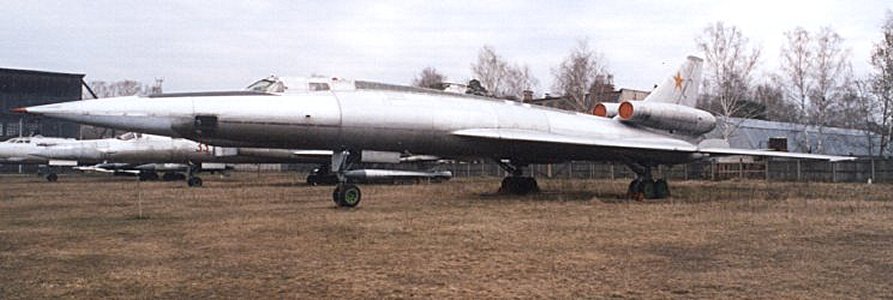
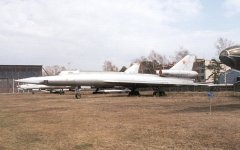
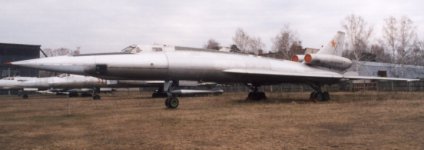
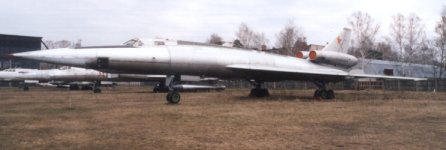
TUPOLEV Tu-22 "Blinder"
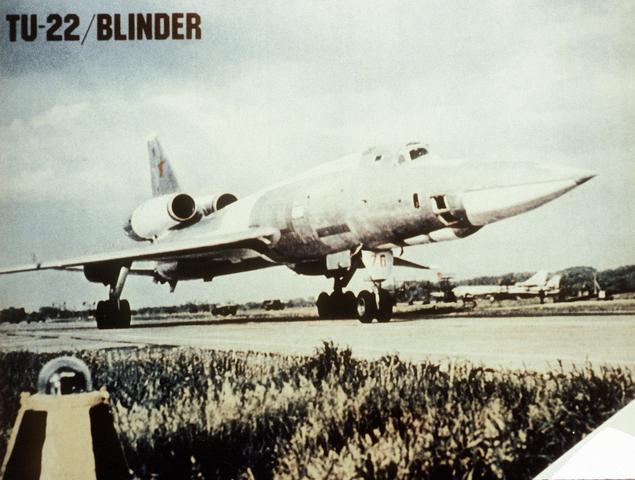 |
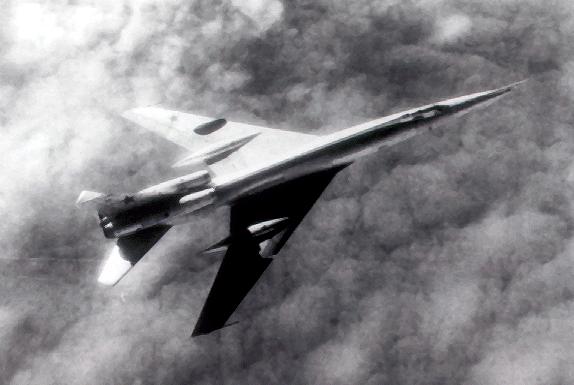
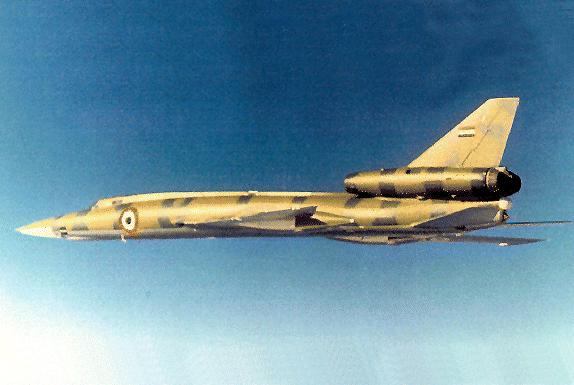
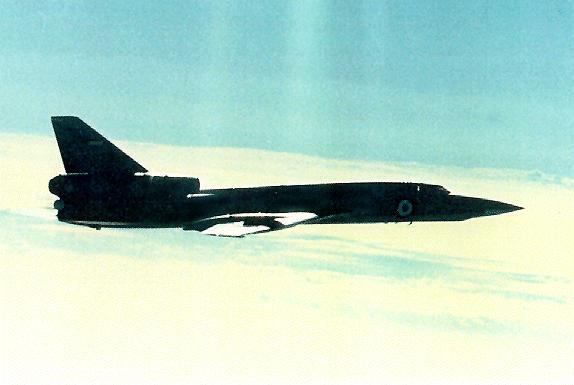
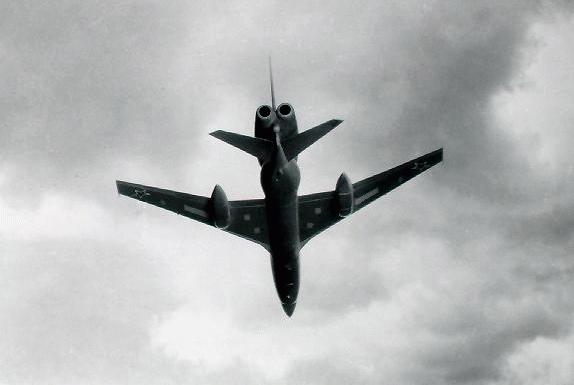
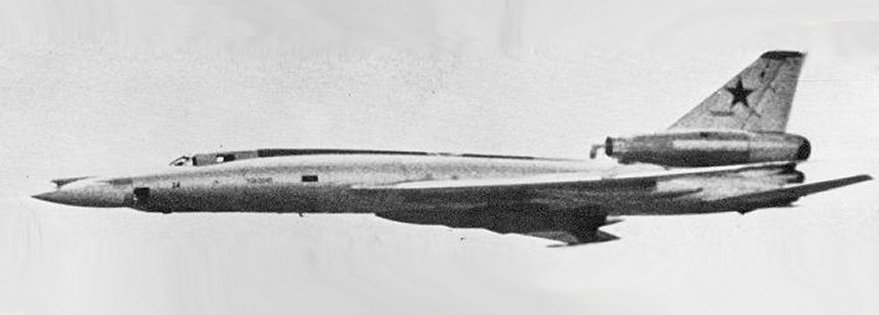
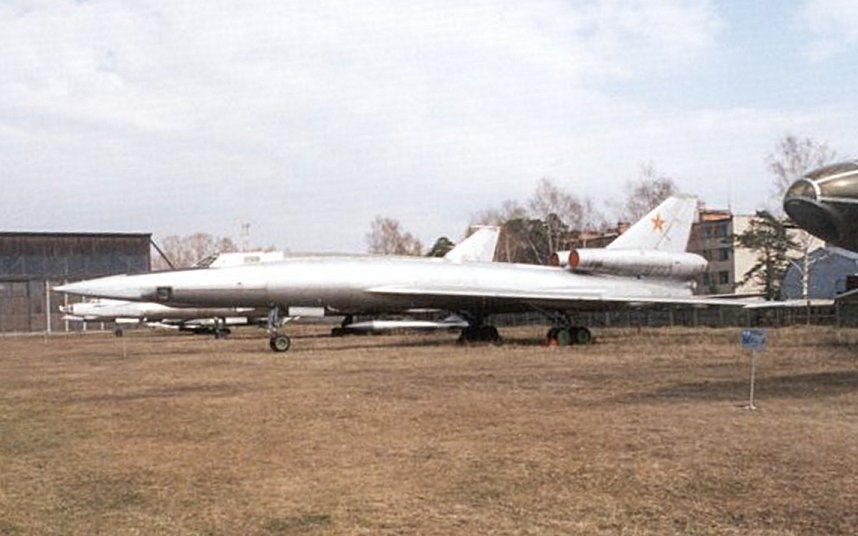
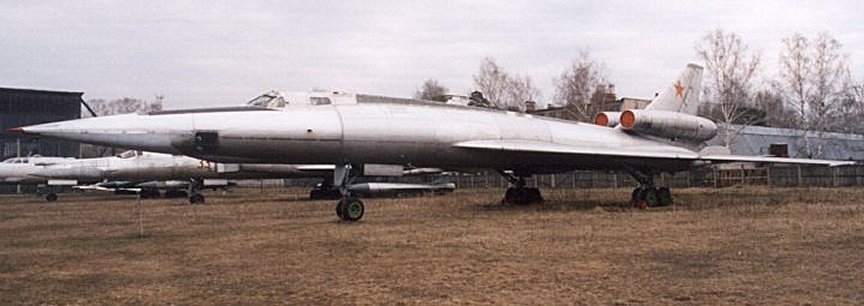
With performance roughly similar to that of the American B-58 Hustler, the BLINDER was capable of supersonic dash and cruises at high subsonic speeds, At least three major variants of the BLINDER entered operational service in the Soviet Air Forces — a free-fall bomber, an ASM carrier, and a photo/electronic reconnaissance variant.
Development of the supersonic TU-22 bomber began after the start of production of the TU-16. During preliminary studies, OKB Tupolev considered three versions: a supersonic attack bomber "98", a long range supersonic bomber "105" and an intercontinental supersonic bomber "108". The first two required swept-wings while the "108" bomber had triangular wings. In the end, the "105" design served as the basis for the TU-22 while the design of the "98" was applied to the long range fighterplane TU-128. The "108" design was completely dropped. The original design drew heavily on the TU-16 and provided for four BD-5 or BD-7 turbojet engines. The angle of the swept-back wings was increased up to 45 degrees. The project was finally approved by the Soviet government in August 1954, despite numerous objections within the Communist Party leadership.
This supersonic medium-range bomber is a swept-wing aircraft with two engines positioned as the base of the tailfin. The low-mounted swept-back wings are tapered with square tips and a wide wing root. The landing gear pods extend beyond wings’ trailing edges. Two turbojets engines are low-mounted on the tail fin, with round air intakes. This eliminated the need for a complicated boundary layer separation system in the intakes, but added a 15% weight penalty, and made engine maintenance much more difficult because of how high they were off the ground. The fuselage is tube-shaped with a solid pointed nose and a stepped cockpit. Tail flats are low-mounted on the fuselage, swept-back, and tapered with square tips. The fin is swept-back, and tapered with square tip.
The prototype of the "105" aircraft with BD-7M engines made its' first flight on 21 June 1958, but was subsequently extensively modified and upgraded. The Russians apparently had engine development problems early in the BLINDER program, and BLINDER prototypes were fitted with interim engines. In April 1958, even before the first flight, the decision was made to equip the aircraft with more powerful HK-6 engines and to build a second prototype with BD-7M engines. As development of the HK-6 engines was delayed, only the second prototype was actually built, which carried out its' first flight in September 1959. During testing, numerous problems arose, and a number of crewman were lost in crashes. Series production of this aircraft -- designated the TU-22 -- started at the plant Nr.22 in Kazan in 1959, where more than 300 TU-22 bombers were built through 1969. It entered operational service in 1962 and by 1970 there were 180 BLINDER aircraft in LRA service.
Several versions of the Blinder-bomber were built:
- Blinder A - Tu-22B -- Blinder A is primarily employed as a medium bomber dropping free-fall bombs, All of the ten 22B bombers were mainly used for training purposes. The aircraft also could be modified to serve as a tanker. Initially, converted TU-16Z planes served as tankers, but from 1972 on they were replaced by TU-22RM aircraft carrying new onboard avionics.
- Blinder B - Tu-22K -- The Tu-22K was equipped to carry one Kh-22 (AS-4 Kitchen ) 250-nm range air-to-surface The TU-22K carried a missile, and could also carry free-fall bombs. It carried out its' first tests in 1961 and deployment started in 1967 after conclusion of the testing phase.
- Blinder C -- In 1962 the maritime reconnaissance aircraft TU-22P was equipped with an air refueling system and received the designation TU-22PD. About 70 'Blinder-C' reconnaissance and electronic warfare aircraft were produced
- Blinder D - Tu-22U -- The - Tu-22B is a trainer version similar to Blinder A, though with a raised student cockpit.
- Blinder E - TU-22RDM -- Further upgrading in the 1980s lead to the TU-22RDM reconnaissance aircraft.
From 1965 on, all Blinder aircraft were equipped with an air refueling system, consisting of a refueling probe which folds into the fuselage when not in use. And beginning in 1965 the TU-22 fleet was re-equipped with more powerful RD-7M2 engines which allowed an increase in the maximum speed up to 1,600 km/h.
The TU-22 bombers was intended to replace the TU-16, but due to its' poor performance it was deemed unsatisfactory. Carrying a similar payload to only a slightly greater range, the Tu-22 offered no real increase in capability. Its limited range was its main disadvantage, though the TU-22K only carried one missile whereas the TU-16 carried up to three. Unreliable and prone to accidents, the Blinder was not built in sufficient numbers to replace the aging Tu-16 Badgers, which remained in service well into the 1970s. Subseqeuntly, KB Tupolev sought to upgrade the TU-22 in the form of a new design [designated "106"] that was supposed to have a range of 6700km, a speed of 2,000km/h and new HK-6 engines. This effort eventually led to the development of the Tu-22M BACKFIRE.
The Tu-22 was used by the Soviet Union in the Afghanistan War, and served the Soviet Air Force, and Navy into the late 1980’s. Iraq received about 12 Blinders in 1973, while Libya received their 12 to 18 from 1977 to 1983. They were used by Iraq during in Iraq-Iran War, and by Libya during the conflicts in Sudan and Chad. A number of Blinders from each nation were lost to SAM’s of opposing nations. As of 2000, Ukraine remains the sole operator of the type, with the Libyan, and Iraqi aircraft thought to be unserviceable.
Specifications:
Design Bureau: OKB Tupolev
Manufacturer: Plant Nr. 22 Kazan
Primary Role: Basic medium bomber
Power Plant: Two VD-7M 16,000kg thrust each OR Two RD-7M-2 turbojet engines 16,500kg thrust each
Crew: 3 in tandem - One pilot, one navigator/systems officer, rear gunner
Development began: August 1954
First Flight: 6/21/1958
Series production: 1959-1969
Dimensions:
Length: 41.6 m
Height: 10-10.7 m
Wingspan: 23.5 m
Wing surface: 163.2sqm
Maximum Takeoff Gross Weight: 85500 kg
Operational Wt. Empty: 39050 kg
Fuel Capacity: (gal) 13,600
Performance :
Combat Radius: (km) Unrefueled 2450
Maximum Range: [km] 5,650 - 7,150 with air refueling
Ceiling: 13,300-14,700 meters
Speed Cruise: 832 km/h
Speed Combat: 1610 km/h
Speed Maximum: 1510 km/h (with VD-7M engines) - 1610km/h (with RD-7M-2 engines)
Armaments:
Primary Bombs from 250kg up to 9.000kg or nuclear bombs
One R-23 (23mm) gun
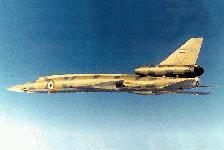
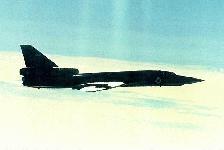
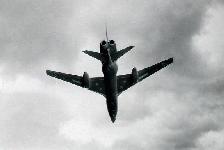
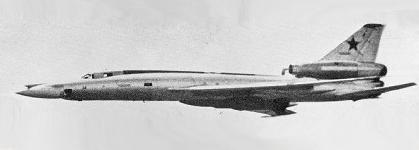
All information and photos Copyright of
FAS.org
57
posted on
04/28/2004 1:09:40 PM PDT
by
Johnny Gage
(God Bless President Bush, God Bless our Troops, and GOD BLESS AMERICA!)
To: Darksheare
Very sad story.
My wife called earlier today to tell me that one of the teens that died in that story was the son of another dental assistant in her office.
Prayers for the families.
58
posted on
04/28/2004 1:11:32 PM PDT
by
Johnny Gage
(God Bless President Bush, God Bless our Troops, and GOD BLESS AMERICA!)
To: Johnny Gage
Egads.
Saw it online and thought it was pretty awful.
Worse when someone knows the person mentioned in the article.
They're going to need some emotional support.
59
posted on
04/28/2004 1:19:34 PM PDT
by
Darksheare
(Fortune for the day: Beware, my coffee has become weaponised and was used to take down net servers.)
To: colorado tanker
Good afternoon tanker!
60
posted on
04/28/2004 1:45:09 PM PDT
by
snippy_about_it
(Fall in --> The FReeper Foxhole. America's History. America's Soul.)
Navigation: use the links below to view more comments.
first previous 1-20, 21-40, 41-60, 61-80, 81-85 next last
Disclaimer:
Opinions posted on Free Republic are those of the individual
posters and do not necessarily represent the opinion of Free Republic or its
management. All materials posted herein are protected by copyright law and the
exemption for fair use of copyrighted works.
FreeRepublic.com is powered by software copyright 2000-2008 John Robinson