|
Richard Poe
Since Mar 1, 2002
| |||||
|
| ||||||
![]() ![]() ![]() ![]() ![]() ![]() ![]() ![]() ![]() |
| Remember the Towers |
![]() ![]() May God Bless and Keep Our Republic ![]() ![]() |
![]() |
|
My name is Richard Poe. I've been lurking and occasionally posting at FreeRepublic under a pseudonym since March 1999. Later, throwing caution to the winds, I began posting under my real name in March 2002. By profession, I am a journalist. Like many journalists during the 1990s, I discovered that if you wanted to write the truth about Bill and Hillary Clinton, you had to do it on the Internet. Every other channel was closed. And so I joined the movement that I now call the Web Underground. It has been my great joy and privilege to know and work personally with some of the finest journalists of our time pioneers of the Web Underground, such as NewsMax founder Christopher Ruddy; WorldNetDaily founder Joseph Farah; FrontPage founder David Horowitz; and, of course, FreeRepublic founder Jim Robinson. What these men have accomplished remains unknown to most Americans. An All the Presidents' Men for the Internet Generation
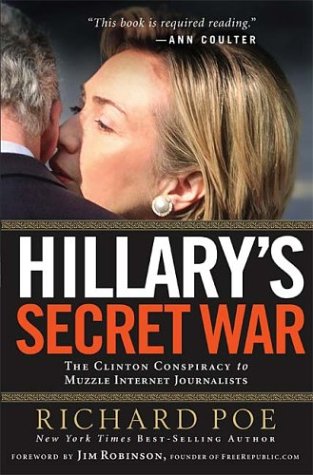
The book and film inspired an entire generation of young idealists to enroll in journalism school, hoping that they too could become crusaders for justice, as they imagined Woodward and Bernstein to have been. Hillary's Secret War The left has demonized Nixon as a power-mad Caesar, whose removal from office saved our nation from dictatorship. Yet, as any student of Roman history could have predicted, eliminating our American Caesar only stirred the winds of lawlessness already battering our Republic. As in ancient Rome, the very forces which toppled Nixon soon began vying to take his place, and to wield for their own purposes the kingly scepter Nixon had dropped. Thus came the Clintons to power, terrorizing their foes with a fearless license which Nixon's Plumbers never enjoyed. Battle of the Storytellers A seemingly unbridgable gap divides those who place their trust in New Media from those who rely on Old Media for their news. They may walk the same streets and inhabit the same neighborhoods, yet their beliefs about current events differ so sharply, they might as well live in parallel universes. Of this problem, I wrote in Hillary's Secret War: "Both visions cannot be correct. One must be true and the other false. How can we tell the difference? How do we separate fact from fancy in the digital funhouse of the Information Age? There is no easy answer. Like Alice, we must walk though the looking glass and see with our own eyes what lies beyond." In a May 22, 2004 broadcast, Rush Limbaugh offered these thoughts on the war between Old and New Media a war between rival storytellers whose outcome will largely determine what future generations know and believe about our time. Limbaugh said: In Hillary's Secret War, I tried to begin the long, slow process of restoring to our national memory what really happened during the Clinton years. Perhaps I began the process too soon. Mighty forces guard the vaults where those memories lie hidden. They will not yield without a fight. Spiked by Big Media
The Brahmins of Big Media, needless to say, extended a cooler reception to Hillary's Secret War than they had to Woodward and Bernstein in their day and not, I suspect, solely because I happen to be a much smaller fish. True, I barely rise to the level of plankton in the media food chain, but the people whose stories appear in Hillary's Secret War constitute the media equivalent of killer whales. Their tale should have been told years ago, if not by me, then by others more worthy. Yet no one bothered. The difficulties I encountered in publishing Hillary's Secret War may help explain why. After compelling me to perform several rewrites during which process I was told, among other things, that my book contained too much "Hillary-bashing" my publisher suddenly announced that it had decided to kill the book.
Thank God for them. Had it not been for the direct intervention of some of the founding fathers of Web media, I daresay Hillary's Secret War would have faded into the very oblivion that Big Media had intended for it. Joseph Farah published my book through his WND Books division (though it is now published by Thomas Nelson). David Horowitz gave me a full-length author interview in FrontPage. Christopher Ruddy and his partner Richard Mellon Scaife published a ringing endorsement of the book. But perhaps the greatest honor of all came from Jim Robinson, who not only wrote the Foreword to Hillary's Secret War, but took the unprecedented step of posting an official call to, "Freep this Book," asking all Freepers who were able to purchase a copy of Hillary's Secret War. Thank you, Jim! You're a true-blue friend. Hillary's Secret Police On February 11, 1998, Hillary Clinton told reporters that the Internet needed an "editing" or "gatekeeping" function. The World Wide Web was out of control, she said. It needed to be reined in. Hillary neglected to mention at the press conference that she was already working on the problem. Indeed, she had been waging a secret war to silence Internet dissidents for the last four years. She continues waging it today. From her own War Room in the White House, Hillary commanded a secret police operation dedicated to suppressing evidence of Clinton crimes. "Hillary is not merely an aider and abettor to this secret police operation. She has been its prime instigator and organizer," wrote the late Barbara Olson in her 1999 book Hell to Pay Mrs. Olson was in a position to know. A former federal prosecutor, she served as Chief Investigative Counsel for Congressman William F. Clinger Jr.'s House Government Reform and Oversight Committee, which probed Hillary's role in the Travelgate and Filegate scandals in 1995 and 1996. Hillary's operatives silenced witnesses; neutralized federal investigations; blackmailed Senators and Congressmen and intimidated journalists. As I told Jamie Glazov in an interview with FrontPageMagazine.com: "During the Clinton years, journalists who probed too deeply into Clinton scandals ran terrible risks. Journalists were beaten, wiretapped, framed on criminal charges, fired and blacklisted. They experienced burglaries, IRS audits, smear campaigns and White-House-orchestrated lawsuits. Some may have paid the ultimate price.
"Some of the White House `secret police' were private detectives, such as Terry Lenzner, Jack Palladino and Anthony Pellicano. Others were Clinton loyalists embedded in federal intelligence and law enforcement agencies such as the FBI, the CIA, the IRS, the NTSB and so on. Many of these people are still in place, and still doing the Clintons dirty work. I call them the Shadow Team." Prominent among the "White-House-orchestrated lawsuits" described in my book is the action brought against Jim Robinson and FreeRepublic.com in 1998 ostensibly for copyright infringement by the Washington Post and the Los Angeles Times. The lawsuit, which nearly put FreeRepublic out of business, was stage-managed by Debevoise & Plimpton, a law firm notorious for its intimate ties to the Clinton political machine and to known operatives of Hillary's Shadow Team such as Terry Lenzner. Hillary's War on the Web In their effort to suppress negative press coverage, the Clintons encountered little resistance from Big Media. Major news organizations were easily brought to heel. But the Internet lay beyond their control. Hillary's Shadow Team issued a secret report in 1995 titled The Communication Stream of Conspiracy Commerce. It characterized the Internet as a dangerously "unregulated" medium, potentially devastating in its ability to bypass the controlled, corporate newspapers and networks. In Hillary's view, the Internet presented a grave threat to Clinton power. For that reason, her secret police persecuted Internet dissidents with special ferocity. During the Clinton years, dissident Web sites such as NewsMax, WorldNetDaily, the Drudge Report, FreeRepublic and others took up the mantle of crusading journalism that Big Media had forfeited, exposing wrongdoing that mainstream journalists dared not acknowledge. These Web warriors played a decisive role in thwarting the Clintons' plans for a sixteen-year co-presidency (eight years of Bill, followed by eight years of Hillary). Hillary's Secret War reveals for the first time how these rebel journalists on the Net defied an outlaw White House; endured government repression; exposed treason at the pinnacle of power and helped change the course of the 2000 election. Their story has never before been told. Hillary's Shadow Government
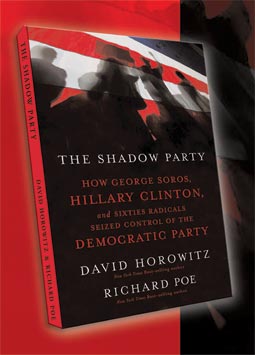
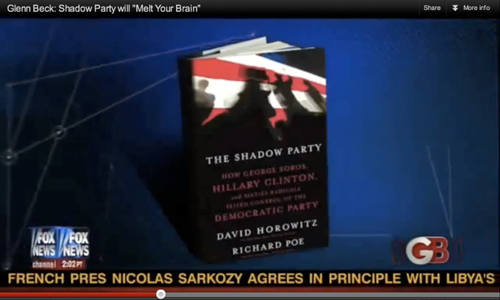
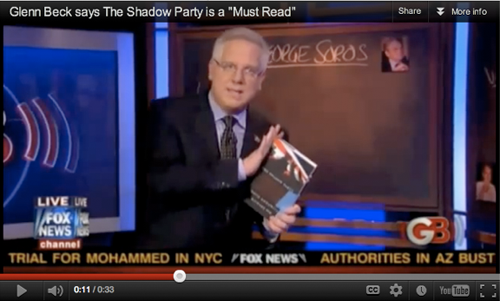
As David Horowitz and I documented in our book The Shadow Party The Struggle Ahead In a New Year's message at RichardPoe.com, I observed: "Most of us, I think, are ready for a good long rest. After eleven years of battling the Clintons, both in and out of the White House, we would like nothing better than to forget politics for awhile and get back to our lives. But our foes are not like us. They have no lives to go back to. The only life they know is political struggle. They will fight on, with the soulless fury of warring ants, until they are crushed." It was of times such as these that C.S. Lewis once wrote, "When the Round Table is broken every man must follow Galahad or Mordred; middle things are gone. So it is today. We choose sides in a battle pitting good against evil. In such a contest, there can be no neutral ground. Posted by Richard Poe, March 13, 2005. Updated January 8, 2008. |