Skip to comments.
High cost and demand for fertilizer scares farmers
Associated Press ^
| Jun 4, 2008
| James Hannah
Posted on 06/04/2008 4:08:53 AM PDT by decimon
DAYTON — Corn stalks normally dominate the fields of farmer Lyle McKanna. But this summer, leafy green soybean plants will swallow up more acreage than ever.
McKanna, who farms 800 acres near Lima, has replaced more than one-fourth of his corn crop with soybeans, which require far less fertilizer.
In part because of a global surge in demand, the price of fertilizer has skyrocketed 228 percent since 2000, forcing U.S. farmers to switch crops, cut back on fertilizer or search for manure as a substitute.
Wholesalers and retailers are scrambling to find and buy fertilizer and juggle what supplies they have to meet customers' needs. Between 2001 and 2006, global demand jumped 14 percent, an amount equivalent to the entire U.S. market, according to The Fertilizer Institute, a Washington D.C.-based trade group.
"We're trying to get as much as we can and get it into storage," said Joe Dillier, plant, food, markets manager for The GROWMARK System, a farm cooperative based in Bloomington, Ill. "It's hard to buy as much as you want forward because everyone sees that this price is going to continue to go up."
The price increase means the cost of fertilizing an acre of average-yield U.S. corn rose from about $30 to $160.
Mike Duffy, professor of economics at Iowa State University who closely tracks the costs of crop production, said the more expensive fertilizer might increase the price of sweet corn this summer. And if enough farmers change over to soybeans, it could cause some localized shortages of sweet corn and increase the price of corn in grain markets.
The demand for fertilizer has been driven by an increasing world population and a growing middle class in developing nations that wants more grain-fed meat and more diverse diets. In addition, many U.S. farmers continue to use large amounts of nitrogen fertilizer on their corn because the crop's market price remains high and they feel they can still make a profit.
The stronger demand has helped raise fertilizer prices, combined with a weak dollar and soaring energy costs that make producing and transporting fertilizer more expensive.
The United States has lost more than 40 percent of its capacity to produce nitrogen fertilizer since 1999 because of the high cost of natural gas.
Hammelman Nitrate, a small, independent fertilizer retailer in Edwardsport, Ind., lost a few sales last winter because the company couldn't get supplies quickly enough for some of its customers.
"It's a big concern because you don't know whether the supply is going to be there or not," said Kevin Hammelman. "It's a big, big struggle."
Normally, Ceres Solutions, an agricultural cooperative with 26 stores around Indiana, buys fertilizer a few months before it sells it. Now it is buying nearly a year in advance to assure it can get what it needs.
"I'm already pre-ordering for next fall," added Thad Shidler of Howesville Farm Supply in Clay City, Ind. "We've never had to do that. It's always been available."
Some farmers are sticking to their traditional practices — nervously.
This year's corn plants on Bob Peterson's southern Ohio farm are getting the same amount of fertilizer they got last year. But it's costing twice as much — nearly $300 an acre.
"This is the riskiest crop I've ever planted," said Peterson, who farms 1,600 acres of corn and soybeans near Washington Court House, Ohio.
"If we get a normal yield, we will make money. But, boy, if we have a drought, reduced yields, insect problems — we'll lose a lot of money."
It costs more to fertilize corn than soybeans — about $160 per average-yield acre of corn to $120 for soybeans. And although the market price of soybeans is about $12.90 a bushel compared with $5.50 for corn, farmers usually can produce about three times the number of bushels of corn per acre than soybeans.
Vance Bauer has planted more corn this year on his 1,800-acre farm near Gowrie, Iowa, and plans to plant even more next year.
"The fertilizer inputs are high, but corn still makes more sense at today's prices," he said. "It's worth the risk."
The high price of fertilizer may have a silver lining. Karen Chapman, water and wildlife analyst for the Environmental Defense Fund, said that if U.S. farmers are using a little less fertilizer, runoff that pollutes streams and rivers could be reduced.
"We may see some benefits in water quality," Chapman said.
___
On the Net:
The Fertilizer Institute: http://www.tfi.org/
TOPICS: Business/Economy; News/Current Events; US: Ohio
KEYWORDS: fertilizer; foodprices; foodsupply
Navigation: use the links below to view more comments.
first 1-20, 21-40, 41 next last
1
posted on
06/04/2008 4:08:54 AM PDT
by
decimon
To: decimon
“cut back on fertilizer or search for manure as a substitute.”
Bad tomatoes?
2
posted on
06/04/2008 4:15:57 AM PDT
by
wolfcreek
(I see miles and miles of Texas....let's keep it that way.)
To: decimon
But we have to get over our “addiction” to oil! (Which makes fertilizer for farmers, who grow food.)
Who knew?
3
posted on
06/04/2008 4:18:51 AM PDT
by
PSYCHO-FREEP
(Juan McCain....The lesser of Three Liberals.")
To: decimon
...or search for manure...Just take a truck to Washington DC. There's plenty there.
4
posted on
06/04/2008 4:21:06 AM PDT
by
FReepaholic
(Me no bottom man. Me top man.)
To: decimon
"If we get a normal yield, we will make money. But, boy, if we have a drought, reduced yields, insect problems — we'll lose a lot of money." Or hail, or freeze, or poor germination due to low soil temps or too much rain, or..or..
I always blanche when I pay my fertilizer bills and I'm only paying 1/3 of it as an absentee landlord. When I think of the total amount paid by the tenant and myself, I really blanche.
But there are those on this forum would maintain that NOOOOO Farm Bill support for our nation's farmers should ever be passed by the legislature. Which is foolishness.
5
posted on
06/04/2008 4:33:43 AM PDT
by
prairiebreeze
(I didn't leave the republicans, they left me.)
To: prairiebreeze
But there are those on this forum would maintain that NOOOOO Farm Bill support for our nation's farmers should ever be passed by the legislature. Which is foolishness Those free market libertines don't have a ounce of common sense. One even posted on this site (paraphrasing) "who cares if the American farmer goes out of business we will buy our food wherever it's the cheapest" . Idiot poster thinks other countries like Russia and China will sell us food in a worldwide drought condition.
6
posted on
06/04/2008 5:08:37 AM PDT
by
am452
(In order to ensure the quality of your patriotism, your conversation may be monitored.)
To: decimon
I have some horses who will fertilize for nothing more than the price of hay... ;)
7
posted on
06/04/2008 5:28:19 AM PDT
by
nicola_tesla
("Life is Tough... It's Worse When You're Stupid".... John Wayne)
To: am452
Exactly. I don’t know if you’re familiar with the latest recent attempt to get S. Korea to actually open their border to US beef imports.
They talk and promise, promise and talk and when the date actually arrives for shipments to start, they renege due to political pressure from their own ag lobby.
It simply isn’t going to happen and as you suggest we’re foolish to think the rest of the world would export food to us without charging both arms and both legs.
8
posted on
06/04/2008 5:34:46 AM PDT
by
prairiebreeze
(I didn't leave the republicans, they left me.)
To: decimon
Somebody needs to invent fertilizer made of solar power so we can eat “green” and feel good about ourselves.
9
posted on
06/04/2008 5:51:02 AM PDT
by
Gritty
(No human community should be larger than 20,000, separated from others by wilderness-Paul Watson)
To: decimon

This is a 1 yr chart for the ETF MOO, which invests in agribusiness companies, including several major fertilizer companies. I've been invested in it for awhile, and have been happy with the performance.
If I have to continually pay more for food, I figured try to find a way to make money off the rise in food prices.
To: PSYCHO-FREEP
Nobody knew.
...and the principal reason is that fertilizer isn't made from oil.
To: wolfcreek
There are huge Tomato fields around my old homestead that are fertilized with a sprayed manure mixture a few weeks prior to planting. Stinks up the place when the wind shifts.
12
posted on
06/04/2008 6:11:42 AM PDT
by
Rebelbase
(McCain: The Third Bush Term ?)
To: decimon
MAP was $220/ton now projected to go to $1200/ton next spring. Presently $800/ton.
To: Gabz
Hey Gabz!
Check this out!
To: decimon; Diana in Wisconsin; gardengirl; girlangler; SunkenCiv; HungarianGypsy; Gabz; billhilly; ...
15
posted on
06/04/2008 10:48:49 AM PDT
by
Gabz
(Don't tell my mom I'm a lobbyist, she thinks I'm a piano player in a whorehouse)
To: Gritty
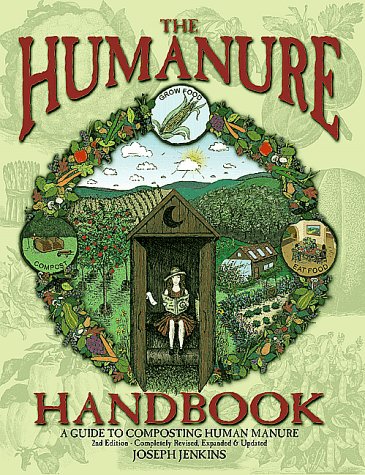
Well, if you really want to feel good about yourself contributing to the fertilizer solution.........(snicker).
16
posted on
06/04/2008 11:05:10 AM PDT
by
OB1kNOb
("We like Mr. Obama and we hope he will win the election." - Ahmed Yousef, Hamas PM advisor)
To: Gabz
I’ve been using cow manure compost to fertilize my yard and garden. My plants grow like mad, and water usage is way down.
17
posted on
06/04/2008 11:18:31 AM PDT
by
Arrowhead1952
(Typical white person, bitter, religious, gun owner, who will "Just say No to BO in Nov.")
To: webschooner
“If I have to continually pay more for food, I figured try to find a way to make money off the rise in food prices.”
Glad to see another investor who thinks/invests as I do. :)
18
posted on
06/04/2008 11:54:59 AM PDT
by
Diana in Wisconsin
(Save The Earth. It's The Only Planet With Chocolate.)
To: Gabz
The farmers around here know the score. There are 700 acres of soybean around me this season, versus sweet or field corn in other years.
FIL’s only planting field corn this year to cash in on the ethanol boondoggle; nearly $6 a bushel! Unheard of in years past.
19
posted on
06/04/2008 11:59:18 AM PDT
by
Diana in Wisconsin
(Save The Earth. It's The Only Planet With Chocolate.)
To: Gabz
"If we get a normal yield, we will make money. But, boy, if we have a drought, reduced yields, insect problems — we'll lose a lot of money." When people we meet ask my husband what we 'do', he sometimes replies that we are professional gamblers. He will then smile and tell them that we farm. There is an awful lot of truth in the gambler statement, though.
Actually, I think that 'scared' is a term somewhat misused here, as I believe that you wouldn't farm if you were scared. You just have to be prudent and weigh all of your options harder than you might in years past.
This year we decided to plant field corn on irrigated ground, which reduced our 'usual' corn crop by 60%, but it takes the rainfall question out of the equation. We are having a smaller cotton crop this year as well, as it requires high amounts of nitrogen (not mentioned in the article). Soybeans actually fix nitrogen in the soil, so they are always a good rotation crop regardless of the market price. We have more soybeans than usual.
Thanks for the ping.
20
posted on
06/04/2008 12:16:13 PM PDT
by
JustaDumbBlonde
("When the government fears the people there is liberty ... " Thomas Jefferson)
Navigation: use the links below to view more comments.
first 1-20, 21-40, 41 next last
Disclaimer:
Opinions posted on Free Republic are those of the individual
posters and do not necessarily represent the opinion of Free Republic or its
management. All materials posted herein are protected by copyright law and the
exemption for fair use of copyrighted works.
FreeRepublic.com is powered by software copyright 2000-2008 John Robinson