Free Republic
Browse · Search
Bloggers & Personal
Topics · Post Article

Skip to comments.

NASA Releases New Details on Moon Base Progress [6:05]
YouTube ^ | October 29, 2026 | Avid Space

Posted on 10/29/2026 5:42:13 PM PDT by SunkenCiv

In this week's Avid Space industry update, SpaceX launches their second Starfall capsule, we have program updates from PLD Space, Rocket Lab and NASA, and Japan sends a lander to Mars' moon Phobos. 
NASA Releases New Details on Moon Base Progress | 6:05 
Avid Space | 251K subscribers | 11,408 views | October 29, 2026
NASA Releases New Details on Moon Base Progress | 6:05 | Avid Space | 251K subscribers | 11,408 views | October 29, 2026 
YouTube transcript reformatted at textformatter.ai *may* follow.

(Excerpt) Read more at youtube.com ...


TOPICS: Business/Economy; Science; Travel
KEYWORDS: avidspace; elonmusk; miura5; nasa; pldspace; rocketlab; spacex; virgingalactic

Click here: to donate by Credit Card

Or here: to donate by PayPal

Or by mail to: Free Republic, LLC - PO Box 9771 - Fresno, CA 93794

Thank you very much and God bless you.

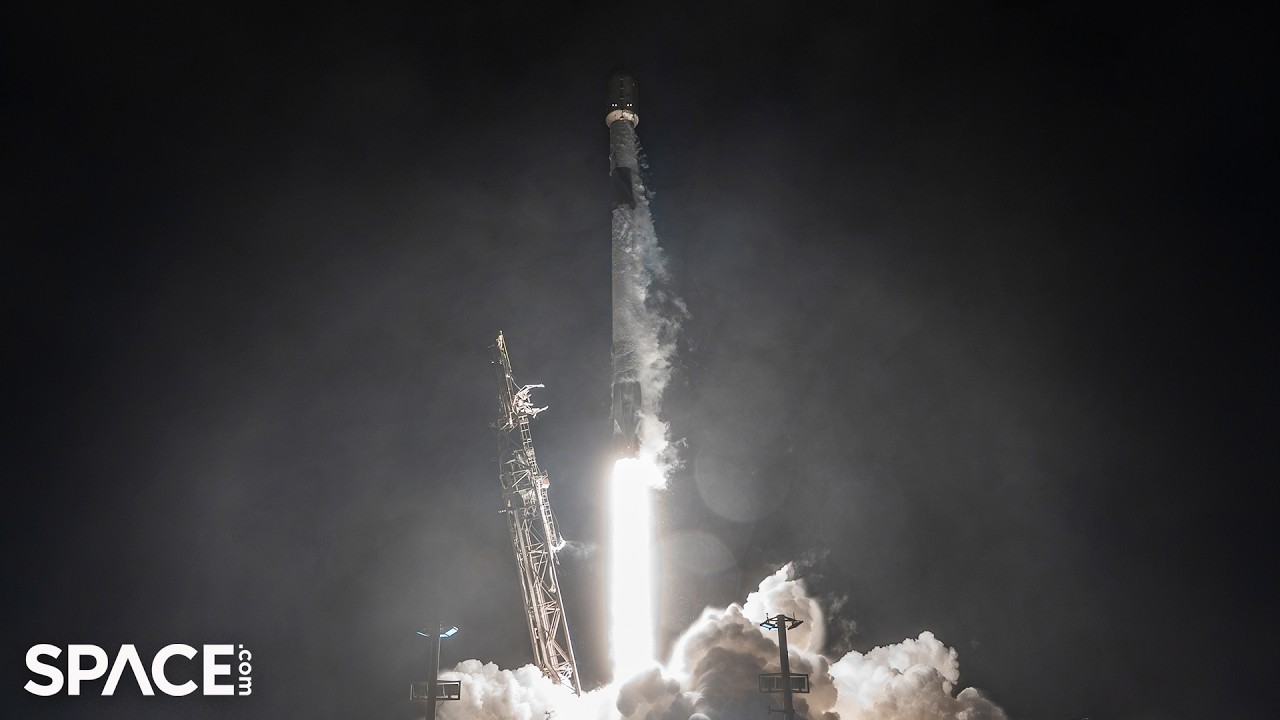
A SpaceX Falcon 9 rocket launched 27 Starlink satellites from Space Launch Complex 4 East (SLC-4E) at Vandenberg Space Force Base in California on Oct. 27, 2026, at 3:25 a.m. EDT (12:25 a.m. PDT). 

The mission marked SpaceX's 117th Falcon 9 launch of the year, with the rocket's first-stage booster completing another successful landing aboard the droneship Of Course I Still Love You in the Pacific Ocean. 

Credit: SpaceX 
Blastoff! SpaceX launches Starlink satellites on 117th Falcon 9 flight of 2026, nails landing | 9:21 
VideoFromSpace | 2.17M subscribers | 47,642 views | October 27, 2026
Blastoff! SpaceX launches Starlink satellites on 117th Falcon 9 flight of 2026, nails landing | 9:21 | VideoFromSpace | 2.17M subscribers | 47,642 views | October 27, 2026

1 posted on 10/29/2026 5:42:13 PM PDT by SunkenCiv
[ Post Reply | Private Reply | View Replies]

MEET MIURA 5. From rocket to a world-class launch infrastructure. 

Europe’s next launch capability won’t be built on ambition alone. 

MIURA 5 is becoming the visible result of an integrated industrial system designed to manufacture, qualify and launch orbital satellite missions from Europe. A complete capability, built to scale and engineered to deliver reliable access to space. 

MIURA 5 launch system is where it all comes together. 
MIURA 5 Progress Update - October 2026. | 19:28 
PLD Space | 21.1K subscribers | 154,820 views | October 19, 2026
MIURA 5 Progress Update - October 2026. | 19:28 | PLD Space | 21.1K subscribers | 154,820 views | October 19, 2026

2 posted on 10/29/2026 5:42:39 PM PDT by SunkenCiv (TDS -- it's not just for DNC shills and jihadists anymore -- oh, wait, yeah it is.)
[ Post Reply | Private Reply | View Replies]

 
Rocket Lab - 'We're Not Hawking Around' Launch | 1:10:47 
Rocket Lab | 222K subscribers | 56,061 views | Streamed live on October 23, 2026
Rocket Lab - 'We're Not Hawking Around' Launch | 1:10:47 | Rocket Lab | 222K subscribers | 56,061 views | Streamed live on October 23, 2026

3 posted on 10/29/2026 5:42:54 PM PDT by SunkenCiv (TDS -- it's not just for DNC shills and jihadists anymore -- oh, wait, yeah it is.)
[ Post Reply | Private Reply | View Replies]

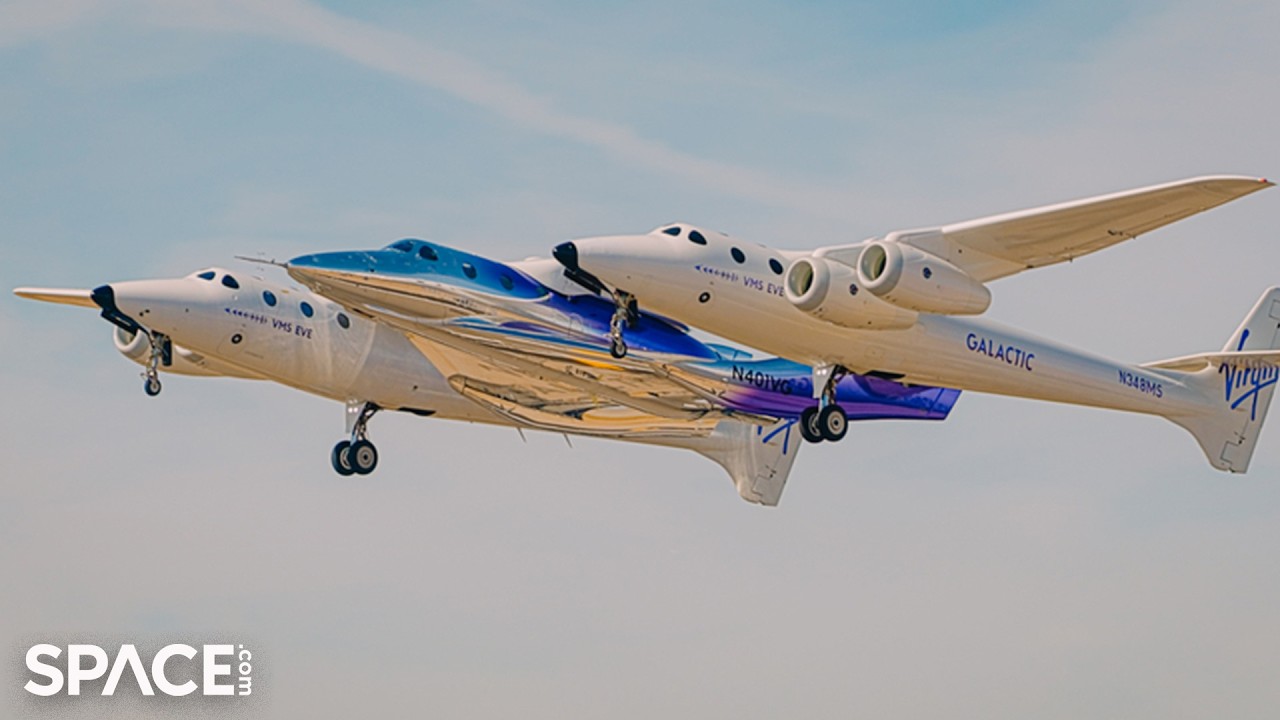
Virgin Galactic's new spaceship Apeiron has arrived at Spaceport America in New Mexico! 

Watch as the company's next-generation spaceplane makes the journey from Arizona to its new home, carried beneath Virgin Galactic's VMS Eve mothership. 

On Oct. 28, 2026, Apeiron departed Phoenix-Mesa Gateway Airport at 10:29 a.m. MST and landed at Spaceport America at 12:59 p.m. MDT. 

The spacecraft, whose name means "boundless" in ancient Greek, will now undergo avionics integration, validation and flight testing ahead of planned commercial spaceflights in early Q2 2027. 

Designed to fly twice per week and complete more than 500 missions during its operational lifetime, Apeiron is the first in Virgin Galactic's next-generation fleet. A second spacecraft is also under construction, with commercial operations targeted for late Q2 or early Q3 2027. 
Virgin Galactic's Apeiron Takes to the Skies for First Time -- Carried by Mothership! | 1:57 
VideoFromSpace | 2.17M subscribers | 16,063 views | October 29, 2026
Virgin Galactic's Apeiron Takes to the Skies for First Time -- Carried by Mothership! | 1:57 | VideoFromSpace | 2.17M subscribers | 16,063 views | October 29, 2026

4 posted on 10/29/2026 5:43:29 PM PDT by SunkenCiv (TDS -- it's not just for DNC shills and jihadists anymore -- oh, wait, yeah it is.)
[ Post Reply | Private Reply | View Replies]

Avid Space Transcript

In this week’s Avid Space Industry update, SpaceX launches their second Starfall capsule. We have program updates from PLLD Space, Rocket Lab, and NASA. And Japan sends a lander to Mars’ moon, Phobos. So, let’s jump right in and see what’s new.

Falcon 9 Activity

Starting off with the week’s Falcon 9 activity, the first launch of the week came on Tuesday morning when booster 1085 took to the Florida skies to launch the Bandwagon 5 mission from Space Launch Complex 40. Several minutes later, the first stage touched back down on a shortfall of Gravitas, successfully completing its 19th mission. Meanwhile, the second stage continued on to orbit where SpaceX successfully deployed 31 payloads, including a Starfall capsule for their second demonstration mission of their re-entry vehicle. A few days later, the rocket and both recovered fairing halves were returned to Port Canaveral for refurbishment ahead of their next missions.

On Thursday, SpaceX had to abort their next Starlink mission out of Vandenberg due to weather issues. Fortunately, SpaceX was able to turn around and launch the mission just a day later. Falcon 9 booster 1063 lifted off on its 36th mission and successfully sent another 27 satellites on their way to orbit before landing downrange on Of Course I Still Love You.

PLLD Space Update

In other space news, on Monday, PLLD Space posted an October update on their Mura 5 rocket program. The company has now produced their first four Mura 5 rockets, the first two of which will be used for qualification testing while the third is the first launch vehicle. They’re currently in the process of scaling up production to prepare for when they become operational. And they’re also working diligently to develop their first launch infrastructure ahead of their debut launch, which is expected in the first half of next year.

Japan Aerospace Exploration Agency

In the early hours of Tuesday morning, the Japan Aerospace Exploration Agency launched one of their H3 rockets from the Tangga Shamia Space Center. The rocket carried the Martian moon’s exploration mission and sent it on its way toward the red planet where a lander is planned to touch down on Phobos. Once it arrives on the larger of Mars’ moons, the lander will take samples that will then be returned to Earth. The mission is also carrying a European rover to the moon’s surface.

Rocket Lab Updates

On Monday, Rocket Lab shared a clip of the production of a new forward dome for their Neutron rocket. This follows news from last week that they’d recently identified issues with the manufacturing process of their domes. They’ve now implemented a fix and are back to producing these massive carbon fiber structures. On Wednesday, they shared another video, this one of their Neutron second stage being laid horizontal in preparation for its upcoming barge transport to their facilities at Launch Complex 3 on Wallops Island in Virginia. Once there, the stage will undergo testing and eventually have its vacuum optimized Archimedes engine installed.

Rocket Lab has also announced that they’re in the process of building a new testing infrastructure to help deal with the high demand launch cadence for their Electron and Haste rocket program. This new static fire stand is being built at their propulsion test complex in New Zealand and will allow the company to reduce the current need of two to three days for stack testing down to less than one day.

On Friday evening local time, Rocket Lab launched the We’re Not Hawking Around mission from their Launch Complex 1 in New Zealand. The mission delivered a trio of Hawkeye 360 signal intelligence satellites to low Earth orbit, successfully completing the company’s 19th mission of the year. Unfortunately, there was some bad news for their European Space Agency space rider program as a full-scale model of the space plane was lost during a failed drop test. After being released, the parafoil didn’t deploy, resulting in a total loss of the model. The agency attempted this same test back in the spring, but had to abort due to an issue during the ascent phase. It’s not yet clear if the agency will build a new model to reattempt the test or if they’ll take another avenue to verify the technology ahead of the space plane’s expected debut in 2028.

NASA Updates

On Tuesday, NASA provided an update on their development of various technologies for their eventual moon base. Their Viper rover is a robotic vehicle that’s expected to launch next year and be delivered to the moon on Blue Origin’s second Blue Moon Mark 1 lander. On the surface, the rover will search for ice and other resources as it traverses more than 18 miles on the surface. Also, both Astro Lab and Lunar Outpost are developing lunar terrain vehicles for the agency. These vehicles are capable of being remotely controlled from Earth, allowing them to be used to map out surface conditions ahead of manned missions. Both companies have now delivered mock-ups for testing by NASA astronauts. And once astronauts are on the moon, they’ll use the two vehicles to move about the lunar terrain.

Astrolab also plans to send their flip rover to the moon later this year on the Griffin 1 mission where it’ll explore the South Pole and test various systems planned for their lunar terrain vehicle. Lunar Outpost already put a rover on the moon last year and plans to have a second one land next year which, among other goals, will allow them to validate some of their own technologies for their vehicle.

Lunar Related News

In other lunar related news, on Wednesday, NASA released footage from a recent hotfire test of an RS25E engine at Stennis Space Center. The engine was throttled up to 111%, and the test ran for the full planned 500-second duration, the same length as a nominal burn during the launch of an SLS rocket. This engine isn’t in the plans to fly, but rather is a development article the agency is using to validate systems and gather data to improve performance and reliability.

Stoke Space recently filed paperwork to expand their horizontal integration facility at Space Launch Complex 14 as the company continues to develop and work toward the debut of their Nova rocket and become an operational launch provider.

Blue Origin Update

Finally, for this week, Blue Origin continues their push to return their New Glenn rocket to the skies. CEO Dave Limp posted on Friday that module 8, the penultimate section of the launch tower, has now been restacked at Launch Complex 36. The final section, smaller than the previous ones, will be stacked soon and followed shortly thereafter by the umbilical connections.

Well, that’s going to do it for this week’s Avid Spaceflight Industry update, but make sure you keep an eye out for our next Starship and Starbase update coming up in a few days. Thanks for watching and we’ll see you next week.

5 posted on 10/29/2026 5:45:03 PM PDT by SunkenCiv (TDS -- it's not just for DNC shills and jihadists anymore -- oh, wait, yeah it is.)
[ Post Reply | Private Reply | View Replies]

To: AdmSmith; AnonymousConservative; Arthur Wildfire! March; Berosus; Bockscar; BraveMan; cardinal4; ...
🚀🛰️

6 posted on 10/29/2026 5:46:09 PM PDT by SunkenCiv (TDS -- it's not just for DNC shills and jihadists anymore -- oh, wait, yeah it is.)
[ Post Reply | Private Reply | View Replies]

To: SunkenCiv
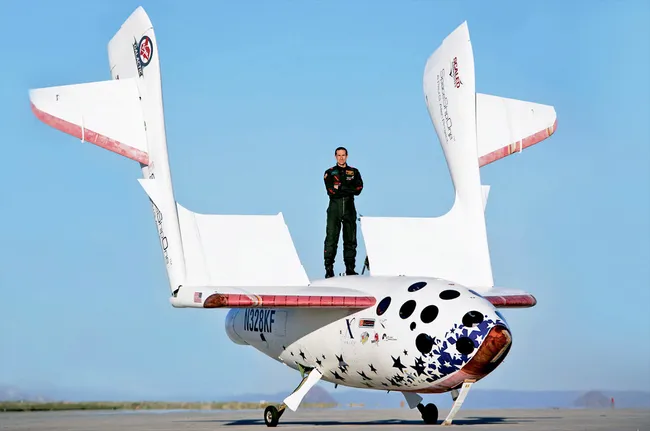
The Apeiron is the commercial version of the plane Burt Rutan won the Ansari X Prize with in 2004. It parasite launches from the White Knight mothership, leaves the atmosphere and then flies back without needing heat shields or parachutes.

It's a commercial flight to the edge of space with no space suit and no astronaut training.

Before re-entry it bends in the middle (as shown in the photo, called "shuttlecocking") so that its drag profile is so high that gravity won't accelerate it to a speed that could burn it up. Once it's low enough and the air is thick enough that the control surfaces are effective, the tails straighten out and it flies like a normal glider.

https://en.wikipedia.org/wiki/Ansari_X_Prize
https://en.wikipedia.org/wiki/SpaceShipOne
https://scaled.com/portfolio/spaceshipone/

7 posted on 10/29/2026 6:25:40 PM PDT by Paal Gulli
[ Post Reply | Private Reply | To 5 | View Replies]

To: Paal Gulli

Meet Apeiron, Virgin Galactic’s 1st ‘Delta-class’ space plane
News
By Josh Dinner
Published yesterday
https://www.space.com/space-exploration/private-spaceflight/meet-apeiron-virgin-galactics-1st-delta-class-space-plane


8 posted on 10/29/2026 7:35:08 PM PDT by SunkenCiv (TDS -- it's not just for DNC shills and jihadists anymore -- oh, wait, yeah it is.)
[ Post Reply | Private Reply | To 7 | View Replies]

Disclaimer: Opinions posted on Free Republic are those of the individual posters and do not necessarily represent the opinion of Free Republic or its management. All materials posted herein are protected by copyright law and the exemption for fair use of copyrighted works.

Free Republic
Browse · Search
Bloggers & Personal
Topics · Post Article

FreeRepublic, LLC, PO BOX 9771, FRESNO, CA 93794
FreeRepublic.com is powered by software copyright 2000-2008 John Robinson